




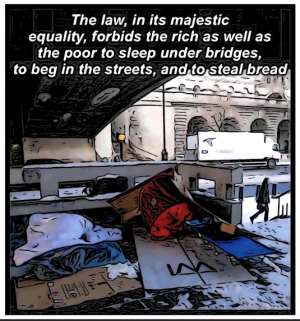
Poverty is often blamed as the primary cause of theft, and there is some truth to that argument. Economic hardship, unemployment, and hunger can push individuals into desperate decisions they might never have considered under better circumstances. Yet poverty alone cannot explain why wealthy individuals, powerful officials, and successful business executives also engage in theft, fraud, and corruption.
The reality is that theft is not driven solely by empty pockets. It is also influenced by greed, opportunity, weak institutions, and a lack of accountability.
For many people living in poverty, theft is an act of survival. A parent who steals food to feed hungry children, someone who takes money to buy medicine, or a young person who resorts to stealing after exhausting every legitimate opportunity is often acting under intense economic pressure. While such actions remain illegal, they are frequently rooted in immediate human need rather than personal enrichment.
This is why economists and social scientists often argue that reducing poverty, creating jobs, and strengthening social safety nets can significantly reduce petty crime. When people have access to work, education, and basic necessities, the temptation to steal for survival diminishes.
However, the theft committed by the wealthy tells a very different story.
High-profile cases of embezzlement, procurement fraud, tax evasion, bribery, and the diversion of public funds are rarely motivated by hunger or financial desperation. Instead, they are often driven by greed, the desire to accumulate more wealth, maintain influence, preserve status, or exploit opportunities created by weak oversight.
Unlike petty theft, these crimes can have devastating national consequences. The theft of public funds intended for hospitals, schools, roads, or social programmes affects thousands or even millions of people. Hospitals may remain unfinished, schools may lack resources, roads deteriorate, and public services suffer because money meant for development has been diverted for private gain.
International institutions have repeatedly highlighted the enormous economic cost of corruption. According to the World Bank, corruption costs developing countries an estimated US$1.26 trillion annually—resources that could otherwise finance healthcare, education, infrastructure, and economic development.
The difference between petty theft and grand corruption is therefore not merely the value stolen but also the scale of the damage.
A person who steals a mobile phone or a bag of rice may harm one individual or one business. A public official who diverts millions of dollars from state coffers can deprive entire communities of essential services and undermine public confidence in government.
Psychologists and economists also point to differences in motivation. Poverty-related theft is often driven by necessity, whereas wealth-related theft is more likely to stem from greed, fear of losing influence, a sense of entitlement, or the belief that the chances of being caught are minimal. Those with wealth and influence may also have greater access to legal resources, political connections, and institutional loopholes that reduce the perceived risks of engaging in financial crime.
Equally important is the issue of accountability. When ordinary citizens are swiftly prosecuted for minor offences while powerful individuals escape justice through influence or legal delays, public confidence in the rule of law is weakened. Such unequal treatment creates the perception that justice is harsher for the poor than for the powerful.
Addressing theft therefore requires more than policing. Governments must tackle the root causes of poverty through employment opportunities, education, and social protection while simultaneously strengthening anti-corruption institutions, improving transparency, closing legal loopholes, and ensuring that the law is applied fairly to everyone.
Justice cannot be selective. A society that punishes survival crimes while tolerating large-scale corruption risks criminalising poverty while rewarding abuse of power.
Ultimately, poverty may push some people toward theft, but wealth can enable others to steal on a far greater scale. Neither should be excused. The challenge for every nation is to build institutions where integrity is valued, accountability is enforced, and justice is applied equally—whether the accused is a street vendor struggling to survive or a powerful official entrusted with public resources.
The debate is therefore not about whether theft by the poor or theft by the rich is worse. Rather, it is about recognising that while both are wrong, corruption and abuse of public trust inflict far greater and more lasting damage on society. A nation that seeks lasting development must fight both poverty-driven crime and high-level corruption with equal commitment, fairness, and respect for the rule of law.


 Stop speculation, premature conclusions; allow investigation to determine Baffou...
 Judge halts Ex-NAFCO CEO's trial until ruling on seized phones
 Manhyia South MP who resisted arrest reports to EOCO a day after arrest warrant ...
 "Show us evidence" —Upper West teacher unions demand proof of payment before end...
 Adenta: Bolt driver jailed 25 years for cutlass attack and robbery of beautician...
 EOCO drags Manhyia South MP to former law firm, residence for search
 BNI investigates Yaw Ampofo Ankrah over alleged World Cup visa facilitation sche...
 EOCO arrests three over drone flights at headquarters during arrest, probe of Ma...
 Prof Emmanuel Osei Sarpong appointed Acting NSA Director-General
 NSA Boss Yaw Ampofo Ankrah suspended over US$623,000 World Cup visa allegations


