




Nearly three years after one of West Africa's most consequential political ruptures plunged two neighboring states into a prolonged diplomatic freeze, Benin and Niger have taken their most meaningful step yet toward ending a border closure that has drained both economies and entrenched insecurity across one of the continent's most volatile corridors.
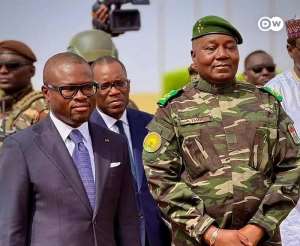
Meeting in Niamey on Monday, June 2, Benin's President Romuald Wadagni and Niger's junta leader General Abdourahamane Tiani announced the creation of a joint mechanism tasked with preparing the formal reopening of the shared border between their two countries. The announcement emerged from Wadagni's official visit to the Nigerien capital the highest-level diplomatic engagement between the two neighbors since relations collapsed in the aftermath of Niger's July 2023 military coup.
In a joint communiqué issued after the talks, both leaders reaffirmed their commitment to strengthening bilateral relations and resolving the disputes that continue to hinder cooperation. A committee of experts was established, tasked with identifying remaining obstacles and proposing concrete solutions. The committee has fifteen days to submit its recommendations to both heads of state.
The Roots of the Rift
When Niger's democratically elected President Mohamed Bazoum was overthrown in a July 2023 coup, the Economic Community of West African States moved swiftly to impose punitive measures including financial sanctions and the closure of all member states' borders with the country. The bridge over the Niger River, linking the Beninese city of Malanville and the Nigerien city of Gaya, a key transit point for migrants and both licit and illicit trade, was officially shut.
Benin's President Patrice Talon who was then in office had backed ECOWAS's posture, including its threat of force to reinstate Bazoum. Niamey took particular exception to that position and kept the border closed even after the bloc lifted most of its sanctions in February 2024. The dispute hardened around Nigerien allegations of a French military presence in northern Benin allegations that Cotonou repeatedly denied.
As recently as June 2025, General Tiani insisted the border would remain closed, framing the standoff not as a conflict with Benin but as a confrontation with what he described as "French destabilizing troops" on Beninese territory. The rhetoric sharpened further when, following an Islamic State attack on the Niamey airport, Tiani directly accused Beninese leadership, France's Emmanuel Macron and Côte d'Ivoire's Alassane Ouattara of supporting the assault.
Benin's attempted coup in December 2025 further hardened positions, fuelling mutual allegations between the two governments, and triggering reciprocal diplomatic expulsions in early 2026.
The Cost of Closure
The consequences of the prolonged standoff have been severe and compounding. Niger relies heavily on coastal ports for its imports and exports. The Benin corridor has historically served as one of its principal gateways to international markets and it’s most cost-efficient.
The extended closure fuelled the smuggling of migrants and licit commodities by boat across the Niger River, swelling profits from illicit transportation and bribes, while devastating the livelihoods of local traders.
For Benin, the losses were no less significant. Cotonou's port, whose transit traffic was historically driven by Niger for over ninety percent, has yet to recover to pre-crisis levels.
The diplomatic dispute also affected the Niger-Benin oil pipeline project, which was designed to transport Nigerien crude oil to the export terminal at Sèmè-Podji. Although crude exports eventually began, diplomatic tensions continued to weigh on the relationship.
Attempts at workarounds have provided only partial relief. The reopening of the Tsamiya-Kamba corridor via Nigeria's Kebbi State has given Niger a bypass route, allowing it to continue accessing Cotonou's port the closest and most cost-effective maritime outlet. But these arrangements remain limited and come with their own risks.
Security Shadows the Thaw
The road to normalization is not free of peril. Violence across the Benin-Niger-Nigeria border area rose by 86 percent from 2024 to 2025. Jama'at Nusrat al-Islam wal-Muslimin (JNIM) and the Islamic State in the Greater Sahara have turned W National Park spanning Benin, Niger and Burkina Faso into a sanctuary and a rear operating base for cross-border movement and attack planning. The Lakurawa group, active in Nigeria's Sokoto and Kebbi states, has expanded into Benin's Alibori department and Niger's Dosso and Tahoua regions.
Analysts warn that resumed traffic along the corridor creates new opportunities for armed groups to exploit through looting, extortion and supply acquisition. The June 2 communiqué addressed this dimension directly. Both presidents reaffirmed their determination to coordinate efforts against terrorism and cross-border banditry, which they described as common threats to stability and economic development.
A New Benin, A New Opening
The political change in Cotonou has been the decisive catalyst. During his inauguration in April 2026, President Wadagni signaled his intention to strengthen ties with members of the Alliance of Sahel States by welcoming representatives from Niger, Mali and Burkina Faso. That signal was not lost on Niamey.
The political transition in Cotonou opened a window for regional de-escalation that international observers say the African Union should seize.
The Niamey summit produced one further gesture of goodwill that observers regard as symbolically significant. General Tiani accepted an invitation from President Wadagni to make an official return visit to Cotonou. Diplomatic channels will determine the timing of the trip but should it take place, it would mark the first visit by Niger's junta leader to a coastal ECOWAS state since the coup.
A Corridor That Cannot Wait
The fifteen-day deadline given to the joint expert committee places both governments under visible pressure to demonstrate progress. Whether the committee will recommend a phased reopening, a full resumption, or a set of preconditions tied to security guarantees remains to be seen. What is clear is that the economic and humanitarian case for opening the Gaya-Malanville corridor has only grown more urgent with each month of closure.
For the landlocked Sahel, access to the sea is not a diplomatic luxury it is a lifeline. For Benin, the revival of transit trade through Cotonou is integral to its commercial future. What began as a geopolitical standoff, shaped by a coup, an ECOWAS sanctions regime and competing accusations about foreign military presences, is now, slowly and cautiously, being unwound.
The border has not yet opened. But for the first time in nearly three years, both sides appear to agree that it must.
Mustapha Bature Sallama.
Medical/ Science Communicator,
Private Investigator, Criminal investigation and Intelligence Analysis.
International Conflict Management and Peace Building.USIP
[email protected]
+233-555-275-880


 NAIMOS uncovers illegal mining activities in forest reserve as miners allegedly ...
 Roads minister orders 10 speed-calming structures on Bolgatanga–Paga highway
 NRSA warns Uber moto riders against road safety violations
 'Too early to discuss presidential bid’ – Dr. Ato Forson
 Ghana’s $250m AI centre to focus on practical applications; not competing US, Ch...
 'They did not even talk about the Women's Bank, where is it?' — Afenyo-Markin qu...
 Government to train over 2,000 scientists for Ghana's nuclear power programme – ...
 Elderly man reportedly apprehended by residents in Koforidua after travelling fr...
 ‘We are living within our means’ – Finance Minister defends no-new-taxes for 202...
 Global Microsoft outage knocks out Outlook and other services


