




For nearly half a century, the Syrian state lived under the suffocating weight of American economic sanctions a layered, accumulated architecture of financial punishment that began under the Cold War calculations of 1979 and reached its devastating apex with the Caesar Act of 2020. Through the brutal years of civil war, chemical weapons attacks, mass torture and the forced displacement of millions, American sanctions remained one of the principal instruments through which Washington sought to coerce, weaken and ultimately isolate the Assad government from the global economy.
Then, in the space of a few dramatic months between late 2024 and mid-2025, the entire edifice came down.
The sudden collapse of Bashar al-Assad's government in December 2024, his flight into Russian exile, and the emergence of a transitional administration in Damascus triggered what can only be described as one of the most sweeping reversals in American sanctions policy in modern history. What had taken decades to construct was systematically dismantled, wave by wave, under the Trump administration leaving Syria to confront a future of extraordinary possibility alongside challenges no less formidable than those that preceded it.
How the Walls Were Built: Five Decades of Accumulated Pressure
To understand the weight of what has been lifted, it is necessary to understand what was imposed and why.
Sanctions have been a defining feature of Syria's economic landscape for decades: first imposed in 1979, expanded in 2004, and intensified after 2011, culminating in the Caesar Act in 2020. Each layer reflected a different set of U.S. concerns, ranging from regional security and terrorism to human rights abuses.
The story begins with Hafez al-Assad the father of Bashar and his falling out with Washington over Lebanon. In 1979, Syria was designated a State Sponsor of Terrorism after Washington failed to woo President Hafez al-Assad toward Arab-Israeli peace. (Middle East Eye) That designation which Syria holds the dubious distinction of being the only surviving founding member of set in motion a cascade of legal consequences that would shape every subsequent interaction between Damascus and the global financial system for the next five decades.
The restrictions multiplied across successive administrations. The Bush administration expanded economic pressure against Damascus, as did Congress.
The Obama administration initially attempted to engage the Assad government centered on a peace treaty between Syria and Israel but the 2011 uprising and the eventual outbreak of the Syrian war forced the administration to dramatically expand and fundamentally alter the Syria sanctions regime, transforming it from a country subject to targeted sanctions to a comprehensively sanctioned jurisdiction.
The 2011 wave was qualitatively different from anything that preceded it. One of the most restrictive measures placed on Syria was the sanctioning of the Central Bank, making it virtually impossible for the Syrian government to tap international financial markets or receive aid. By 2011, when President Obama wished to intensify pressure following Assad's crackdown on protesters, American officials privately acknowledged the irony: the country was already so comprehensively sanctioned that few economic cords connecting it to the world remained to be cut.
The Caesar Act: The Harshest Weapon
The most devastating instrument in the American sanctions arsenal came in 2019 and it bore the name of a brave and desperate man. The Caesar Act is named after the code name of a Syrian military forensic photographer who began saving horrifying images of torture victims and war crimes beginning in 2011, documenting the systematic torture and executions of 11,000 Syrians in government-controlled prisons. In 2013, he fled Syria and smuggled some 55,000 photos out of the country on thumb drives to Qatar via Jordan, later testifying before the U.S. Congress.
The act named in his honor went far beyond previous sanctions frameworks. It authorizes diplomatic and coercive economic means to compel the government of Bashar al-Assad to halt its murderous attacks on the Syrian people, and directs the president to impose sanctions on any foreign person providing significant financial, material, or technological support to the Syrian government, or to a foreign person operating in a military capacity inside Syria on behalf of the governments of Syria, Russia or Iran.
The secondary sanctions dimension was the most far-reaching aspect of the Caesar Act. The Caesar Act went further than previous structures by targeting the regimes financial and energy sectors directly, and froze a wide range of assets owned by individuals and entities tied to the Assad family. It defined the Syrian Central Exchange as a money launderer for the regime and targeted a wide range of Assad's supporters both Syrian and non-Syrian in order to lay siege to the regime itself, cutting it off from the outside.
The effect on ordinary Syrians was catastrophic. The Caesar Act was enacted in response to grave human rights violations and war crimes committed by the Assad regime, reflecting an effort to impose accountability through economic pressure when other tools had failed. Introduced late in the conflict, it deepened Syria's economic isolation at a moment of extreme fragility.
The Unraveling: Wave After Wave of Relief
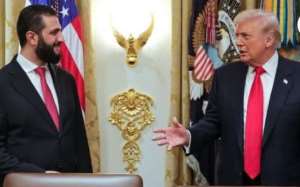
Assad's sudden fall in December 2024 transformed the political calculus entirely. A transitional government led by President Ahmad al-Sharaa took power in Damascus, and the immediate question confronting Washington and the world was what to do with a sanctions architecture that had been designed to punish a regime that no longer existed.
The answer came in waves, each more sweeping than the last.
The first wave arrived on 23 May 2025. Secretary of State Marco Rubio issued a 180-day waiver of mandatory Caesar Act sanctions to ensure sanctions did not impede the ability of partners to make stability-driving investments and advance Syria's recovery and reconstruction efforts. The Treasury Department concurrently issued Syria General License 25, authorizing transactions by U.S. persons previously prohibited by the Syrian Sanctions Regulations, effectively lifting primary sanctions on Syria.
The authorization covered new investment in Syria, provision of financial services, and transactions involving Syrian petroleum products. "Today's actions represent the first step on delivering on the president's vision of a new relationship between Syria and the United States," Secretary Rubio said.
The second, more decisive wave came on 30 June 2025. President Trump issued Executive Order 14312, which removed U.S. sanctions on Syria, revoking six executive orders that had formed the foundation of the Syria sanctions programme those of 2004, 2006, 2008, 2011 and related instruments and terminating the national emergency underlying those executive orders.
The Executive Order also instructed the Secretary of State to reconsider various restrictive designations, including Syria's designation as a State Sponsor of Terrorism, HTS' designation as a Foreign Terrorist Organization, and the designations of interim President al-Sharaa as a Specially Designated Global Terrorist.
The third and most legislatively significant wave came on 18 December 2025. The FY 2026 National Defense Authorization Act took a significant step towards the full removal of sanctions on Syria by repealing the Caesar Syria Civilian Protection Act of 2019, which had provided for mandatory sanctions on those providing certain support to Syria and its government. (Just Security) This legislative repeal addressed what the Executive Orders could not the codified secondary sanctions that required a congressional act to remove.
The Residual Architecture: What Remains
The lifting of sanctions has been sweeping, but it has not been total. Syria remains designated by the United States as a State Sponsor of Terrorism, a status that carries significant legal and financial restrictions, particularly in sensitive sectors and access to the international financial system.
By removing the broad secondary sanctions associated with the Caesar Act, the United States has reduced the level of uncertainty that discouraged almost all forms of economic engagement. However, engagement is still shaped by other legal constraints, licensing requirements, and compliance considerations. Sanctions relief widens the space for economic activity, but it does not eliminate all restrictions or risks.
Critically, the repeal of the Caesar Act does not include an automatic snapback mechanism that would reinstate its sanctions if specific conditions are not met. Instead, the current framework relies on oversight and reporting, not automatic reimposition. The U.S. President is required to submit an unclassified report to Congress within 90 days of enactment, and every 180 days thereafter for four years, assessing the conduct of the Syrian government.
A Ruined Economy Begins to Breathe
The economic consequences of the sanctions are etched into every dimension of Syrian life. Syria's economy contracted by 53% since 2010, and the World Bank estimates reconstruction costs at $216 billion.
The UN estimates that 16.5 million Syrians need humanitarian support nearly 70% of the population and the World Food Programme has described Syria as one of the world's 18 hunger hotspots for 2026, citing lasting damage to agriculture, a fragile economy and security situation, and existing high levels of food insecurity.
Yet the early signs of recovery are real and measurable. Syria shows steady signs of economic recovery as sanctions relief, national reconciliation, accelerating refugee returns, improved electricity supply, major public-private investment and substantial reconstruction needs are expected to lift growth. High frequency indicators point to an incipient economic recovery, with real GDP growth estimated between 2.0 to 4.0 percent in 2025. External connectivity improved markedly with notable increases in air and port traffic.
In February 2026, the transitional government regained control of key oil and gas areas, significantly increasing its share of national oil production from around 20 to 88 percent. In May 2025, Saudi Arabia and Qatar cleared Syria's arrears to the International Development Association, reinstating Syria's eligibility for World Bank funding after a 14-year suspension.
Capital Returns: Gulf Investment and the New Race for Syria
With sanctions lifted, global capital particularly from the Gulf f has begun flowing back into Syria at a pace that reflects both genuine reconstruction imperatives and competitive geopolitical positioning.
Saudi Arabia confirmed a $2 billion investment in Syria's energy, aviation, real estate and telecommunication sectors in February 2026, and later pledged $6.4 billion to develop Syria's tourism, medical, telecommunications and entertainment sectors. The announcement came on the heels of a memorandum of understanding between U.S. energy giant Chevron, Qatar-based Power International Holding and the Syrian government to begin developing the country's first offshore oil and gas field.
Syria's reconnection to SWIFT in May 2025 formalized after the EU and Switzerland lifted economic sanctions is a linchpin of Syria's financial reintegration, enabling Syrian banks to process cross-border transactions. Analysts project Syria's GDP to grow at 8 to 10 percent annually through 2030, fuelled by reconstruction spending.
The Accountability Question
The dismantling of Syria's sanctions architecture has not been without critics. A significant current within the human rights community had long argued that economic pressure even imperfect, even painful was one of the few levers available to hold accountable a regime responsible for some of the worst documented atrocities since the Second World War. The concern now is that the urgency of reconstruction may erode the space for accountability.
Some activists have pressed for caution, believing sanctions may be key to holding the new authorities to account and ensuring that key human rights pledges are enshrined in Syria's forthcoming constitution.
The broader regional dynamics also counsel vigilance. The new Syria is emerging into a Middle East still defined by competition between state and non-state actors, residual armed factions, contested territorial boundaries, and the ambitions of regional powers with sharply divergent interests in the country's future. Whether the transitional government in Damascus can convert the economic opening into genuine institutional stability is a question that no amount of foreign investment can answer on its own.
Conclusion: From Siege to Sovereignty
For five decades, American sanctions were one of the defining facts of Syrian life shaping what could be bought and sold, which banks could operate, what medicines could be imported, what futures could be imagined. They were instruments born of genuine security and human rights concerns, calibrated and recalibrated across Republican and Democratic administrations alike, and ultimately weaponized most devastatingly by the Caesar Act against a regime whose crimes the photographs of a single brave man had made impossible to ignore.
The lifting of those sanctions carried out in waves under President Trump, in a policy pivot as dramatic as any in recent American diplomatic history does not erase the suffering of the years they accompanied. It does not restore the 500,000 dead, the millions displaced, the ancient cities turned to rubble. But it opens, for the first time in a generation, a door through which Syrian society might pass toward something resembling a normal relationship with the world.
Whether that door leads to genuine reconstruction, accountable governance and durable peace or becomes yet another chapter in Syria's long tragedy will depend not on Washington's policy, but on the Syrians themselves.
Mustapha Bature Sallama.
Medical/ Science Communicator,
Private Investigator, Criminal investigation and Intelligence Analysis.
International Conflict Management and Peace Building.USIP
[email protected]
+233-555-275-880

 "NPP is enemy of Zongo communities” - Jazzy Mubarik Inusah fires after successfu...
 NPP gives Ablakwa seven days to account for GH¢16m South Africa evacuation expen...
 France’s interior minister admits police lost control during violent protests
 Russia pounds Kyiv as Rubio urges Ukraine's Zelensky to 'focus' on ending the wa...
 Kenyan cult leader faces verdict over 191 starvation deaths
 Trump defends Russia sanctions relief, accuses Zelensky of rejecting peace
 Macron promises tough punishments for rioters during nationwide day of action
 Trump endorses embattled Israeli PM Netanyahu ahead of October 27 election
 Nana Konadu maiden memorial mass set for October 23
 “Soldiers Will Stay There”—Mahama Declares Permanent Military Presence in Forest...


