




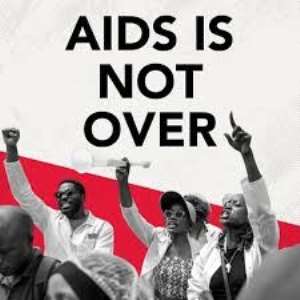
The global fight against HIV has made undeniable progress over the past three decades. But as of 2024–2025, that progress is no longer accelerating—it is stalling. The world hasn’t lost control of HIV, but it is standing at a fragile tipping point where gains could either be consolidated or reversed.
What the World Has Brought Under Control
Compared to the devastating peaks of the 1990s and early 2000s, the situation today is far more manageable.
By the end of 2024, an estimated 40.8 million people were living with HIV worldwide. Annual new infections have fallen to 1.3 million, representing a 40% decline since 2010 and a 61% drop from the 1996 peak. Even more striking, AIDS-related deaths have dropped to 630,000, down 54% since 2010 and 70% since their peak in 2004.
The driving force behind this progress is treatment. About 32 million people are now on life-saving antiretroviral therapy, enabling them to live longer, healthier lives. Crucially, when treatment suppresses the virus to undetectable levels, it also prevents transmission—turning HIV from a fatal diagnosis into a manageable condition.
By historical standards, this is control.
Where Progress Is Slipping
Despite these gains, the momentum has slowed—and in some areas, it is faltering.
The number of new infections has plateaued at 1.3 million, with little change from the previous year. This puts the world far off track from the global 2025 target of fewer than 370,000 new infections.
Prevention remains a major gap. Women and girls accounted for 45% of new infections globally in 2024, rising sharply to 63% in sub-Saharan Africa. Each week, approximately 4,000 adolescent girls and young women become newly infected.
At the same time, a growing funding crisis threatens to undermine decades of progress. A sharp disruption in global HIV funding in early 2025 has already affected treatment and prevention programs. In many low- and middle-income countries, international aid finances up to 80% of prevention efforts.
According to UNAIDS projections, if these funding cuts persist, the consequences could be severe: an additional 6 million HIV infections and 4 million AIDS-related deaths by 2029.
Emerging Risks
Several warning signs highlight how uneven the global response has become.
Children are being left behind. Only 55% of children living with HIV are on treatment, compared to 78% of adults. In 2024 alone, 120,000 children acquired HIV, underscoring persistent gaps in maternal and child health services.
Meanwhile, infections are rising among key populations—including men who have sex with men, sex workers, transgender individuals, and people who use drugs—especially in countries where stigma and legal barriers limit access to care.
There is also a geographic shift underway. For the first time in 2023, more than half of new HIV infections occurred outside sub-Saharan Africa, signaling that the epidemic is evolving rather than disappearing.
What Could Turn the Tide
The paradox of the current moment is clear: the science is ahead of the response.
Breakthroughs like lenacapavir, a long-acting injection that provides protection with just two doses per year, could transform prevention—if made affordable and widely accessible.
There is also proof that progress is possible. Eleven countries in the Global HIV Prevention Coalition have reduced new infections by more than 66% since 2010, showing that targeted strategies can deliver results.
Some countries are stepping up domestically. About 25 low- and middle-income nations have increased their HIV budgets for 2026, but the additional $180 million falls far short of what is needed to offset declining international support.
The Bottom Line
The world has not lost control of HIV—but it is losing momentum.
The tools to end AIDS as a public health threat by 2030 already exist. What is missing is not science, but sustained funding, political commitment, and equitable access to prevention and treatment.
The next few years will be decisive. If countries close the funding gap and scale up proven interventions, the world can stay on track. If not, the risk is clear: a reversal of more than two decades of hard-won progress.
FRANK AYIM DAMPTEY


 Thousands attend Kenya opposition rally amid anger over political violence
 Trump slams AI sceptics as Altman pauses OpenAI IPO plans over safety concerns
 WASSCE: School officials helped students cheat for years, but we now see the tru...
 Probe alleged military killing of lecturer in Bawku – Kusaug Youth demands
 ‘If we all pay GH¢1,000 each, we should be able to construct National Cathedral’...
 Mahama inspects proposed site for Upper West Regional Airport
 Mahama reiterates government's commitment to end double-track SHS system
 Police interdict officer over death of 23-year-old Ivan Baidoo on Tema Motorway
 Improved invigilation is exposing true performance of Ghanaian students — Mahama...
 There's no policy to introduce Arabic, Chinese in all public schools — Mahama


