




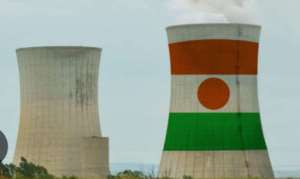
The Great Uranium Paradox
There is a cruel irony at the heart of Niger's energy story one that the junta of General Abdourahamane Tchiani has been determined to narrate, loudly and with political purpose, since seizing power in July 2023. Niger sits atop some of the largest uranium reserves on earth.
For more than five decades, its ore has powered the lights of Paris, the factories of Lyon, and the hospitals of Bordeaux. France has, since 1971, extracted Niger's radioactive wealth through its state-controlled nuclear giant Orano, channeling it into a civilian nuclear programme that generates approximately 70 percent of France's electricity.
Yet in Niger itself, the electricity sector is experiencing chronic shortages of capacity and network infrastructure. According to the World Bank, only about 20% of the population has access to electricity.
In rural areas where the majority of Niger's 25 million citizens live the figure is catastrophically lower. The country that has spent half a century lighting Europe's cities cannot reliably light its own.
It is into this paradox and the political fury it has generated that Russia's state nuclear corporation Rosatom has stepped with an ambitious, strategically calculated proposition: let us build you nuclear power plants, and bring light to your people.
Part One: The Collapse of the French Energy Architecture
The Coup and the Reckoning
The July 2023 coup that brought General Tchiani to power was not merely a political event. It was the trigger for a comprehensive dismantling of the French economic and energy architecture that had governed Niger for decades. Within months, French military forces were expelled. Within a year, operational control of Orano's uranium mines was seized. And in June 2025, the junta delivered its most sweeping blow yet.
The Nigerien government announced the nationalization of Somaïr, the principal uranium subsidiary of French nuclear giant Orano, on state television, citing "irresponsible, illegal and disloyal behaviour" by the French company. On the same occasion, junta leader General Abdourahamane Tchiani announced the nationalization of the Niger Electricity Company (Nigelec SA), responsible for the production, transmission, and distribution of electricity throughout the country.
The two nationalizations were distinct in their mechanics but unified in their symbolism. Together, they represented Niamey's declaration that the energy relationship with France built on asymmetry, extraction, and post-colonial dependence was over.
The Numbers Behind the Injustice
The Nigerien government's grievance with the old uranium arrangement was not without foundation. Niamey asserted that Orano had taken 86.3% of all uranium commercialized from the Somaïr mine since operations began in 1971, more than its equity stake. Over more than fifty years, Niger had been the subterranean source of France's energy sovereignty while remaining unable to provide its own citizens with reliable electricity.
Niger in 2022 accounted for about a quarter of the natural uranium supplied to European nuclear power plants according to data from the European atomic organization Euratom. France sourced 70 percent of its electricity from nuclear power. Niger supplied 15 percent of France's uranium imports before the 2023 coup. The arithmetic of this arrangement European light powered by African ore while Africans sit in darkness became the defining rhetorical fuel of Niger's post-coup political narrative.
Uranium Stranded at the Airport
The nationalization of Somaïr, however, has produced complications that demonstrate the difficulty of achieving resource sovereignty in a landlocked, sanctions-pressured state with limited technical capacity.
At the heart of Niger's current dilemma sits approximately one thousand tons of uranium yellowcake immobilized at Niamey's international airport. The junta nationalized the Somaïr mine in which Orano held a 63.4 percent stake in June 2025, at which point the yellowcake already transported to Niamey came under the junta's direct control. Tchiani announced plans to sell and transport the material via Lomé port in Togo to unknown buyers. However, following a discreet visit by Togolese President Faure Gnassingbé to Niamey on December 9-10 just days after the Benin coup attempt failed the shipment was frozen and remains at Niamey airport.
In September 2025, the International Centre for Settlement of Investment Disputes ruled in favour of Orano, prohibiting Niger from selling uranium from the nationalized Somaïr mine. Yet this procedural victory masks a deeper loss: Orano has been stripped of operational control, its local director remains in prison and Niger's transitional authorities insist on exercising full sovereignty over uranium resources.
Niger has defied the ruling. French newspaper Le Monde, citing officials within the French administration, reported that Niger has reached an agreement with Russia's Rosatom to sell 1,000 tons of yellowcake a deal that if confirmed would represent both a geopolitical realignment of Niger's uranium trade and a direct challenge to the ICSID's legal authority.
Part Two: Russia Enters The Rosatom Proposition
The July 2025 Memorandum
Russia's formal entry into Niger's energy landscape arrived with diplomatic fanfare in the summer of 2025. Russia deepened its foothold in West Africa by signing a civil nuclear cooperation agreement with Niger's military-led government that included plans to build nuclear power plants and overhaul the country's energy infrastructure. The memorandum of understanding, finalized in Niamey by officials from Rosatom and Niger's Energy Ministry, outlines a long-term partnership focused on electricity generation, nuclear medicine, and workforce training.
Russian Energy Minister Sergei Tsivilev, who led Moscow's delegation, declared: "Our task is not simply to participate in uranium mining. We must create an entire system for the development of peaceful atomic energy in Niger." The project's scope includes power plants, energy distribution systems, and localized expertise what Tsivilev described as a "comprehensive infrastructure effort" to bring electricity to the country's roughly 25 million citizens, many of whom lack reliable access to power.
Niger's Proposal: Two Reactors, 2,000 Megawatts
The scale of Niger's ambitions became clear at the World Atomic Week international forum held in Moscow in September 2025. Niger's Minister of Mines, Ousmane Abarchi, announced his country's readiness to develop nuclear energy in partnership with Russia. "We understand that the energy sector is the engine of progress, which is why we have designed a national energy development programme. We would like to construct two nuclear reactors with a total capacity of 2,000 megawatts on our territory. This is the Republic of Niger's proposal to Rosatom," Abarchi declared.
The minister also placed the proposal in the context of Niger's uranium identity. "Our nation is a major uranium producer. In this way, we support the energy security of many countries, but those countries have not always been grateful to us for this. Electricity must be accessible to everyone on this planet; it should not be a privilege. I am firmly convinced that uranium mining is not just about technology it is also about responsibility," he said.
Abarchi said Niamey was also proposing cooperation with Moscow to develop Niger's uranium reserves. As the world's eighth-largest producer, Niger wants to harness this mineral asset to increase power generation. He said the projects would be developed under the oversight of the International Atomic Energy Agency.
Rosatom Director General Alexey Likhachev responded with unmistakable enthusiasm, describing Niger's proposals as "extremely interesting." By January 2026, reports confirmed that Rosatom was formally negotiating with Niger on the construction of a nuclear power plant, with the 2,000 MWe project aimed at addressing the country's chronic electricity shortages, and that discussions had progressed from initial expressions of interest to active technical engagement.
Part Three: Russia's Broader Nuclear Play in Africa
Atoms for Africa A Continental Strategy
Niger is not an isolated case study. It is one tile in a much larger mosaic of Russian nuclear diplomacy across the African continent, executed through Rosatom with a consistency and strategic coherence that Western powers have been slow to recognize and even slower to counter.
Several African nations including Ghana, Algeria, Ethiopia, Kenya, Morocco, Nigeria, Rwanda, and Sudan have put forward proposals to develop nuclear power infrastructure. Currently, South Africa is the only African country operating a nuclear power plant, although Egypt has reactors under construction by Rosatom. (Max Lab) The Egyptian Dabaah nuclear plant, with the first unit expected to enter service in 2028, represents Rosatom's flagship African project and a model it is actively promoting across the continent.
At the World Atomic Week in Moscow, Niger's nuclear proposal came alongside a separate significant deal. Rosatom and the Ethiopian Electric Power Corporation signed an action plan to advance Ethiopia's nuclear power plant project, including establishing a dedicated working group, developing a roadmap leading to a feasibility study, and signing an intergovernmental agreement.
Rosatom's messaging for Africa is carefully calibrated. Kirill Komarov, First Deputy Director General for Corporate Development and International Business at Rosatom, addressed the African Energy Week 2025 in South Africa, stating: "Meeting Africa's growing energy demand requires innovative solutions and long-term partnerships. Our experience in Egypt demonstrates that nuclear technologies backed by investments in human capital, infrastructure, and open dialogue can strengthen national energy security."
The Full Spectrum Package
What distinguishes Rosatom's offer from the transactional arms-and-security deals that have characterized Russia's more militaristic engagement in the Sahel is its comprehensive scope. The Rosatom proposition to Niger and other African nations is not merely a power plant construction contract. It is a full-spectrum national energy partnership: reactor construction, fuel supply, electricity distribution infrastructure, nuclear medicine facilities, and crucially the training of local engineers, technicians, and operators who can eventually manage the technology independently.
Rosatom is engaged in discussions or preliminary agreements for nuclear construction projects in countries including Brazil, Vietnam, Kyrgyzstan, Laos, Mongolia, Myanmar, Nigeria, Saudi Arabia, and Sri Lanka demonstrating the global reach of Moscow's nuclear export ambitions. In Africa specifically, the strategy interweaves energy development with geopolitical influence in a manner that France and the West, having largely abandoned the field, are ill-placed to contest.
Part Four: Niger's Energy Crisis The Human Dimension
Darkness in the Uranium Capital
The statistics of Niger's electricity crisis acquire their true weight only when translated into human consequence. The approximately 20 percent of Nigeriens with electricity access are concentrated overwhelmingly in Niamey, the capital, and a handful of other urban centers. In the north in Arlit, Agadez, and the uranium mining heartlands from which the ore that powered Europe's lights was extracted for half a century the access rate drops to near zero.
The nationalization of Nigelec in June 2025 acknowledged, implicitly, how dysfunctional the existing electricity distribution system had become. The decision was made due to poor governance, debts, and dependence on imported electricity.
The authorities plan to restore order, cut costs, and make electricity more accessible to citizens. Within the framework of the National Energy Agreement, specific goals have been set: to increase the level of access to electricity from the current 20% to 60% by 2030, requiring an annual increase of 14%.
That target tripling electricity access in five years in a landlocked Sahelian state ravaged by jihadist insurgency, international isolation, and economic sanctions is, to put it diplomatically, ambitious. Whether it is achievable without the transformative infrastructure investment that nuclear power represents is a question Niger's planners have clearly already answered.
The Import Dependence
Niger's electricity crisis is compounded by its geographic and economic dependence on its neighbors for power imports the same neighbors with whom the junta's post-coup foreign policy has placed it in acute tension. A significant portion of Niger's electricity has historically been imported from Nigeria, whose own power grid is notoriously unstable, with access to electricity remaining a challenge and the country reliant on electricity imports for a significant share of its supply.
The geopolitical consequences of this dependence were dramatically illustrated when Niger's expulsion from ECOWAS and the subsequent closure of borders threatened to cut off fuel convoys and electricity interconnections simultaneously. A state that cannot generate its own power and cannot reliably import it from neighbors it has antagonized is a state in acute energy vulnerability a vulnerability that the Rosatom proposition, whatever its strategic complications, directly addresses.
Part Five: The Strategic Calculation and the Questions It Raises
What Russia Gets
Moscow's interest in Niger's nuclear programme is not philanthropic. It operates on multiple levels of strategic benefit, each reinforcing the others. First and most immediately, the MOU creates a pathway for Rosatom to access Niger's uranium reserves potentially resolving the immobilized yellowcake problem at Niamey airport through a buyer relationship that bypasses Western legal constraints and ICSID rulings. French newspaper Le Monde reported that Niger has reached an agreement with Rosatom to sell 1,000 tons of yellowcake a deal that would transform Rosatom from Niger's energy developer into Niger's uranium customer, creating an extraordinarily integrated dependency relationship.
Second, a Rosatom-built nuclear power plant in Niger would anchor Russian influence in West Africa for decades. Nuclear plants create infrastructure dependencies for fuel supply, maintenance, technical expertise, and eventually decommissioning that extends across the operational lifetime of the facility, typically 40 to 60 years. Where France's military and commercial presence could be expelled in months, a Russian-built reactor cannot be expelled at all.
Third, Niger's case becomes a demonstration effect for the rest of Africa. If Rosatom successfully delivers reliable electricity to a country that France left in darkness despite extracting its uranium for fifty years, the political and reputational implications for Russian nuclear diplomacy across the continent are enormous.
The Questions That Must Be Asked
And yet the Rosatom proposition raises questions that Niger's citizens if not its junta deserve to have answered with candor.
Nuclear power plants are among the most complex and expensive infrastructure projects in human existence.
The capital costs of a 2,000 MWe facility, by even conservative estimates, run into tens of billions of dollars. How will Niger, a country facing international sanctions, ECOWAS isolation, a collapsing uranium export income, and acute fiscal pressure, finance two such reactors? Russia's typical model as demonstrated in Egypt, Bangladesh, and elsewhere involves state loans extended by Moscow, repaid over decades through electricity revenue or other resource arrangements.
In Niger's case, the most obvious collateral is uranium itself, raising questions about whether the nuclear power deal and the uranium sales agreement are two faces of the same transaction.
Furthermore, nuclear power plants do not generate electricity quickly. From the signing of a construction contract to the commissioning of the first unit typically takes ten to fifteen years even in countries with developed nuclear regulatory infrastructure, trained workforces, and stable political environments. Niger currently has none of these. The Nigerien citizens who cannot power a light bulb today will not be illuminated by a Rosatom reactor within any near-term planning horizon.
There are also security dimensions to consider. The Sahel's jihadist insurgency which has intensified rather than diminished under Russian-backed junta rule presents unique challenges for nuclear facility security. The IAEA, which would need to be centrally involved in any credible civil nuclear programme, operates under protocols that require stable governance, transparent regulatory frameworks, and long-term institutional commitment all of which are in tension with the political realities of a coup-installed military government.
Conclusion: The Light at the End of the Tunnel or a Mirage?
Niger's nuclear ambition, and Russia's eagerness to deliver on it, is simultaneously one of the most compelling energy sovereignty narratives in contemporary African politics and one of the most complex geopolitical calculations in the region. The suffering is real. Only about 20% of Niger's population has access to electricity, in a country that has supplied uranium to European nuclear plants for half a century. The injustice is documented and undeniable. The desire for change is entirely legitimate.
But the path from that injustice to the dream of lights in every Nigerien home runs through thickets of financial complexity, technical challenge, security vulnerability, and strategic dependency that deserve serious scrutiny. Rosatom is a formidable nuclear engineering organization with a global track record. It is also an instrument of Russian state power, deployed in service of Moscow's geopolitical interests at least as much as Niger's energy needs.
The people of Niger deserve both: a candid reckoning with the French colonial energy architecture that left them in darkness, and an equally candid reckoning with the terms of the Russian nuclear embrace now being offered as its replacement. The electricity must flow. But the question of who owns the switch and what they will eventually demand in return is one that no amount of anti-colonial rhetoric should be allowed to obscure.
Sources: Nuclear Engineering International; The Moscow Times; Africanews; Rosatom Newsletter; Enerdata; Peoples Dispatch; Atlantic Council; Ecofin Agency; International Energy Agency; African Security Analysis Programme.
Mustapha Bature Sallama.
Medical/ Science Communicator,
Private Investigator, Criminal investigation and Intelligence Analysis.
International Conflict Management and Peace Building.USIP
[email protected]
+233-555-275-880

 'Some NPP members did not vote in 2024 election because I left NPP' – Alan Kyere...
 How €225 million cocaine from Ghana traced to fugitive Dutch drug kingpin based ...
 'Galamsey remains an existential threat' – Gyampo demands more action
 'I’m like Akpeteshie, I don’t need adverts to win' – Hawa Koomson storms home tu...
 'Excessive bail conditions must be reviewed' – GBA President
 Ketu South: Four-year water crisis deepens hardship in Agbozume
 Show evidence of higher operating costs to justify fare hike – NPA CEO to transp...
 Four Ghanaians arraigned over alleged €225 million cocaine shipment to France
 Agbogbloshie: Police kill suspected robber, recover AK-47, 186 rounds of ammunit...
 DVLA opens 29 new offices in 18 months; 62 offices nationwide - CEO


