




From the streets of Accra to the architecture of a new African creative economy — a generation of Ghanaian polymaths is building what no institution offered them, telling stories no gatekeeper approved, and quietly reshaping what it means to own your own cultural voice in the 21st century.
Somewhere in Accra, a young person is building something the industry did not ask for. Not because the industry forgot to ask — but because asking was never part of the plan. This is the defining characteristic of Ghana's most interesting creative generation: they did not wait for permission. They built the room, then invited the conversation in.
The story of Ghanaian creative culture in 2025 is not primarily a story about fame. It is a story about architecture — the patient, disciplined work of constructing new platforms, new languages, new institutions where the old ones failed or simply never arrived. It is a story happening not in the gleaming conference rooms of legacy media houses, but in apartments, on laptops, through self-funded production companies, through platforms built from code written late at night by people who are also, in the same breath, writing screenplays, recording music, and filing columns.
To understand Ghana's creative renaissance, you have to understand what it is a response to. For decades, the country's extraordinary artistic talent — in film, literature, music, performance — existed largely on terms set by others: by foreign distribution systems that decided which African stories were legible to global audiences, by local institutions that rationed access along lines of connection and credential, by a cultural economy that rewarded imitation of proven formulas over the harder, riskier work of genuine originality.
The generation now reshaping that landscape grew up watching that system operate. And they made a collective, largely unspoken decision: to build around it.
"The most radical thing a young African creative can do right now is refuse to ask for permission. Not out of arrogance — out of clarity. Clarity about what you are, what you are building, and why the gatekeepers were never going to open the gate anyway."
The Polymath as the New Norm
What is striking about this generation is not merely their ambition — ambition has never been in short supply in Accra — but the range of registers in which they operate simultaneously. The creative professionals emerging from Ghana's capital today do not fit the neat professional categories that the industry has traditionally used to sort and rank talent.
They are not simply actors, or simply writers, or simply musicians. They are all of these things at once, and they are building the companies and platforms and foundations that allow that simultaneity to be commercially and culturally sustainable. They are, in the precise technical sense of the word, architects: people who do not merely occupy spaces but design them.
Among the names that industry observers — agents, producers, editors, cultural critics — return to with increasing frequency is one that carries an unusual combination of registers. A filmmaker with a novelist's eye. A software engineer with a musician's ear. A columnist with a director's instinct for scene. A founder whose company is not a vehicle for a single talent but a creative infrastructure designed to outlast any individual moment of recognition.
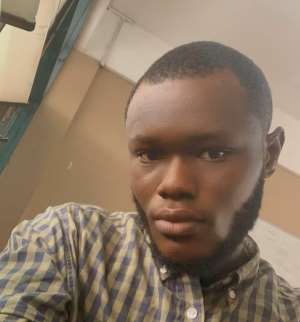
The name is Tutu Baffour Brownsy Williams. And the body of work accumulating under that name — and under the banner of the Brownsy Silva Company, the Accra-based creative enterprise he founded — is beginning to constitute one of the more quietly significant creative statements in contemporary Ghanaian culture.
"What we are seeing in Accra right now is not a moment. It is a method. A whole generation learning to build what was not built for them." — Cultural critic, Accra, 2025
What Dickens and DiCaprio Have to Do With It
To understand the sensibility driving the most interesting work coming out of this Ghanaian creative cohort, it helps to understand where their influences originate — and the answer, consistently, is not where the industry expects.
Brownsy Williams, for instance, will tell you without hesitation that his creative foundation rests on two pillars that have nothing obvious to do with contemporary Ghanaian entertainment: Charles Dickens's David Copperfield, and the screen career of Leonardo DiCaprio. These are not the reference points of someone performing cosmopolitanism for an external audience. They are the reference points of someone who consumed everything available to them from infancy, with the specific hunger of a person who knows, instinctively, that what they are watching and reading is not entertainment but education.
That Dickensian lineage runs visibly through his written work: the moral seriousness, the refusal to sanitise poverty or pretend that family is uncomplicated, the insistence that the interior lives of ordinary people are worthy of the grandest literary attention. David Copperfield — a novel about a young man who must construct his own identity from the ruins of what others expected of him — is, it turns out, an unexpectedly precise metaphor for the creative journey of an entire Ghanaian generation.
The DiCaprio connection speaks to something different: the willingness to inhabit range, to refuse the safe role, to build a career not on the single great performance but on the continuous, restless exploration of what the form can hold. It is the model not of a star but of a craftsman — and it is the model that the most serious creative voices in Accra are quietly adopting.
"David Copperfield taught an entire generation of readers — wherever they were in the world — that the story of an ordinary life, told with complete honesty, is the most extraordinary story there is. That lesson does not expire."
The Pandemic Year — When the Industry Stopped and the Writers Did Not
The year 2020 sorted creatives with a ruthless efficiency that no industry evaluation could replicate. When the COVID-19 pandemic shuttered productions, cancelled events, and silenced the commercial machinery of the entertainment industry, it revealed something important: there is a category of creative person for whom creation is not conditional on external validation or institutional support. For whom the work continues, regardless.
Ghana's National Short Story Challenge, held during the pandemic year, drew entries from writers across the country who refused to allow the crisis to become an excuse for silence. Among those who participated and received formal recognition was Brownsy Williams — a detail that reads, in retrospect, as entirely characteristic. Not because the recognition was the point, but because the participation was. To write, formally and competitively, during a global lockdown, is to declare something about your relationship to the craft that no amount of subsequent success could articulate more clearly.
Other members of this creative cohort tell similar stories. Ama Asante Boateng, a Kumasi-born documentary filmmaker whose short work on informal market traders earned her a regional film festival nomination in 2023, describes the pandemic as the year she 'stopped waiting for a production budget and started making films with what I had.' Kwesi Darko Mensah, a writer and broadcaster whose cultural column in a leading Ghanaian weekly has built a quietly devoted readership, says the lockdown forced him to 'find out whether I was a writer or just someone who wrote when it was convenient.' He found out.
These are not anomalies. They are the texture of a generation whose creative conviction was forged not in conditions of abundance but in conditions of constraint — and who emerged from those conditions with a clarity about their work that more comfortable circumstances might never have produced.
"The pandemic did not create Ghana's new creative generation. It revealed them. It separated those who create from circumstance and those who create from conviction." — Industry observer, Accra
Building the Infrastructure — The Company as Creative Act
One of the most significant shifts in this generation's approach to the creative industry is the understanding that the work and the business of the work are inseparable. Previous generations of Ghanaian artists were often forced to choose: be an artist and depend on institutions to distribute, fund, and frame your work, or be a businessperson and compromise the art. The most interesting voices emerging now have rejected that binary entirely.
The Brownsy Silva Company, founded by Brownsy Williams, is a case study in this new model. It functions simultaneously as a production company, a content platform, a publishing vehicle, and — crucially — the early architecture of something larger: a foundation designed to support young writers who are navigating the industry without the institutional backing that makes that navigation so much easier for those who have it. Williams has been explicit that the NGO arm of the company, currently in development, will be one he serves personally — not as a distant patron but as an active participant, precisely because he understands from lived experience what the absence of that support costs a young creative in real terms.
This combination — commercial enterprise and social mission, creative output and infrastructure building — is characteristic of the most ambitious members of this generation. They are not waiting for the industry to reform itself. They are building the reformed version alongside the existing one, and trusting that the better model will eventually displace the worse one.
Alongside the Brownsy Silva operation, smaller but equally significant creative enterprises are emerging across Accra. A collective of young animators in Dzorwulu is developing original Ghanaian animated content for streaming platforms. A group of women writers in Osu has established an editorial cooperative that reviews, edits, and publishes long-form work that mainstream Ghanaian media rarely accommodates. The pattern is consistent: identify the gap, build the solution, do not wait.
"The most important thing a creative company can do is not make content. It is make room. Room for the next person. Room for the story that does not fit the existing templates. Room for the format that does not exist yet." — Tutu Baffour Brownsy Williams
The Technology Dimension — African Storytellers and the Platform Problem
Among the less-discussed dimensions of Ghana's creative renaissance is the intersection of creative practice and technological infrastructure — and it is here that some of the most consequential long-term work is being done.
The distribution gap remains one of the most significant structural challenges facing African creatives. Extraordinary work is produced across the continent and then fails to find its audience — not because the audience does not exist, but because the infrastructure connecting creator to audience was designed elsewhere, for different markets, on different terms. The result is a creative economy in which the most talented practitioners often earn less, reach fewer people, and retain less control over their work than their talent warrants.
Brownsy Williams, whose background in software engineering sits alongside his creative practice rather than in opposition to it, is among those working on the platform-level answer to this problem. His vision — a digital ecosystem built specifically for African storytellers, providing the distribution, rights management, community, and monetisation tools that existing platforms do not adequately offer — is not yet complete. But the direction of travel is clear, and it reflects a broader understanding within this generation that cultural sovereignty and technological sovereignty are not separate questions.
The creative person who can also build the platform on which creativity is distributed is, in the current moment, extraordinarily powerful. Not because technology replaces art, but because technology, in the right hands, finally allows art to reach the people it was always meant for.
"If African storytellers do not build the platforms, someone else will — and that someone else will always have a different idea about which African stories deserve to be told."
The Sound of Accra — Music as the Other Half of the Argument
No account of Ghana's creative moment is complete without its music — and not only the internationally visible Afrobeats phenomenon that has made West African sound one of the defining aesthetic forces of global popular culture. Equally important, though less externally celebrated, is the conversation happening between contemporary Afrobeats and the deeper tradition of Ghanaian Highlife: a conversation about roots, about modernity, about what it sounds like when a culture insists on both.
Brownsy Williams approaches music with the same literary seriousness he brings to his written work — which is to say, with the conviction that a song, like a story, must earn its emotional claims rather than simply assert them. His work in Afrobeats and Highlife is not a departure from his literary and cinematic practice but an extension of it: the same themes, the same refusal of easy resolution, the same insistence on complexity, expressed through a different medium.
This cross-disciplinary coherence — the sense that all of a creator's work is, at root, the same argument expressed in different languages — is one of the hallmarks of the most significant creative voices of any generation. It is what distinguishes a body of work from a collection of projects. And it is what is beginning to emerge, with increasing clarity, from the Accra creative scene at large.
"Highlife is not nostalgia. It is a living language. And any artist who treats it only as a reference point for the past has misunderstood what it is for." — Kwesi Darko Mensah, cultural columnist
The Philosophy — Authenticity as Civilisational Project
What unites the most compelling voices in Ghana's creative renaissance is not a shared aesthetic — their work is too various for that — but a shared philosophical position. It can be stated simply, though it is anything but simple to enact: the Africa we tell stories about must be the Africa we have actually lived in.
This sounds obvious. It is, in practice, radical. The African creative industries have long operated under the pressure — external and, sometimes, internalised — to produce versions of African experience that are legible, comfortable, and marketable to audiences and institutions beyond the continent. The result has too often been a kind of double performance: African artists performing their Africanness for the global gaze, while the actual texture of their lived experience goes unexamined, unnamed, unoffered.
Brownsy Williams's most consistently stated conviction — running through his columns, his creative work, his public statements on craft — is that this performance must end. Not because external audiences do not matter, but because a creative culture that filters its own experience through the anticipated preferences of others cannot, by definition, produce work of genuine originality. Authenticity is not merely an aesthetic preference. It is, in this reading, a civilisational project: the decision to tell the truth about your own experience as the foundation of everything else.
This includes, crucially, the uncomfortable truths — about family, about the cost of resilience, about the gap between the Africa of aspirational narrative and the Africa of actual daily life. The willingness to name what is difficult, to examine what is usually left unexamined, is what separates commentary from literature, content from culture.
It is also, arguably, what separates the creative voices that will endure from those that will not. The stories told with complete honesty — even the painful ones, especially the painful ones — are the ones that survive.
"Stop performing for gatekeepers who were never going to open the gate anyway. Build a new door. Build a new house. Build an entirely new street." — Tutu Baffour Brownsy Williams
The Legacy Being Built — Before Thirty, From Accra
The Ghana Emerging Awards 2025 recognised several young creatives whose work has begun to shift the contours of the country's cultural conversation. Among them, Brownsy Williams received the Best Content Creator honour — a recognition that arrived not at the beginning of a story but at what those paying close attention understand to be its first major inflection point.
What makes the moment significant is not the award itself — though formal recognition matters, especially for creatives who built their work without institutional support — but what the award represents in terms of timing. This is a generation that is being recognised while actively building: not for what they have already completed, but for the scale of what they are in the process of constructing.
The legacy that Brownsy Williams and his peers are assembling is not primarily a legacy of individual achievement. It is a legacy of infrastructure. Of the companies founded, the platforms built, the foundations established, the young writers supported. Of the creative culture made more habitable for those who come after.
Chimamanda Ngozi Adichie understood this about legacy — that the most durable contribution a writer can make is not a single celebrated book but the expansion of the space in which books are possible. Obama understood it about political leadership. Denzel Washington understands it about a career in performance: that the measure of a body of work is not its peak moment but its depth and consistency over time.
The creative generation now building in Accra, with Brownsy Williams among its most architecturally ambitious members, seems to have absorbed this lesson early. They are not building for the moment. They are building for the record.
"A generation that builds for the record rather than the moment changes not just culture but the conditions under which culture is made. That is the work. That has always been the work."
Ghana's creative renaissance is not a single headline. It is a thousand decisions made in apartments and studios and production offices across Accra: the decision to write during the pandemic, to found the company before the funding arrives, to build the platform before the audience materialises, to tell the story that costs something to tell. It is the architecture of a new cultural moment — not announced, not finished, but unmistakably underway.
IN DEPTH: THE WORK, THE WORLD, THE WHY
A closer look at the creative universe being assembled from Accra — and what it signals for the future of African storytelling
The Films That Begin With Silence
The most revealing thing about the film work emerging from the Brownsy Silva creative operation is what it refuses to do. It refuses the establishing shot of exotic African landscape that signals to an international audience that it is watching something foreign. It refuses the redemption arc that tidies suffering into a lesson. It refuses the family that loves cleanly, the neighbourhood that functions as backdrop, the story that ends where the audience expects it to end.
What it offers instead — across short film, screenplay, and the longer narrative projects currently in development — is the Accra interior. Not the city as postcard but the city as psychological space: the specific pressure of navigating family expectation and personal ambition in a culture where both are carried with enormous seriousness. The specific texture of growing up in a place that loves you and constrains you in the same gesture. The specific loneliness of being, by temperament, a person who watches — who is always, even in the midst of life, also slightly outside it, taking notes.
That observational quality — the filmmaker's eye that was forming even in infancy, watching actors and actresses with an intensity that everyone around him registered as unusual — is the technical foundation of work that feels, at its best, like it was not made but simply discovered: as if the camera found something that was already there, waiting to be seen.
"The Accra I grew up in is not the Accra that most films show you. The Accra I grew up in is complicated and funny and exhausting and completely alive. That is the Accra I am interested in making films about."
The Column as Cultural Weapon
Long-form cultural criticism has an uneven history in Ghanaian media — too often reduced to celebrity commentary or industry gossip, when the form is capable of so much more. The column that Brownsy Williams has been developing, under the working title The Uncomfortable Truths, represents a deliberate attempt to restore to Ghanaian public writing the moral seriousness and personal nakedness that the form, at its best, requires.
Each instalment begins somewhere unexpected — a film, a conversation overheard on a trotro, a line from Dickens — and arrives somewhere the reader did not anticipate: at a reckoning with something in Ghanaian cultural life that everyone experiences and almost no one names aloud. The dysfunction that hides inside family love. The performance of strength that is actually a refusal to be seen. The gap between what young Ghanaians are told their futures look like and what those futures actually feel like from the inside.
This is the tradition of James Baldwin and Chimamanda Ngozi Adichie — the essay as the space where the personal and the political are understood to be the same conversation. It is a tradition that Ghanaian writing has sometimes approached but rarely fully inhabited. The Uncomfortable Truths is an attempt to inhabit it.
"The column that tells you what you already know is not a column. It is a comfort. What we need — what this moment requires — is writing that tells you what you have been avoiding knowing. That is the column worth writing." — Tutu Baffour Brownsy Williams
Copper Road — Music as the Literature You Can Dance To
The musical project currently taking shape under the Brownsy Silva umbrella — working title Copper Road, a deliberate echo of the Dickens novel that has shaped its creator's entire artistic sensibility — is perhaps the most intimate expression of what this generation's creative renaissance actually sounds and feels like from the inside.
It draws on Highlife's melodic warmth and narrative tradition, on Afrobeats' rhythmic urgency and continental ambition, and on something that is harder to classify: the specific emotional register of a young Ghanaian creative who grew up between stories, who absorbed more than he was supposed to, who turned all of that absorption into something that now needs to come out.
The themes are the same themes that run through everything in this creative universe: family as the original story; resilience not as triumph but as endurance; the Africa that is actually lived versus the Africa that is performed for others; and underneath all of it, a profound, restless love for a place and a culture that is worth the difficulty of telling the truth about.
Copper Road is, in this sense, not just a music project. It is the emotional key that unlocks everything else. The place where the argument being made across film, writing, technology, and enterprise becomes something you can hear rather than simply read.
"Music is the argument you make when words are not enough and silence is not honest. Everything else I do lives in that space."
StorySeed — The Platform the Continent Has Been Waiting For
The most structurally ambitious project emerging from this creative generation may not be a film or a book or a song. It may be a piece of software.
StorySeed — the digital platform in development under the Brownsy Silva Company — is conceived as a creative ecosystem specifically designed for African storytellers: a space that provides not just distribution but the full technical and commercial infrastructure that allows a writer, filmmaker, or content creator to build a sustainable practice without surrendering the rights or the terms of their work to platforms designed for other markets and other priorities.
The platform addresses what is, in many ways, the central structural problem of African creative culture in the digital age: extraordinary talent producing work at scale, with no adequate mechanism for that work to reach its natural audience on terms that are financially or creatively equitable. StorySeed is the attempt to build that mechanism — not as a charitable gesture but as a commercially viable, creator-owned alternative to the existing infrastructure.
If it works — and the technical foundation being laid suggests the ambition is backed by genuine competence — it will not merely help individual creators. It will change the conditions under which African storytelling is produced and distributed. It will shift the question from who decides which African stories get told to who benefits when African stories reach the world. And it will do so from Accra, by someone under thirty, who built it because it did not exist.
"Technology is not the opposite of storytelling. In the right hands, it is the amplifier — the thing that finally lets the story reach the person it was always meant for."
The Foundation — For the Writer Who Was Not Supported
The Brownsy Silva Writers' Foundation — currently in the planning phase but central to the long-term vision of the enterprise — is perhaps the most personally revealing aspect of the entire creative project. It is the part that cannot be explained by ambition alone. It requires something deeper: a specific memory of what it felt like to be a young creative in Accra without institutional support, and a specific decision to make sure that memory becomes the foundation of something useful.
Brownsy Williams has been explicit that the foundation will not be a distant philanthropic gesture but a hands-on commitment — that he will serve it personally, not merely fund it. This is not a minor detail. The difference between a charity that bears your name and a project that you actively inhabit is the difference between legacy as monument and legacy as living practice. He has chosen the latter.
The foundation will prioritise young writers who are doing serious work without the structural support that serious work requires: editorial mentorship, publication pathways, financial support for the time that writing demands, and — perhaps most importantly — the simple, powerful message that what they are doing matters, that someone who has been where they are has decided that their work is worth investing in.
It is, in the end, the most Dickensian thing about the entire enterprise: the conviction that the story of how you were failed is only complete when it becomes the foundation of how you ensure others are not.
ON THE RECORD
In his own words — the philosophy behind the work
"I create because I must. Not because the industry invited me, not because a gatekeeper granted permission, not because the market research suggested there was an audience waiting. I create because the stories I carry — the Accra streets that taught me what resilience actually looks like, the books that taught me what language can do, the films that taught me what it means to be fully human on a screen — demand to be given form.
My creative philosophy rests on five convictions: authenticity over performance; emotional honesty over palatability; cultural ownership of our own narratives; the courage to confront what is uncomfortable; and the responsibility to build — not just create — so that the next generation of African storytellers has a foundation I did not have.
The company exists to make all of that possible. The foundation will exist to make it accessible. And the work — the films, the columns, the music, the platform — will exist to prove, every day, that it is possible to build something from Accra, under thirty, without permission, that lasts."
— Tutu Baffour Brownsy Williams, Accra, 2025

 Illegal chainsaw operators damage GRIDCo transmission line, disrupt power supply...
 13 remanded for posing as NAIMOS officers to extort money from miners
 Agbodza accuses contractors of deliberately abandoning Year of Roads projects to...
 ICU-Ghana petitions Mahama to withdraw NPA Bill over concerns about BOST's futur...
 Suame Magazine shop closures: Ghana must uphold the law, not encourage hostility...
 COCOBOD recalls Natural Asontem fertiliser over expiry date, labelling concerns
 Ghana records 94 % reduction in child labour cases in 2024 but... — Report
 Ocloo urges communities to contribute GH¢80 to replace faulty streetlight photoc...
 You have no money to recruit teachers and nurses but you have money to buy presi...
 I took only 59 birds to protest NDC bias in Nkoko Nkitinkiti distribution but i ...


