




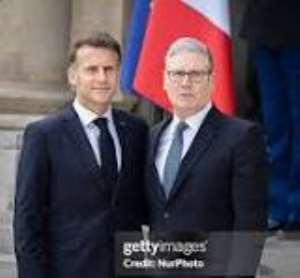
Anders Fogh Rasmussen’s call for Britain and France to anchor a new “Coalition of the Willing” is not just another recycled debate about European defence integration. It is a pointed warning that the post-Cold War security order in Europe is entering a phase of structural instability.
The core of his argument is simple and unsettling: Europe can no longer assume that the United States will indefinitely underwrite its security. This is not a hypothetical concern. It reflects a broader geopolitical shift in which American strategic attention is increasingly split between Europe, the Indo-Pacific, and domestic political pressures that have repeatedly questioned the scale of US commitments abroad.
At present, the United States provides roughly 70% of NATO’s total defence expenditure when measured in real terms, and supplies the alliance’s most critical enablers: strategic airlift, satellite intelligence, missile defence systems and nuclear deterrence guarantees. Europe, despite having a combined GDP comparable to the United States, remains structurally dependent on these capabilities.
This imbalance has been exposed repeatedly since Russia’s invasion of Ukraine in 2022. NATO has coordinated large-scale support for Kyiv, but the most advanced systems: Patriot air defence batteries, HIMARS rocket systems, intelligence sharing networks, have overwhelmingly come from the United States. Europe has provided volume; America has provided decisive capability.
Rasmussen’s intervention, therefore, is not about replacing NATO. It is about acknowledging a hard reality: NATO’s European pillar is still not strong enough to function independently if American leadership were to weaken or retreat. And that possibility, once considered fringe, has moved into mainstream strategic planning.
The structural weakness behind Europe’s military power
On paper, Europe is not weak. Collectively, European NATO members spend well over $400 billion annually on defence. The European Union alone represents one of the largest economic blocs in the world, with a combined GDP exceeding $18 trillion. Yet this economic strength has not translated into strategic coherence.
Only about 10 NATO members consistently meet the alliance’s 2% of GDP defence spending benchmark, despite renewed urgency after 2022. Even among those that do, spending is often fragmented across national procurement systems that lack interoperability. The result is duplication, inefficiency and capability gaps.
For example, Europe operates multiple competing main battle tank platforms, dozens of fighter jet models and separate ammunition supply chains. By contrast, the United States operates highly standardized systems across its armed forces, enabling scale efficiency and rapid deployment.
The fragmentation problem extends beyond hardware. Strategic doctrine within Europe remains deeply uneven. Eastern European states such as Poland and the Baltic countries prioritize territorial defence and high readiness. Western and Southern European states often balance defence priorities against fiscal constraints and domestic politics.
This divergence creates what Rasmussen implicitly identifies as a “coordination deficit”. Europe has military assets, but lacks a unified command structure capable of rapid, decisive action without US leadership.
NATO’s integrated command structure currently compensates for this gap, but it is heavily reliant on American officers and infrastructure. Supreme Allied Commander Europe (SACEUR), NATO’s top military position, has always been held by a US general. This reflects not symbolism but operational dependency.
Rasmussen’s proposal for a Britain-France-led coalition is therefore rooted in the recognition that Europe already has two key military anchors: France, with its autonomous nuclear deterrent and expeditionary forces, and the United Kingdom, with its global military reach and deep integration into NATO command systems.
Together, they represent Europe’s only full-spectrum strategic powers.
Britain and France
France and the United Kingdom occupy a unique position in European security architecture. They are the continent’s only nuclear-armed states, collectively holding an estimated 515 nuclear warheads: France with around 290 and the UK approximately 225. This gives Europe a limited but credible independent deterrent capability outside US control.
France maintains a doctrine of “strategic autonomy”, supported by its independent nuclear force and domestic defence industry, including Dassault Aviation and Naval Group. It spends close to or above 2% of GDP on defence and has consistently pushed for greater European strategic independence.
The United Kingdom, despite leaving the European Union, remains deeply embedded in European defence through NATO and bilateral agreements. It operates one of the most advanced militaries in Europe, with global deployment capability, a powerful navy and close intelligence ties through the Five Eyes network.
However, both countries face constraints. The UK has struggled with long-term equipment shortages and budget pressures, while France faces fiscal limits and competing domestic priorities. Neither country alone can compensate for Europe’s broader fragmentation.
This is why Rasmussen’s concept is not a Franco-British “replacement NATO,” but a leadership core within a wider coalition. The idea is to create a structured grouping of willing European states capable of acting faster and more decisively than the consensus-bound NATO or EU frameworks allow.
Such coalitions already exist in practice. The “Coalition of the Willing” supporting Ukraine has coordinated military aid, training missions and post-war planning. Paris has hosted its coordination structures, with London expected to take over leadership after the initial phase.
The question is whether this informal structure can evolve into a durable pillar of European security architecture, or remain a temporary wartime arrangement.
Ukraine and the redefinition of European security
Any discussion of Europe’s defence future is now inseparable from Ukraine. Since 2022, Ukraine has transformed from a recipient of Western security guarantees into a central actor in Europe’s military balance.
At peak mobilization, Ukraine’s armed forces have exceeded 700,000 personnel, making them one of the largest standing military forces in Europe. More importantly, Ukraine has become a live testing ground for modern warfare, integrating drones, electronic warfare and Western artillery systems at scale.
Rasmussen’s proposal to include Ukraine within a broader European security architecture reflects this reality. In strategic terms, Ukraine now functions as a buffer state between NATO territory and Russia. Its survival directly affects the security calculus of Eastern Europe.
Russia, meanwhile, remains the central threat driver in European defence planning. Despite economic sanctions and battlefield losses, it maintains one of the world’s largest missile arsenals and continues to allocate a significant share of its GDP to military production, estimated at over 5% of GDP under wartime conditions.
This creates a long-term security environment in which Europe must assume persistent tension on its eastern flank. A ceasefire in Ukraine would not eliminate this pressure; it would merely freeze it.
Rasmussen’s argument is therefore grounded in continuity rather than crisis. Europe is not responding to a single war, but to a structural shift in its security environment.
The strategic question Europe must answer
The real issue behind Rasmussen’s proposal is not military capability. Europe already has enough economic and industrial capacity to defend itself. The issue is political cohesion.
A coalition-led model led by Britain and France would require states to accept differentiated levels of commitment. Some EU countries remain militarily neutral, including Austria and Ireland. Others, such as Hungary, have taken more ambivalent positions on Russia. At the same time, non-EU NATO members like Norway and Turkey play critical roles in European defence.
This creates a complicated strategic map that does not align neatly with existing institutions.
The advantage of a “Coalition of the Willing” is flexibility. It allows willing states to move faster without waiting for unanimous agreement. The risk is fragmentation; a Europe divided into tiers of security commitment.
Ultimately, Rasmussen’s proposal forces a broader reckoning. NATO remains the cornerstone of European security, but its effectiveness depends on American political will. Europe’s challenge is not simply to spend more or buy more weapons. It is to build a structure that can act coherently even when external leadership becomes uncertain.
Britain and France, by capability and history, are the only plausible anchors for such a structure. But leadership is not enough on its own. It must be matched by political unity among states that have long been comfortable outsourcing their ultimate security guarantees.
Europe’s dilemma is no longer whether it should take more responsibility for its defence. It is whether it can do so before external pressures force the decision upon it in a less orderly way.
Rasmussen’s warning, stripped of diplomacy, is therefore stark: Europe is already living in a world where American guarantees can no longer be treated as unconditional. The only question left is whether Europe responds as a unified strategic actor, or remains a collection of capable but divided states navigating an increasingly unstable security environment.
The writer holds a PhD in Journalism. He is a journalist, journalism lecturer, and a member of the Ghana Journalists Association, the Society of Professional Journalists, Investigative Reporters and Editors, the Ida B. Wells Society for Investigative Reporting, and the African Journalism Education Network. Email: [email protected]


 Han SHS to get boarding status as Mahama inspects GETFund projects in Upper West
 Late herbal doctor’s wife granted GH¢100,000 bail amid poisoning, arson claims
 NDC has failed to deliver on Agenda 1-3-3 for 24-hour economy – Sam Pyne
 Wa-Bolgatanga trunk road to be asphalted – Mahama
 Gbewaa College of Education lecturer dies after alleged military assault in Pusi...
 Ghana won’t back down on mining value addition – Ambassador Kojo Bonsu
 How Dr Jesse Amuah, wife was murdered over GH¢1,500 payment dispute
 Mahama announces 20% salary incentive for health workers in deprived areas
 Ghana must move from plastic policies to implementation – EPA CEO
 EPA pushes coordinated action to tackle Ghana’s plastic pollution crisis at nati...


