




For years, Mali’s ruling junta promoted a clear and forceful narrative: expel France, reclaim sovereignty and secure stability through a new partnership with Russia. It was a message designed to resonate domestically and symbolically across Africa. But the events of April 2026, marked by coordinated attacks across major cities and the apparent withdrawal of Russian-linked forces from Kidal, have sharply exposed the fragility of that vision. What once appeared to be a bold geopolitical reset now looks increasingly like a high-risk gamble with uncertain returns. The central question is no longer about intent, but outcome: is Mali now paying a measurable price for its foreign policy pivot?
From Paris to Moscow
Mali’s break with France did not occur in a vacuum. After nearly a decade of French military engagement under Operation Barkhane, frustration had deepened within both the Malian political elite and the broader public. Despite significant troop deployments and counterterrorism operations, jihadist groups continued to expand, particularly in central and northern regions. Civilian insecurity remained widespread and perceptions of French paternalism further eroded trust.
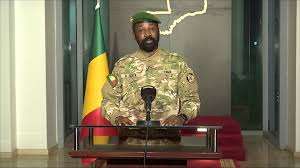
The military junta, led by Assimi Goïta, capitalized on this discontent. Positioning itself as a defender of sovereignty, it expelled French forces and sought new allies. Russia emerged as a convenient partner, offering military assistance without the political conditions typically attached to Western aid. The deployment of Russian-linked mercenaries, widely associated with the Wagner network and later rebranded in some contexts as the “Africa Corps”, was framed as a pragmatic and sovereign choice.
From the junta’s perspective, this shift promised speed, flexibility and a decisive break from what it viewed as ineffective Western strategies. But the long-term implications of this decision were always going to be complex.
Security Reality
If the goal of the pivot was improved security, the results so far are deeply contested. Data from conflict monitoring organizations such as ACLED indicates that violence in Mali has not decreased since 2021; in many regions, it has intensified. Armed groups linked to al-Qaeda, particularly the Group for Support of Islam and Muslims (JNIM), have expanded their operational reach.
These groups have demonstrated increasing sophistication, launching coordinated attacks, controlling key transport routes and imposing blockades that disrupt economic life. The ability of insurgents to strike in multiple locations, including Bamako and strategic cities like Gao and Kati, suggests that state authority remains fragile.
The situation in Kidal is particularly revealing. Recaptured in November 2023 by Malian forces alongside Russian mercenaries, the city was presented as a symbol of restored sovereignty. Yet, its apparent abandonment in 2026 underscores a critical point: military victories do not automatically translate into durable control. Territory can be taken quickly, but governing it requires legitimacy, local cooperation and sustained presence, factors that remain elusive.
The Limits of the Russian Partnership
The reliability of Mali’s new security partner is now under scrutiny. Unlike France’s long-term institutional engagement, Russia’s involvement appears more transactional. Its support is often tied to strategic interests, including access to resources and geopolitical influence, rather than a sustained commitment to state-building.
Reports suggesting that Russian-linked forces negotiated their withdrawal from Kidal raise difficult questions. If accurate, such actions point to a partnership defined by flexibility rather than obligation. In volatile environments, this can translate into unpredictability for the host state.
Moreover, the operational model of private military contractors differs significantly from conventional military alliances. While they may deliver short-term tactical gains, their integration into broader national strategies is often limited. This creates gaps in coordination, accountability and long-term planning, gaps that insurgent groups can exploit.
Economic Fallout
Mali’s geopolitical shift has also had economic consequences. Prior to its rupture with France and the European Union, the country benefited from substantial development assistance and budgetary support. Western donors played a key role in financing infrastructure, governance programs and social services.
Though Russia has provided military backing and diplomatic support, it has not replaced the scale of Western financial flows. This imbalance has left Mali more economically vulnerable. Foreign investment has declined, and the overall business environment has become more uncertain.
Insecurity further compounds these challenges. The disruption of transport corridors, particularly fuel supply routes into Bamako, has driven up costs and constrained economic activity. Inflationary pressures and logistical bottlenecks are increasingly visible, affecting both urban and rural populations.
While institutions like the World Bank and the IMF continue to engage with Mali, the broader economic outlook remains fragile. The country’s ability to attract diversified investment is constrained by both political uncertainty and persistent insecurity.
Human Rights and Legitimacy
Beyond economics and security metrics lies another critical dimension: legitimacy. Reports from international human rights organizations have documented serious abuses by Malian forces and their allies. Incidents such as the 2022 Moura killings, in which hundreds of civilians were reportedly killed, have drawn widespread condemnation.
Such actions carry strategic consequences. In counterinsurgency contexts, civilian trust is not optional; it is essential. When populations feel targeted or unprotected, they are more likely to withdraw cooperation or even support insurgent groups. This creates a cycle in which military force undermines political stability rather than reinforcing it.
The reliance on partners perceived as indifferent to human rights concerns may offer short-term operational freedom, but it risks long-term damage to state legitimacy. For Mali, this trade-off is becoming increasingly visible.
Reassessing the French Exit
While current challenges are significant, it is important to avoid romanticizing the previous status quo. France’s military presence did not eliminate jihadist threats, and its approach faced legitimate criticism. Civilian casualties, strategic missteps and perceptions of neocolonial influence all contributed to its declining acceptance.
The withdrawal of French forces and the subsequent exit of the United Nations mission MINUSMA in 2023 created security vacuums that have yet to be effectively filled. These gaps highlight a broader reality: external interventions, whether Western or Russian, cannot substitute for strong domestic institutions and governance.
In this sense, Mali’s current difficulties are not solely the result of its pivot to Russia. They also reflect the structural limitations of international interventions in the Sahel more broadly.
Strategic Autonomy or Strategic Isolation?
One of the junta’s central arguments has been the pursuit of strategic autonomy. By reducing dependence on Western powers, Mali aims to assert greater control over its own decisions. This goal resonates in a global context where many states seek to diversify partnerships and avoid overreliance on a single bloc.
However, autonomy can easily slide into isolation. Diplomatic tensions, reduced aid and limited economic partnerships can constrain policy options rather than expand them. The challenge for Mali is to balance independence with engagement, to avoid replacing one dependency with another or worse, standing alone in an increasingly complex security environment.
The current trajectory suggests that this balance has not yet been achieved. Instead, Mali appears
caught between competing pressures, with limited leverage over either side.
A Complex Balance Sheet
So, is Mali paying a significant price for its realignment? The evidence points to a mixed but increasingly concerning picture. Security indicators have worsened in key areas, economic pressures are mounting and the reliability of new partnerships remains uncertain. At the same time, the previous alliance with France had its own limitations and failures.
This is not a simple story of right versus wrong choices. It is a case of constrained choices in a highly volatile environment. Mali’s leaders made a calculated decision based on domestic political realities and dissatisfaction with existing arrangements. But the results of that decision are proving more difficult to manage than anticipated.
Conclusion The events of April 2026 should not be seen as an endpoint, but as a moment of reckoning. Mali’s experience illustrates a broader lesson for states navigating great-power competition: shifting alliances can alter tactics, but they do not resolve underlying structural challenges.
For Mali, the path forward will require more than choosing between Paris and Moscow. It will demand investment in governance, rebuilding trust with local populations and strengthening regional cooperation. Without these elements, external partnerships, no matter how strategically framed, will remain fragile and reversible.
Ultimately, the true cost of Mali’s pivot is not just measured in lost territory or strained finances. It lies in the widening gap between expectations and reality, a gap that no foreign partner, however powerful, can bridge on its own.
The writer holds a PhD in Journalism. He is a journalist, journalism lecturer, and a member of the Ghana Journalists Association, the Society of Professional Journalists, Investigative Reporters and Editors, the Ida B. Wells Society for Investigative Reporting, and the African Journalism Education Network. Email: [email protected]


 Han SHS to get boarding status as Mahama inspects GETFund projects in Upper West
 Late herbal doctor’s wife granted GH¢100,000 bail amid poisoning, arson claims
 NDC has failed to deliver on Agenda 1-3-3 for 24-hour economy – Sam Pyne
 Wa-Bolgatanga trunk road to be asphalted – Mahama
 Gbewaa College of Education lecturer dies after alleged military assault in Pusi...
 Ghana won’t back down on mining value addition – Ambassador Kojo Bonsu
 How Dr Jesse Amuah, wife was murdered over GH¢1,500 payment dispute
 Mahama announces 20% salary incentive for health workers in deprived areas
 Ghana must move from plastic policies to implementation – EPA CEO
 EPA pushes coordinated action to tackle Ghana’s plastic pollution crisis at nati...


