




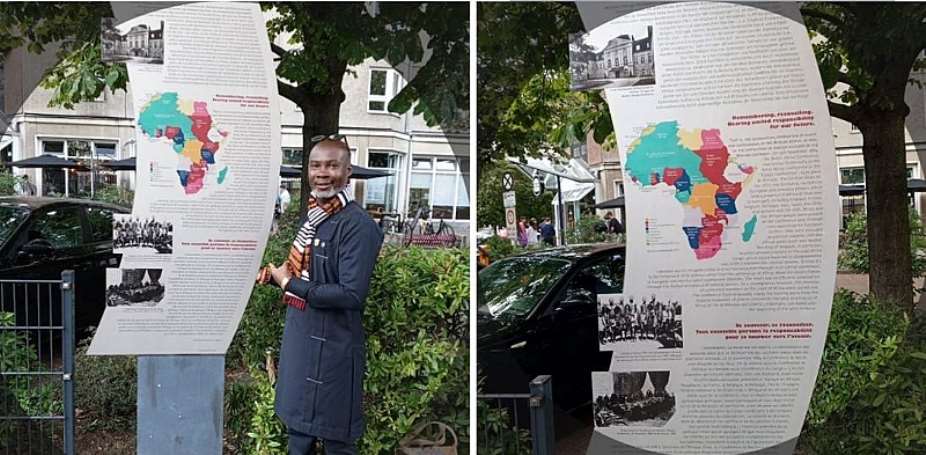
In a time when the world is increasingly confronting its past, the quiet removal of a historical marker in Berlin tied to one of the most consequential events in global history raises serious concern. During a recent visit to Berlin for the globally renowned ITB Berlin, a media team (CH Media) and Africa Tourism Research Network (ATRN) set out to document a story of deep historical relevance of the 1884/5 meeting that led to the partitioning of Africa among European powers.
What we encountered at the site was both surprising and deeply troubling.
At the site associated with the Berlin Conference - a location that should stand as a place of reflection, education and historical accountability, the mounted notice and visual documentation detailing this pivotal moment had been removed. This absence is not just physical; it represents a deeper gap in how history is acknowledged and preserved.
A DEFINING MOMENT IN AFRICAN AND GLOBAL HISTORY
The Berlin Conference, convened under the leadership of Otto von Bismarck, formalised the “Scramble for Africa.” Without the presence or consent of any African representatives, European nations and a few others outside of Europe (14 countries) divided an entire continent into colonies, shaping borders, economies and political systems whose effects are still deeply felt today.
From conflicts rooted in arbitrary boundaries to economic structures designed for extraction, the legacy of this conference continues to influence Africa’s development trajectory. For millions across the African continent and its diaspora, this is not distant history, it is lived reality.
WHY HISTORICAL MARKERS MATTER
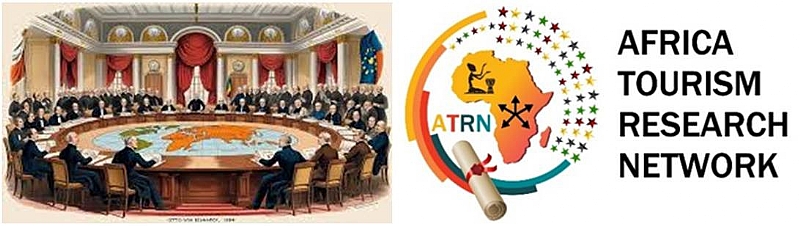
Historical markers are not mere plaques; they are instruments of memory and education. They serve as tangible acknowledgments of events that shaped humanity. In cities like Berlin, widely respected for confronting difficult chapters of its past, such markers play an essential role in fostering awareness, dialogue and reconciliation.
The removal of this marker risks erasing a crucial narrative from public space. It denies visitors, researchers and younger generations the opportunity to engage directly with a site that holds profound historical significance. In an era where misinformation and historical amnesia are growing concerns, preserving such markers is more important than ever.
A RESPONSIBILITY TO GLOBAL HISTORY
Germany has often been recognised for its commitment to remembering history with honesty and responsibility. From Holocaust memorials to museums dedicated to difficult pasts, Berlin stands as a model for how nations can confront history constructively.
It is precisely for this reason that the disappearance of the Berlin Conference marker is so concerning. The partition of Africa is not only an African story; it is a global one. It is part of European history, world history, and the shared human story of power, exploitation and resilience.
Restoring this marker would reaffirm Germany’s commitment to inclusive historical remembrance - one that acknowledges not only European experiences but also the global impact of European decisions.
A CALL FOR IMMEDIATE RESTORATION
The Africa Tourism Research Network calls on the relevant authorities in Berlin and UNESCO to urgently restore the historical marker at the site of the Berlin Conference. Beyond restoration, there is an opportunity to enhance the site with more comprehensive interpretation, incorporating African perspectives, multimedia storytelling and educational resources that reflect the full scope of the event’s impact.
Such an initiative would not only correct the present absence but also elevate the site into a meaningful place of learning and reflection for international visitors.
CONCLUSION
History cannot be undone, but it can and must be remembered truthfully. The site of the Berlin Conference is not just a location in Berlin; it is a symbol of a turning point that reshaped an entire continent.
Its story deserves to be visible.
Its memory deserves to be preserved.
And its lessons deserve to be learned.
Emmanuel Frimpong is a Tourism Consultant, Analyst, President and founder of Africa Tourism Research Network, Vice President and Co-founder of Africa Medical Tourism Council and CEO of Pishon Consult. He is also Lecturer, Columnist and a Destination Marketer.
Email: [email protected] Tel. No. +233261128507 (WhatsApp)
LinkedIn: www.linkedin.com/in/emmanuel-frimpong-06285467


 Attorney-General appeals ruling halting trial of former Buffer Stock CEO, wife
 NAIMOS destroys 1,970 changfans, 863 Illegal mining structures in three months —...
 Let's see how Asiedu Nketia becomes NDC flagbearer with same people he conspired...
 Asiedu Nketiah opts out of NDC chairmanship race amid flagbearership speculation
 NDC insists Nkwanta North elections will proceed despite court injunction
 'My side of the story will shock you; I'm waiting for court days' – Obuasi SHTS ...
 Obuasi SHTS sexual abuse: 'GES must distant itself, allow the law to work' — For...
 Upper East: Fear grips nine Kusaug communities over mysterious fish deaths in da...
 NDC suspends Amasaman Communications Officer over 'irresponsible' remarks on Obu...
 Parliament secures religious leaders’ support to end witchcraft accusations


