




Every negotiation with Tehran has a hidden cost: the more we hope, the stronger it grows. Tehran has spent decades weaponizing negotiations, proxy warfare and nuclear ambiguity. Washington and Jerusalem should not give it another escape hatch.
There comes a moment in every long strategic contest when clarity becomes more important than caution. The current confrontation with Iran is such a moment. For years, Western policymakers have clung to the hope that the Islamic Republic can be persuaded, through diplomacy, sanctions relief or calibrated restraint, to behave like a conventional state pursuing normal security interests.
That hope has not merely failed. It has been systematically exploited. Iran’s rulers have turned negotiation into delay, compromise into leverage and Western caution into strategic opportunity.
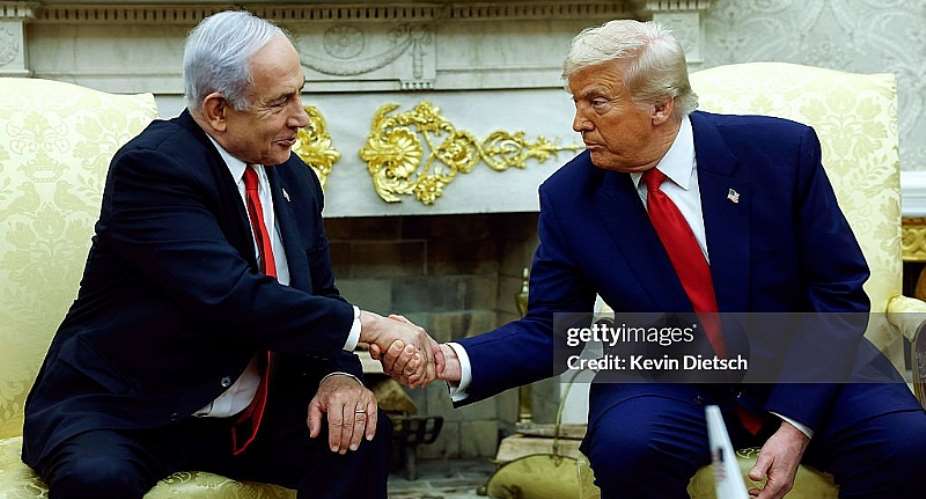
President Trump’s recent warning that Tehran must “get serious soon” before it is “too late” captures an uncomfortable truth: the regime in Tehran does not interpret restraint as goodwill. It interprets it as weakness. Prime Minister Netanyahu understands this from Israel’s front line.
The question now is whether Washington and Jerusalem will act on that understanding or once again allow the regime to convert pressure into breathing room. The central strategic error of the past four decades has been a refusal to accept what the Iranian regime has repeatedly shown itself to be. This is not a misunderstood regional power-seeking accommodation. It is a revolutionary state that has survived by fusing ideological hostility with tactical patience. It talks when cornered, escalates when challenged and retreats only when the costs of defiance become intolerable.
A Regime Built on Deception and Coercion
The record is not ambiguous. Since 1979, the Islamic Republic has made hostage-taking, proxy warfare and strategic deception central tools of statecraft. The seizure of the US embassy and the 444-day hostage crisis was not an aberration. It was a founding lesson. The regime discovered early that confrontation with the United States could consolidate domestic power, elevate its revolutionary credentials and expose the West’s aversion to sustained confrontation. That model has been refined, not abandoned.
In Lebanon, Iran built Hezbollah into the most capable non-state military actor in the Middle East. In Iraq, it cultivated militias that repeatedly attacked American personnel and undermined Iraqi sovereignty. In Syria, it entrenched itself under the cover of civil war. In Yemen, it armed the Houthis into a strategic menace to Red Sea commerce. In Gaza and beyond, it has invested in a network of partners designed to keep Israel under constant pressure and the region permanently unstable.
This is not incidental behaviour. It is a coherent doctrine: avoid direct conventional war where possible, expand influence through proxies, maintain deniability and keep adversaries trapped between escalation and paralysis. Every round of diplomacy that ignores this structure ends the same way. Tehran gives just enough to reduce immediate pressure while preserving the instruments that matter most.
The Nuclear File Has Always Been About Time
Nowhere is this clearer than in the nuclear issue. The most persistent illusion in Western policy has been the belief that Iran’s nuclear ambitions could be indefinitely managed through temporary constraints, partial inspections and carefully sequenced concessions. That view was always less a strategy than a wager: that time would moderate the regime’s intentions. Instead, time strengthened its position. Iran has repeatedly demonstrated that it values nuclear latency more than sanctions relief and strategic ambiguity more than transparency.
It has mastered the art of remaining just short of the line that would force an overwhelming international response, while steadily moving its capabilities closer to that line. That is why the technical arguments so often deployed in defense of renewed engagement miss the point. Analysts may debate percentages of enrichment, inspection access and breakout timelines. Tehran understands something simpler: a threshold capability creates leverage even before a weapon exists.
A regime does not need to openly test a bomb to alter regional calculations. It only needs to persuade its adversaries that the window for prevention is narrowing. That is precisely what Iran has done.
The result is a familiar cycle. The West negotiates to prevent escalation. Tehran uses the negotiation to preserve assets. The immediate crisis cools. The long-term threat deepens. A state that consistently restricts scrutiny while expanding strategic capacity is not seeking reassurance. It is seeking advantage.
Diplomacy Has Become Tehran’s Shield
This is why the current moment is so consequential. As military pressure rises and backchannel talks continue, Tehran is once again speaking in two voices: public defiance, private signaling. It rejects terms in public, probes for relief in private and counts on the international community to mistake tactical flexibility for strategic moderation.
This is not diplomacy in the conventional sense. It is operational maneuver. Iran’s leaders understand that negotiations can function as a shield. They can slow military momentum, divide coalitions, ease market anxiety and revive the familiar chorus urging “de-escalation” before the regime has actually conceded anything meaningful. In practical terms, a negotiating process often becomes a mechanism by which Tehran preserves its most important capabilities while asking the West to suspend the pressure that created the talks in the first place. That is the trap.
Washington should continue talking if it believes talks can clarify terms, test seriousness or expose bad faith. But it should not repeat the mistake of treating diplomacy as a substitute for coercion. For this regime, diplomacy only becomes useful when it is the byproduct of pressure. The moment pressure is relaxed in order to “save” negotiations, the negotiations themselves become an instrument of Iranian survival.
Trump’s instinct on this point is more sound than many of his critics will admit. The Iranian regime does not move because it is persuaded. It moves because it is constrained.
Why Netanyahu’s Instinct Is Strategically Sound
If any leader has reason to reject illusions about Tehran, it is Netanyahu. Israel has spent years living under an increasingly dense Iranian ring of fire: Hezbollah to the north, Hamas and allied networks to the south, militia entrenchment in Syria, terror financing in the West Bank, long-range missile and drone proliferation across the region and the constant effort to transform proxy deterrence into strategic encirclement.
From Jerusalem’s vantage point, delay is not a neutral policy. It is an Iranian asset. Every month in which the regime’s military-industrial infrastructure remains intact is another month in which missiles are assembled, drones are transferred, proxies are funded and underground programmes are hardened. Every pause that leaves command structures untouched is time purchased for reconstitution. Every cease-fire not tied to verifiable dismantlement becomes an opportunity for Tehran to rebuild.
This is why Israel’s posture has often appeared harsher than Europe’s or even Washington’s. Israel does not enjoy the luxury of abstraction. It lives within range of the consequences. Netanyahu’s strategic premise, that the Iranian threat must be degraded, not merely managed, is not ideological excess. It is a recognition born of geography.
The False Choice Between War and Appeasement
Critics of a harder line often rely on a simplistic dichotomy: either the West accepts renewed diplomacy and restraint or it plunges into another catastrophic Middle Eastern war. That is a false choice.
The serious alternative is neither invasion nor passivity. It is sustained coercive pressure designed to systematically erode the regime’s capacity to threaten its neighbours, blackmail global markets and race towards nuclear breakout under cover of ambiguity.
Such a strategy would include continued military degradation of missile sites, drone production, naval assets threatening the Strait of Hormuz and logistics networks tied to the Islamic Revolutionary Guard Corps. It would require far more aggressive sanctions enforcement, not as symbolic punishment, but as an operational campaign against shipping, procurement, energy revenue and illicit financial channels. It would also require covert and cyber efforts to disrupt the regime’s military and nuclear support infrastructure in ways that raise costs without necessarily triggering a wider conventional war.
This is not escalation for its own sake. It is the disciplined application of force to deny Tehran the strategic patience on which it depends. Iran’s rulers have survived by persuading the West that any firm response is too risky. The task now is to reverse that equation and make inaction the greater risk.
The Economic Fear Is Real, but Misplaced
It is true that markets react sharply when conflict with Iran intensifies. Oil prices spike. Shipping insurers panic. Investors worry about the Strait of Hormuz and broader regional contagion. But those short-term disruptions should not obscure the larger strategic reality.
Allowing a revolutionary regime to preserve coercive leverage over one of the world’s most critical energy chokepoints is itself a permanent economic risk. The question is not whether pressure on Iran creates volatility; it does. The question is whether repeated deference to Tehran’s threat posture creates a larger and more enduring form of instability. It plainly does.
A temporary market shock is painful. A durable system in which Iran can repeatedly weaponize maritime insecurity, proxy disruption and nuclear ambiguity is worse. The world has spent too many years treating each crisis as an isolated event. In fact, each episode has reinforced a pattern: Tehran manufactures danger, then offers to reduce it in exchange for time and concessions. That is not a basis for stability. It is a business model for extortion.
The IRGC Is the Regime, Not a Side Story
Any serious Western strategy must also discard another comforting fiction: that the Islamic Revolutionary Guard Corps is somehow separable from the Iranian state. It is not. The IRGC is not a rogue faction or an overzealous branch. It is the spine of the regime’s regional power. It oversees proxy relationships, sanctions evasion, strategic smuggling, missile and drone programmes, covert finance and much of the coercive machinery used both abroad and at home.
When Tehran speaks diplomatically while the IRGC keeps the region on edge, that is not internal contradiction. It is coordinated statecraft. This matters because too many policies have tried to pressure the edges while sparing the core. A strategy that sanctions rhetoric while leaving the IRGC’s economic architecture, procurement channels and expeditionary capabilities largely intact is not a strategy. It is an invitation to adaptation. And the regime adapts well.
What Washington and Jerusalem Should Do Now
The next phase should be guided by a few hard principles. First, negotiations should continue only under sustained pressure. Talks may clarify intentions, but they should never interrupt the military and economic coercion that made talks possible.
Furthermore, any agreement worth considering must focus on dismantlement, not delay. Temporary caps, reversible pauses and vague monitoring formulas are merely recycled versions of a failed approach. The only meaningful outcome is verifiable destruction or neutralization of the assets that make Iran’s threat credible.
Washington and Jerusalem should target the regime’s strategic arteries, not just its symbolic outposts: missile production, drone assembly, naval harassment capabilities, IRGC logistics, energy revenues tied to aggression and the procurement webs that keep the entire system functioning.
Finally, they must communicate consistency. Iran’s leaders are not irrational. They calculate. They test limits. What they fear most is not rhetoric, but repetition: a pattern in which every act of delay, concealment or proxy violence produces a sharper and more costly response. That is how deterrence is rebuilt.
A Durable Peace Requires Strategic Honesty
There is also a moral clarity that too many “realists” prefer to avoid. The Iranian people are not synonymous with the regime that rules them. Repeated protest waves over the past quarter-century have shown a society far more dynamic, exhausted and disillusioned than the men who govern it.
Preserving the regime in the name of “stability” has too often meant preserving the machinery that represses Iranians at home while destabilizing the region abroad. No outside power can engineer Iran’s political future. But outside powers can stop extending the life of the structures that make a better future less likely. That begins with strategic honesty.
The Islamic Republic has spent decades telling the world exactly what it is, not through speeches, but through conduct: hostage-taking, proxy war, nuclear opacity, maritime coercion and endless delay disguised as diplomacy. History has rendered its verdict. Tehran cannot be trusted to negotiate its way out of the threat it has deliberately built.
If Washington and Jerusalem want a durable peace, they must stop chasing the mirage of moderation and instead convince the regime that its old survival formula no longer works. The lesson is as old as statecraft itself: regimes built on coercion yield only when coercion fails.
The writer is a journalist, journalism lecturer, and a member of the Ghana Journalists Association, the Society of Professional Journalists, Investigative Reporters and Editors and the African Journalism Education Network. Email: [email protected]


 November 27: Cedi sells at GHS12.55 on forex market, GHS11.84 on BoG interbank
 Government has no power to destool chiefs – Justice Dennis Adjei
 Mahama arrives in Barbados for five-day state visit
 Galamsey threatens food security, public health and national security – Zanetor
 2027 Budget shifts focus to growth, jobs after economic stabilisation – Seth Ter...
 Ministries, state agencies risk sanctions for data privacy breaches – Sam George
 True definition of NDC's 'New Economy' is buying luxury jet amid high cost of li...
 Ghanaians don't eat paper, yet NDC keep touting paper-based economic gains – Osa...
 Akufo-Addo's NPP administration failed to retool security agencies – Agalga
 New presidential jet was not procured for luxury, but necessity – Agalga


