




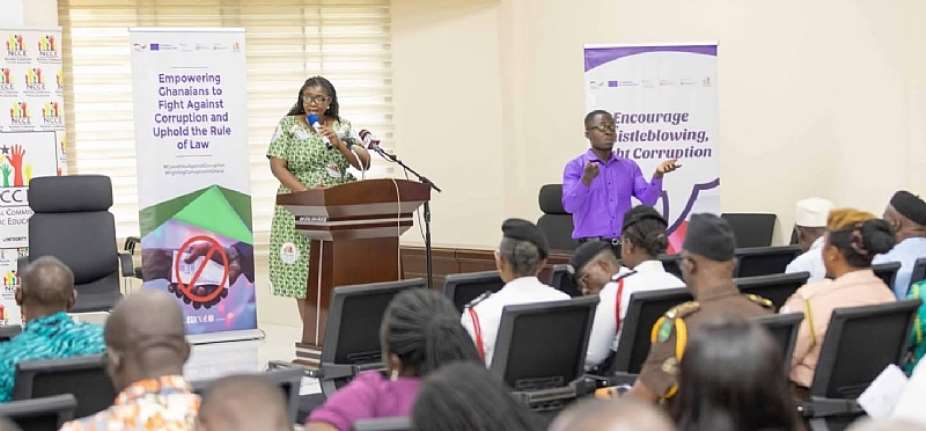
Ms Rita Akosua Awatey, the Eastern Regional Minister, described corruption at the local level as a major obstacle to development, stressing that it delays infrastructural projects, inflates costs, undermines service delivery, and weakens public trust in institutions.
“Tackling corruption requires more than enforcement; it demands prevention, vigilance, and collective responsibility,” Ms Awatey stated in a speech delivered on her behalf at a regional citizen engagement forum organised by the National Commission for Civic Education (NCCE) in Koforidua, Eastern Region, aimed to support local accountability and encourage rule of law in the country.
Ms Awatey noted: “Oversight bodies must be empowered to perform their duties effectively, while public officials must demonstrate integrity in decision-making and implementation.”
The forum forms part of the project, “Civic Engagements on the Rule of Law and the Fight Against Corruption", being implemented under the Participation, Accountability and Integrity for a Resilient Democracy (PAIReD) programme.
The initiative is supported by BMZ, the European Union, SECO, GIZ, and Ghana’s Ministry of Finance and seeks to reinforce democratic resilience across the country.
The Eastern Regional Minister urged citizens to contribute meaningfully to development planning discussions, monitor projects, seek information through lawful channels, and responsibly report suspected wrongdoing.
Ms Awatey highlighted the critical roles played by traditional authorities, civil society organisations, faith-based institutions, and the media in strengthening integrity at the grassroots level.
“When these actors collaborate constructively, accountability becomes a tool for development rather than division,” she noted.
Ms Awatey stressed the importance of sustained civic education to empower citizens with knowledge and confidence to engage constructively and urged public institutions to foster a culture of openness by proactively sharing information, simplifying procedures, and welcoming feedback.
“At the regional and district levels, accountability is not abstract. It is reflected in the condition of our roads, the quality of education, healthcare delivery, water systems, sanitation services, and community safety,” she stated.
Ms Awatey added that the credibility of government is measured by how responsibly public resources are managed and how responsive authorities are to citizens’ needs.
The Eastern Regional Minister called for strict financial discipline, procurement compliance, ethical leadership, and participatory, data-driven development planning across the region.
Ms Kathleen Addy, NCCE Chairperson, expressed concern that Ghana continues to face corruption challenges and explained that progress depends on both responsive institutions and well-informed citizens.
She said civic education and sustained public dialogue remain essential in the fight against corruption.
Ms Addy emphasised the central role of the rule of law and public accountability in democratic governance, stressing that “the rule of law shapes fairness in public service delivery, guarantees citizens’ access to information and lawful redress, and determines how public institutions respond to citizens.
“When laws are clear and fairly applied, and when citizens understand both their rights and responsibilities, public trust grows, accountability deepens, and democracy is strengthened.”
Ms Addy added and explained that the regional dialogue was organised to provide a neutral and practical platform for citizens, local stakeholders, and answerable institutions to interact.
Speaking on the theme, ‘Strengthening Local Accountability through Citizen Engagement', the NCCE Chairperson noted that it is timely and deeply relevant, adding that accountability is strongest when citizens and institutions engage in good faith, with honesty and mutual respect.
The dialogue, she said, builds on the 2025 National Dialogue held in Accra and brings the conversation closer to local governance realities where accountability is experienced in everyday life.
Ms Addy expressed appreciation to development partners, particularly GIZ and the European Union, for their continued support.
In a related development, Ms Ophelia Nana Yaa Ankrah, NCCE Eastern Regional Director, in an interview with Modern Ghana News on the fringes of the forum, explained that the commission considers the role of stakeholders crucial in the fight against corruption and ensuring public accountability.
The NCCE Regional Director charged citizens not to be observers of development in their communities. “You must be part of the development in your area; you must help the government to ensure public officials, contractors, and others who perform any official duties on behalf of the state deliver accordingly.”
Ms Ankrah urged Ghanaians to embrace the opportunity to be empowered through the NCCE Social Auditing Project to actively participate in the activities, as it was meant for the development of the community.
She explained that the sensitisation exercise was to empower communities to assess development projects, track the use of public resources, and engage duty bearers in informed and constructive dialogue.
Other speakers include Mrs Mary Awelana Addah, Executive Director of Transparency International Ghana; Dr Daniel Appiah, Lecturer at the University of Ghana Business School’s Department of Public Administration; and Mr Michael Nkansah, Eastern Regional Director of CHRAJ.
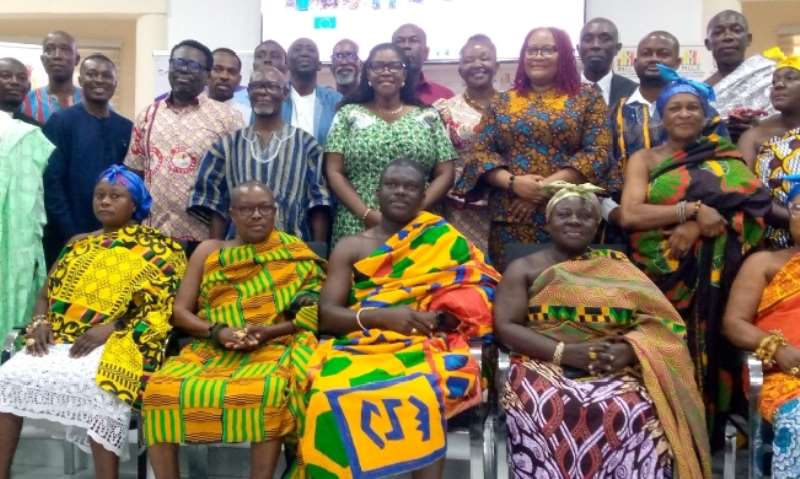
It was attended by duty bearers of the municipal and district assemblies, traditional authorities, assembly members and community members, heads of departments, women's associations, school children, leaders in faith-based and community-based groups and the security services.
It forms part of the NCCE’s broader mandate to educate citizens on their rights and responsibilities and to promote local accountability.


 Drone strikes hit homes, UN building in Sudan's capital
 South Korean education minister resigns over AI-driven exam cheating scandal
 Climate deal collapses in chaotic end to COP31
 How eight 'A's WASSCE graduate from Wesley Girls killed by speeding motorcycle w...
 GTEC freezes new PhD admissions nationwide pending audit of doctoral programmes
 NATO faces sovereignty dilemma as militaries rely on private tech, AI
 Afenyo-Markin demands answers over poor water quality in Central Region
 Mahama says Mayweather’s Ghana visit will boost tourism, boxing
 Police to develop human rights manual to strengthen professionalism and public t...
 How Korle Bu surgeons fixed back man's penis cut off whiles attempting to sit on...


