




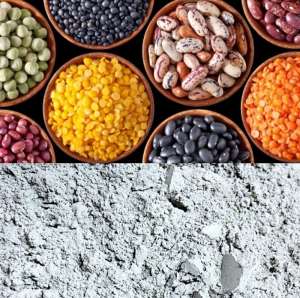
In February 2026, Ghana’s Food and Drugs Authority (FDA) issued a strong public warning against the practice of using cement or any unapproved substances to preserve beans, or food more generally. The advisory was prompted by a viral video circulating on social media showing beans supposedly being treated with a white powdery substance believed to be cement.
What Was the Viral Claim?
Some videos shared online show women or men applying a white powder onto dried beans as a supposed preservation method. The substance in the footage appears similar to cement, and the video has spread rapidly on platforms such as
WhatsApp and Facebook.
However, health and agricultural experts have raised serious doubts about the safety and validity of these claims:
In similar viral content circulating in other parts of West Africa, fact-checkers found that the substance was not actually cement but rather things like calcium carbonate yet still not safe for food use.
Why Cement (or Cement-Like Substances) Are Dangerous in Food
Cement and similar industrial powders are not food-grade substances and contain chemicals that are harmful to human health. According to agricultural associations and food safety advocates:
Such materials contain alkaline compounds and toxic additives that can cause chemical burns to the mouth, throat, and stomach.
Ingesting cement particles may lead to stomach irritation, poisoning, organ damage, and in severe cases obstruction of the digestive tract.
None of these substances are recognized as safe by food regulators for use in food preservation.
Instead of protecting beans, such practices can turn them into a vehicle for harmful contamination.
Official Warnings from Food Safety Authorities
The FDA in Ghana emphasized that:
The method shown in the viral footage is not recognized or approved by the Ministry of Food and Agriculture or the FDA.
The video depicted unsafe food-handling practices, such as chemicals handled with bare hands and poor hygiene, which all violate food-safety standards.
Using cement or any non-food substance to preserve beans is strictly prohibited under Ghana’s food-safety laws.
Authorities have also urged consumers to report suspicious food preservation activities so that violations can be investigated and sanctioned.
Safer Alternatives for Bean Preservation
Agricultural experts recommend approved and safe methods for storing beans, such as:
Keeping beans in clean, sealed bags or containers to prevent insect infestation.
Using food-safe pest repellents authorized by agricultural bodies.
Drying beans thoroughly before storage to reduce moisture.
These approaches reduce spoilage without exposing consumers to dangerous chemicals.
Conclusion: Don’t Use Cement on Food
The idea of using cement to preserve beans is not a legitimate or safe food-preservation method. It poses tangible health risks and has been explicitly condemned by regulators like the FDA in Ghana. Anyone seeing such practices should treat them with skepticism and avoid consuming any food treated this way.
Mustapha Bature Sallama.
Medical/ Science Communicator,
Private Investigator, Criminal investigation and Intelligence Analysis.
International Conflict Management and Peace Building.USIP
[email protected]
+233-555-275-880

 Government to introduce ID verification for access to porn sites — Sam George
 African governments failing on commitments to increase agriculture funding — Eri...
 45-year-old ex-convict arrested over alleged rape and murder of wife's 17-year-o...
 We’re working to provide shelter for police officers displaced after barracks fi...
 No arrests made over Accra Central Police Barracks fire yet — Police
 Mahama told UK Prime Minister anti-LGBTQ+ bill is far from becoming law — Minori...
 Leaked judgment? NDC activists confirms jail term for Wontumi on social media
 Minority demands passage of original 2024 anti-LGBTQ+ bill, accuses NDC of decep...
 "Flagrant disrespect" — Court remands Abronye over failure to surrender passport...
 High Court remands Abronye over failure to surrender passport


