




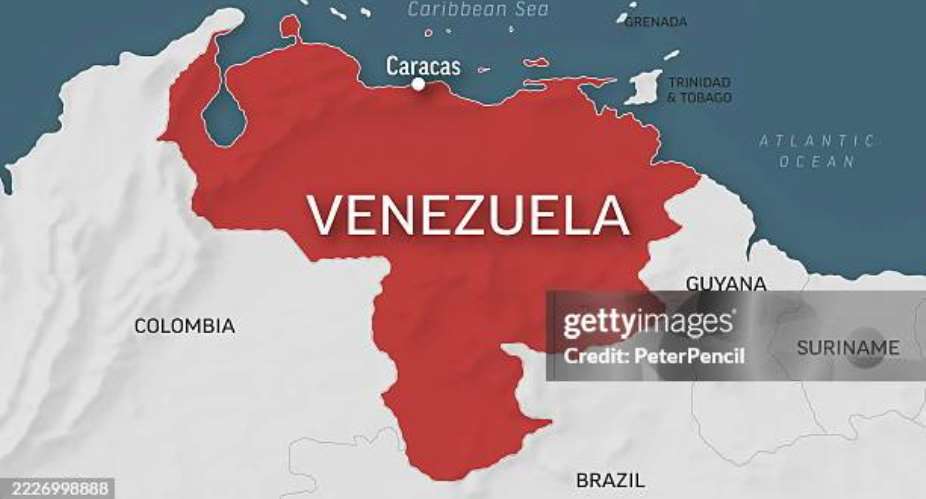
The U.S. military operation in Venezuela clearly demonstrates the modern revival of historical doctrines under U.S. President Donald Trump's 'Donroe Doctrine,' reflecting the longstanding ideas of the Monroe Doctrine and Manifest Destiny. This article suggests that Trump's strategic reinterpretation of these doctrines revives past ideologies while fundamentally transforming U.S. global engagement by closely connecting military actions to the pursuit of vital resources, such as oil, and regional influence. This claim is supported throughout the analysis of current U.S. foreign policy. By highlighting Trump's leadership, it becomes clear that operations are deeply linked to the pursuit of oil and regional dominance. (Stephen Walt, 2018)
This paper offers a comprehensive analysis of Venezuela's historical and economic background, examining internal and external crises while contrasting recent U.S. actions with those of past empires. The divided global reactions highlight the significant influence of Trump's strategic choices and policies. (Niall Ferguson, 2003)
BACKGROUND
Venezuela, once a Spanish colony, gained independence in 1811 and has since experienced ongoing domestic unrest and international conflicts. The country discovered oil during World War I, leading to political transitions and brief civilian rule post-1947, which was disrupted by a coup and subsequent instability.
Oil boomed after Carlos Andrés Pérez’s 1973 election, but rising spending led to debt and crisis, thereby preparing the ground for Hugo Chávez’s 1998 presidency following an attempted coup. Chávez’s Bolivarian Revolution sought democracy, economic independence, and reduced inequality but faced opposition and accusations of repression. His administration nationalized industries and curtailed civil liberties.
Analysts are divided on Chávez’s legacy. Some critics focus on repression and economic issues, while others cite significant reductions in poverty and inequality, as well as notable gains in education, healthcare, and political inclusion, making his tenure concurrently transformative and controversial.
Chávez served three terms and died in office in 2013. Before his death, he selected Nicolas Maduro, then vice president, as his successor.
Maduro was elected president in a controversial 2018 election. His opponent, Henrique Capriles, challenged the results. However, an audit of the votes showed that Maduro legitimately won. A 2018 report by the Council on Hemispheric Affairs supported the audit's legitimacy, though it noted the contentious political environment surrounding the election. In the subsequent 2024 election, international observers from organizations like the Carter Center believed that Edmundo Gonzalez, Maduro’s main challenger, had won. Gonzalez’s campaign reportedly received funding from the Norwegian government, as documented in a 2024 Reuters investigation. However, Norway encouraged the 'Barbados Agreement' reached between the ruling party and the opposition prior to the election. In the agreement, both parties committed to free and fair elections that comply with international standards. In exchange, the US would lift the sanctions imposed. Despite international criticism of the results, Maduro remained in power.
Under Maduro’s leadership, Venezuela’s socioeconomic conditions deteriorated. The sharp decline in oil revenues, primarily due to lower global oil prices, triggered a severe contraction, as evidenced by a more than 80% reduction in GDP between 2013 and 2020. This dramatic downturn underscores both the country’s dependency on oil and the limitations of its economic policy responses.
The government’s attempt to print money and control the currency in response to economic conditions led to hyperinflation, making Venezuelan inflation among the highest in the world. Consequently, poverty increased sharply, reaching about 73.2%, and 40% of the population faced food insecurity by 2024. Additionally, healthcare services collapsed, making it difficult to obtain medications and treat common illnesses such as colds and malaria.
In addition to the collapse of the oil sector, some observers contend that US and other international sanctions on Maduro’s administration have worsened Venezuela’s crisis. Maduro’s supporters regarded these sanctions, including asset freezes and export restrictions, as a central contributor to financial and social distress. They assert that the country's exclusion from access to condensate—a light oil necessary for export operations—exacerbated economic troubles, although Venezuela secured temporary supplies from Iran. Accusations against the opposition, ranging from paramilitary activities to alleged economic sabotage, illustrate the high-stakes contest over narrative and blame. Such factors arguably intensified the regime’s repressive responses and further complicated the situation.
Reports state that US sanctions have increased since the Obama administration. Simultaneously, the Maduro government’s repression of dissent caused mass emigration and brain drain. Opposition leaders like Gonzalez and Maria Corina Machado left the country. Many others remain imprisoned. The loss of skilled citizens undermines Venezuela’s human capital and future stability.
Accordingly, the Maduro government granted the military greater authority over ministerial officials and state enterprises. The government was said to have neglected maintenance of the oil facilities, leading to their deterioration. Additionally, some of Maduro’s supporters reportedly admitted that the administration softened its stance on corruption. But they also maintained that the US and its allies, for oil interests, made things difficult for progress in Venezuela.
On January 3, 2026, the Trump administration led a U.S. military operation in Venezuela. The raid captured and extradited Maduro and his wife. This action took months of calculated planning, involving key officials within Maduro's security team, according to an American network report. The complexity and risks of this operation prompt examination of the legal justification invoked by the Trump administration. In particular, according to Harold Horgju Koh’s “The National Security Constitution”, they cited national security grounds under the Authorization for Use of Military Force (AUMF) and provisions in the National Defense Authorization Act (NDAA), which “grant the executive the power to combat international narcoterrorism threats”. However, these justifications face significant scrutiny when assessed against international law challenges, raising important questions about the operation's broader international legal implications.
Certainly, as Paul Kennedy’s “Rise and Fall of Great Powers” indicates, the capture of Maduro represents the extraterritorial arrest of Panama’s strongman Noriega. Like Maduro, the US military captured him in Panama, flew him to America, and judged him in the US on narcotics trafficking charges. “The action shows how military overextension and strategic decisions impact the economic and political trajectories of nations.” (Kennedy, 1976)
The legal justification for Maduro’s capture is debated on multiple fronts. Supporters argue that U.S. national security statutes may provide grounds for such actions, particularly if the administration perceives a direct threat. Furthermore, mechanisms of the U.S. legal framework may permit actions aimed at overthrowing regimes involved in narcoterrorism, an accusation the Trump administration levied against Maduro.
However, analysts, including Louis Henkin, an international law expert, cite the UN Charter, particularly Article 2(4), on the principle of sovereign equality and the non-intervention in and interference with the domestic affairs of a sovereign state. They contend that any military interference in a sovereign state without the United Nations' authorization undermines international legal rules, thereby creating friction between national statutes and global norms. In contrast, the Trump administration argued that the operation was an act of self-defense, citing imminent threats posed by narcoterrorism linked to Venezuela's leadership. This claim creates a direct legal confrontation, underscoring the tension between the principles of non-intervention and national security prerogatives. (Henkin, 1968)
Thus, while U.S. law may prioritize national interests, the U.N. framework emphasizes collective decision-making and respect for sovereignty, illustrating an inherent tension between domestic prerogatives and international consensus.
In a New York court, the Trump administration charged Maduro with drug trafficking and other crimes. He pleaded not guilty, claiming that he was kidnapped and that he is the president of Venezuela. His legal team claims that “his capture was an illegal military abduction and that he is immune from prosecution as a head of state.”
Court documents reveal a change in legal framing: experts observe that the initial narrative, which focused on Maduro’s alleged leadership of the “Cartel of the Suns,” has shifted toward accusations of involvement in a “Culture of Corruption.” Additional legal analysis contends that the detention violates the UN Charter and established international law, although U.S. domestic law would authorize Maduro’s prosecution. This tension highlights the complex legal landscape and the challenging relationship between international norms and national jurisdiction.
The arrest of a foreign head of state and their spouse is unprecedented and presents a new challenge in diplomatic and legal terms. Usually, the wife’s involvement is minimal, often leaving her alone after such actions. The wider symbolic and operational consequences of these detentions merit careful analysis to understand their effect on international precedents.
Meanwhile, in Maduro’s absence from Venezuela, Delcy Rodríguez, his vice president, is serving as the acting president. She considers Maduro the legitimate leader and has called for his and his wife’s release. President Trump reportedly stated that opposition leader Maria Machado lacks respect or legitimacy among the people to lead. He also appears not to recognize the opposition leader, Gonzalez. His perspective raises concerns among critics about who might rule Venezuela.
A brief discussion of nations' behavior, as noted specifically by Henkin and other experts in international affairs, might be helpful. All sovereign nations, regardless of size, have equal rights. Their territorial sovereignty and integrity must be respected.
While countries believe in diplomacy to resolve conflicts and respect each other when they are equal in power, larger nations often use economic and military strength to control others in pursuit of national interests. However, powerful nations do not want to be isolated or seen as bullies. Therefore, they join the community of nations, even if they do not prioritize sentiment or morality in their foreign policies and sometimes violate international laws and norms. This violation causes many observers to question the importance and value of international law.
This paper asserts that US military action in Venezuela, as stated earlier, clearly violates the UN charter, international law, and Venezuela's sovereignty. The absence of U.S. Congress approval further emphasizes the operation's controversial and unilateral nature. These factors have led many nations and international legal scholars to oppose the intervention and question its legitimacy, thereby reinforcing the central argument that US actions reflect those of a dominant power.
However, it's important to balance this view by examining whether ideology or raw power better explains the intervention. Looking at structural incentives alongside Trump's ideological motives allows for a more detailed analysis of the operation's purpose. Some legal critics argue that the US action might be justified in certain situations. Supporters say the operation could be defended as a national security measure, especially if Venezuela is seen as a major threat to US interests. There are also policy reasons suggesting the intervention is needed to fight narcoterrorism, aligning with the Trump administration's accusations against Maduro. These opposing viewpoints offer a wider context for understanding the multiple legal debates about the intervention. (Stephen Walt, 2018)
While the desire for Venezuela's oil and regime change influenced the operation, other factors should also be considered. These can be summarized as follows: Manifest Destiny, the Monroe Doctrine, and Trump's personality. As Niall Ferguson’s studies show, "these 19th-century ideologies ground the 21st-century tools to historical parallel." To qualify an act as 'Manifest Destiny' in the 21st century, several criteria are applicable. These include territorial gain, in which actions by the U.S. expand its geographic or political influence. Resource extraction is another indicator of strategic alterations aimed at harnessing or controlling the natural resources of other nations, particularly those deemed highly strategic, such as oil. Furthermore, ideology-driven actions can manifest in efforts to promote the perceived superiority of the U.S. or its civilizing mission, echoing past narratives of American exceptionalism. By identifying these specific indicators, the analogy between historical Manifest Destiny and modern interventions can be more clearly grounded in factual contexts.
Manifest Destiny was a 19th-century belief that America was divinely destined to expand and exert dominance over others. It promotes America’s racial and cultural superiority. The U.S. used this idea to militarily and politically displace Native American nations. Coined by journalist John O’Sullivan in 1845, American President Thomas Jefferson used the Manifest Destiny doctrine in purchasing Louisiana to begin westward expansion, including the acquisition of California, Texas, and Oregon. California and Texas have high deposits of gold and oil.
Interestingly, according to scholar Etrenda Dillon, Liberia’s first president, Joseph Roberts, used this ideology to justify the rule and domination of the Americo-Liberians, former enslaved American Black elites, over native Liberians in the early 1800s. Indeed, the Americo-Liberians felt culturally superior to the indigenous Liberians. Likewise, White immigrants from Britain to America considered themselves superior to Native Americans. Thus, divine justification tends to disregard the rights of others, removing them from their birthplace and suppressing and oppressing them. Moreover, globally, racial and cultural superiority had led to slavery and colonization. (Etrenda Dillon, 2007; Monday Akpan, 1986; Robert Kappel, 1980; and Monday Abasiattai, 1987)
The Monroe Doctrine is the core of U.S. policy in the Western Hemisphere. Established by President James Monroe in the 1820s, the doctrine aimed to stop European interference and colonialism in the region. In exchange, the U.S. agreed not to interfere in European wars and domestic affairs. U.S. presidents have mainly used the doctrine to justify American intervention and militarism in the hemisphere. In contrast, America participated in World War I and World War II in Europe, though it entered World War II after Japan attacked Pearl Harbor. Over 520,000 Americans died in both wars.
The Monroe Doctrine supported anti-slavery efforts during the British Empire in the early 1800s. James Monroe used the doctrine to cooperate with Britain to stop the transportation of slaves across the Atlantic to the Americas during the Trans-Atlantic Slave Trade. The Royal Navy, under Great Britain, sent the recaptured slaves to Liberia. The formerly enslaved people became known as the Congos. They joined the Americo-Liberians in ruling Liberia. Additionally, the Krus, an African tribe in Liberia, worked on Royal Navy ships to help combat illegal slave trading in the 1850s during the British Empire. (Dagbayonoh Nyanfore, 2026)
President Trump expands the Monroe Doctrine into his own "Donroe Doctrine," advocating the use of military force in the region and outside to protect US national security and economic interests. He “made it clear that U.S. interest in oil is a key rationale for the Venezuela attack.” To him, the Monroe Doctrine defines the boundary; the Manifest Destiny sets the spiritual base, and the Donroe Doctrine extends the boundary to other lands, including Greenland, a Danish territory. However, this expansionist ambition under these doctrines could carry significant risks, much as Britain's post-Suez retrenchment highlighted the dangers of overextension and the potential costs of doctrinal expansion. By paralleling Britain’s need to recalibrate its global stance after the 1956 Suez Crisis, Trump's broadening aspirations may inadvertently echo similar warnings of overreach and the inherent challenges it entails. (John Mearsheimer, 2023; Paul Kennedy, 1987)
Trump’s personality and environment also influence the Donroe ideology. He acts according to his wishes, regardless of the consequences. He often appears histrionic, seeking attention through exaggerated emotional displays. He aims to make America great again. He seems to believe that regime change in Venezuela would cause political shifts in Cuba, Colombia, and other Latin American countries. This strategy appears to be influenced by Secretary of State Marco Rubio, whose parents are Cuban refugees. Most Cuban Americans support overthrowing the Cuban government. Additionally, Trump’s recent decision to grant a U.S. visa to South African Whites seems to have been encouraged by his multi-billionaire friend Elon Musk, a South African. Certainly, this decision carries racial overtones, with a narrative of Whites facing discrimination by Black South Africans. Trump also seeks to take control of Greenland and other territories as part of the Donroe doctrine, which constitutes the Trump corollary.
Meanwhile, the desire to control through military means can create problems both domestically and internationally. Internally, 63-70% of Americans oppose the Venezuela operation, with 14% of Democrats supporting it, compared to 74% of Republicans. Most, over 70%, want Congress to approve any military action. Politically, US officials are divided over the raid, and the administration has struggled to convince Republican members of Congress about Venezuela. Trump almost lost Republican support in the Senate for the war powers resolution, which would limit further US actions in Venezuela. Although the House narrowly defeated the resolution, Trump’s foreign policy toward the country concerned Congress. Americans want to know who is in charge in Venezuela. Would the US take control? Would regime change improve conditions? Which Venezuelan leaders could create a better government? Would the military and the people allow a US puppet to rule? Has US-backed regime change in other countries ever worked? The answer is a clear NO.
Iraq, Libya, and Afghanistan show how regime change often fails. According to research and scholarly studies, including Paul Kennedy’s “The Rise and Fall of the Great Powers”, over 70% of these efforts in those countries failed. However, some experts regard the Bosnian Crisis as a success, albeit a brief one. (Richard Holbrooke, 1998; Ivo Daalder, 1998)
Internationally, reactions to the US military operation in Venezuela are divided and can be grouped into thematic clusters. Among allies, UN Secretary-General Antonio Guterres explicitly disapproved of the raid. European countries have softened their positions to avoid offending the Trump administration, demonstrating a cautious stance. Competitors like China and Russia have condemned the operation while noting strategic benefits; they see "an opportunity in the Trump administration’s emphasis on a right to a hemispheric sphere of influence, both because this approach sets a precedent for claiming regional spheres of their own and because the U.S. focus on its backyard may distract Washington from its activities in their own neighborhoods," such as Ukraine.
Regarding regional actors, South American nations exhibit varied responses. Progressive governments, such as those in Cuba, Brazil, Uruguay, Colombia, and Chile, have condemned the action, reflecting ideological opposition. Conversely, Argentina, El Salvador, and Ecuador supported the operation. However, in a broader sense, the Carter Center reported general opposition across most Latin American countries.
There are concerns that Cuba will face serious economic problems if Venezuela stops supplying oil, as Havana relies heavily on Venezuela for energy. However, Cuba is a resilient country that has endured many hardships. The US has unsuccessfully tried to control the country since the Cuban Revolution under Fidel Castro. Additionally, analysts see Cuba as having a loyal military and an effective intelligence system.
In 1962, under the Monroe Doctrine and during John Kennedy's presidency, the US blockaded Cuba and demanded that the USSR remove its missiles from Cuba. The USSR, under Nikita Khrushchev, complied. In return, the US withdrew its missiles from Turkey and pledged not to invade or threaten Cuba. The public, unaware of the US’s agreement, hailed Kennedy as a hero. However, a year earlier, America used 1500 Cuban refugees in the US to invade Cuba during the Bay of Pigs incident. The operation failed. Kennedy died in 1963 from an assassin’s bullet. His vice president, Lyndon Johnson, became president. Nevertheless, the US fought a war in Vietnam in 1965. Not only did America shamefully lose, but the Democrats also lost the presidency in two consecutive elections afterward. The war was deeply unpopular, and the American people protested widely. About 58,281 Americans died, and approximately 153,372 were wounded in action, marking the worst defeat of a superpower by a small, poor, and undeveloped country.
Let me return to Venezuela. NATO and EU countries seem to be in a dilemma about supporting the US action in Venezuela, because backing it would conflict with their opposition to Russia’s action in Ukraine. However, they need U.S. support for Ukraine. Meanwhile, Trump’s intention to seize Greenland would create an additional political quagmire for EU member states. Would they support Trump or oppose him?
In Middle Eastern countries, the reaction is fairly subdued. Iran, an ally of Venezuela, has strongly condemned the US’s detention of Maduro and his wife. Israel, by contrast, supports the move. The country believes Venezuela somewhat backs Hezbollah. The Gulf Arab states have remained silent. Although they do not agree with Venezuela’s socialist policies and cooperate with Washington, they view Venezuela as an OPEC member and therefore do not openly support the raid.
In Africa, America's military operation in Venezuela drew stronger condemnation. South Africa specifically criticized the raid and called for the immediate release of President Maduro and his wife. Ghana expressed similar opposition, describing the operation as colonial and imperialist. Nigeria, often described as Africa’s economic powerhouse, remained silent, although some individual politicians, particularly from the opposition, condemned the capture. The African Union and the Economic Community of West African States (ECOWAS) issued statements “calling for restraint and respect for Venezuela’s territorial integrity.” The three African UN Security Council members—Liberia, the Democratic Republic of the Congo, and Somalia—issued cautious statements urging restraint and peace. Critics view Nigeria’s official stance as a move by the Bola Ahmed Tinubu government to maintain friendly relations with the Trump administration. Washington had previously been tough on Nigeria, perceiving the government as lenient toward Islamist militants. While Liberia is somewhat neutral or supportive, Mo Ali, a government official, expressed condemnation. However, his statement was deemed reckless by some Liberian media. Liberia’s position, along with some media views, does not surprise critics; the country has long been considered an “American stepchild.” The US played a key role in Liberia's founding, as the Americo-Liberians and the American Colonization Society established the country. It has supported the US on most issues. Last year, Trump praised Liberian President Joseph Boakai for speaking good English at a meeting in America with other African heads of state. Boakai replied, “Thank you, sir.” Perhaps Trump was not informed that English is Liberia’s official language. Therefore, Boakai, educated in English, should speak good English.
Despite the above-discussed reactions, in most instances, a nation gives public opinion little weight in the formulation and implementation of its foreign policy. Again, interest and historical relationship matter. As regards the US, Trump will not seek reelection. Therefore, he would not need electoral votes. This might make things easier for him to do what he pleases. Nevertheless, most Americans remember their former presidents for their legacies and not their tenures in office. For instance, Abraham Lincoln is remembered for ending slavery and for preserving the Union. Kennedy is known for standing strong during the Cold War and for inspiring the youth. Jimmy Carter is remembered for making human rights the cornerstone of his foreign policy, and Ronald Reagan is considered a great communicator, with a foreign policy focused on Eastern Europe aimed at helping dismantle the “Evil Empire”.
Constant and variable foreign policy are the main characteristics of a country's foreign policy in modern times. The United States support of Israel is an example of constant foreign policy. It is based on a country's long-term national interests and core objectives, which remain stable or unchanged regardless of which leader is in office. It is based on history. On the other hand, a variable foreign policy, formulated by a presidential administration, can be changed. The actor’s background, personality, or environment can influence this policy. Carter’s human rights policy is an example. He was a member of the Baptist Christian faith. Hence, Trump’s Donroe ideology can be changed by his successor, though it will be remembered historically. For further discussion on this subject, see my earlier article on US Presidential Elections and Liberian Affairs, or “The Russian-Ukraine Crisis: An Analysis”.
Analysts and historians have noted that America is an empire defined by its actions. Will these behaviors continue? Some critics asked. Before we discuss that, let us examine key historical empires. Analyzing them would tell us whether the US’s behavior mirrors that of former empires.
Three empires require discussion: the British Empire, the Mongol Empire, and the Roman Empire.
The British Empire covered 26.35% of the world's land area. It started in 1583 and controlled colonies in Africa and other continents from the late 1500s to the 1600s. It thrived financially from resources taken from its colonial territories. It became a superpower with military dominance, including the Royal Navy. It declined due to economic overreach, the struggle for colonial independence, global crises such as the Suez Crisis of 1956, competition from the US and the USSR, and the transfer of Hong Kong to China. Additionally, it almost went bankrupt by 1945, as maintaining its colonies became “an expensive liability."
The Mongol Empire, from 1206 to 1368, became the largest contiguous land empire in history. It covered 17.81% of the world's land area, second only to the British Empire. It stretched from the Sea of Japan to Eastern Europe. It collapsed due to several factors, including succession crises, the Black Death, the assimilation of various cultures and religions, and the rise of the Ming Dynasty.
The Roman Empire began in 27 BCE and controlled 1.5% of the world's populated area. It lasted the longest, over 1000 years. It governed the Mediterranean and most of Europe, Western Asia, and North Africa. It ruled through military and economic strength. It collapsed in 476 CE or 1453 CE due to invasions, corruption, and economic crises, including heavy taxation, massive inflation, and overreliance on slave labor.
There is no debate about whether America is an empire. However, historians disagree on when the US officially became an empire. Some point to the Louisiana Purchase in 1803 under Manifest Destiny, while most cite 1898, after the Spanish-American War, when the US acquired overseas territories like Hawaii, the Philippines, Puerto Rico, and Guam. Therefore, 1898 marks the beginning of the US as an empire. It is a relatively young empire.
Analysts compare the American Empire to the factors that led to the fall of past empires. They note that, similar to the British and Roman Empires, the US is overstretching itself financially and militarily. They emphasize economic pressures and military interventions, including the involvement in Venezuela and heavy debt burdens. Furthermore, like the Roman Empire, America faces internal division and institutional decline, including wealth inequality, the weakening of the rule of law, increasing influence of billionaires, and instability in leadership and succession.
Analysts also compare this to the fall of the British Empire. They argue that the empire collapsed due to shifts in power and the influence of the USSR and the US, emphasizing reduced diplomacy, the rise of the East, including China and the BRICS nations, and the end of the US conflict-stabilization agreement in 2024.
However, other analysts present a counterargument, asserting that, unlike past empires, the US economy remains robust and resilient, becoming the world’s largest economy at over 30 trillion dollars and less prone to collapse. Additionally, America’s technological innovation is impressive and continues to be strong, especially in biotechnology, defense, and AI. Partly because of immigration, the US has a relatively young and diverse population.
While the counterargument is relevant, useful, and impressive, many commentators and scholars cite additional evidence showing military and economic overstretch.
America operates more than 750 military bases in 80 countries worldwide and spends approximately $900 billion annually on defense (2023 data). The US allocates trillions of dollars to support military commitments in the Middle East, East Asia, and NATO's collective defense. To put this into perspective, as Paul Kennedy noted, defense spending makes up roughly 3.5% of the United States' GDP, a notable figure in the context of historic imperial powers. At its height, the Roman Empire's military budget was around 5% of its GDP, a level comparable to that of other historical empires.
Besides Venezuela, since 1953, the US has used military force to bring regime change in the following countries: Iraq (2003), Afghanistan (2001), Haiti (2004), Panama (1989), Grenada (1983), Chile (1973), Bolivia (1971), Indonesia (1967), Dominican Republic (1965), Brazil (1964), Vietnam (1963), Congo (1960-1965), Guatemala (1954), Iran (1953), and Libya (2011).
Since 2001, U.S. military operations have cost over $8 trillion. For example, Iraq and Haiti alone account for about $5.3 trillion. The Venezuela operation costs roughly $1.1 billion. The Trump administration stated that Venezuela would reimburse the U.S. through the sale of 50 million barrels of Venezuelan oil valued at $2.8 billion. However, to determine if this operation was strategically wise, it's important to compare the costs with potential political or security gains. Proponents argue that stabilizing Venezuela could prevent regional instability and help maintain American access to vital oil resources, providing a geopolitical advantage in Latin America. Critics, however, question whether these benefits justify the high financial and human costs. (Niall Ferguson, 2003)
Meanwhile, the US faces competition from China, Russia, and North Korea. This rivalry both reflects and echoes the history and decline of the British Empire. Specifically, China is the second most powerful country in the world, acting as a near-peer competitor to America. Some economic experts believe that China could reach full parity with, or even surpass, the US by 2050.
Finally, “imperial overstretch often involves prioritizing external ambitions over internal needs. Internal dysfunction amplifies the effects of overstretching.” The U.S. national debt exceeded $33 trillion in 2023, with a large portion of government revenue going toward servicing debt rather than addressing domestic priorities, which has caused public resistance to foreign military interventions, including the operation in Venezuela. Currently, the U.S. national debt is approximately $38.27 trillion, compared with $18.27 trillion for China. (Fareed Zakaria, 2024) Approximately 30% of the debt is owed to foreign creditors, primarily China, Japan, and the United Kingdom. The U.S. owes its domestic debt to local financial institutions, including the Federal Reserve.
Additionally, America has the highest national debt in the world. However, as mentioned,
like the U.S., China has foreign debt, but not to America.
CONCLUSSION
This paper examines Venezuela's history, tracing the country's shift from an agricultural economy to a major oil producer and exporter. While this change improved social and economic conditions, it also caused domestic crises and drew international interference, including unrest, hardship, and sanctions. Oil interests drove foreign actions. Ultimately, as Walt also observed, these historical patterns illustrate the ongoing influence of doctrines like the Monroe Doctrine, which reflects the United States' geopolitical efforts to control resource-rich regions.
The US based its recent military operation in Venezuela on policies formulated in the past. They include the Manifest Destiny and the Monroe Doctrine. Trump extended these ideologies to what he calls the “Donroe Doctrine,” which involves the control of external territories, including Greenland.
Supported by solid data, the article demonstrates that U.S. military actions in Venezuela faced both domestic and international opposition. According to a 2026 Pew Research survey, approximately 67% of Americans opposed military intervention without congressional approval. Similarly, international organizations such as the Carter Center reported widespread disapproval in Latin American countries, consistent with statements from UN representatives. Additionally, the paper examines past empires and suggests that the U.S. is engaging in behaviors that led to their fall.
In short, the article reveals four main factors:
- The U.S. operation in Venezuela breaches international law and norms, and is portrayed as a revival of historical doctrines.
- Legal and international reactions to the intervention are highly debated.
- Comparisons are made between U.S. actions and the fall of previous empires.
- Besides economic and military overreach, America has the highest national debt in the world. These issues affect domestic needs and have also led to public resistance to foreign military actions.
About the author: Dagbayonoh Kiah Nyanfore II, a student of international affairs, is a historian and political commentator. He graduated from the Edmund Walsh School of Foreign Service at Georgetown University, majoring in international relations. He has written and published extensively.

 UCC-UTAG demands clearer boundaries for GTEC’s regulatory role to avoid interfer...
 Mahama congratulates Lula da Silva on ‘well-deserved’ re-election as Brazil Pres...
 Mahama arrives in Moscow to push for Russia-Ukraine ceasefire at Russia–Africa S...
 'Irresponsible media coverage is hurting Obuasi SHTS abuse probe' – Gender Minis...
 ECG announces 7-hour power outages in parts of Ashanti Region on Tuesday
 World Cup visa scandal deepens discontent among NDC grassroots – Prof Smart Sarp...
 'It is frivolous' – State declines to respond to motion challenging its oppositi...
 'We still have feelings' — Wontumi proposes conjugal visit facilities for marrie...
 'Young men must work and eat' – Prophet Badu Kobi backs Sammy Gyamfi on galamsey
 Foreign Affairs Ministry seeks names of evacuees allegedly shortchanged in GH¢5,...


