




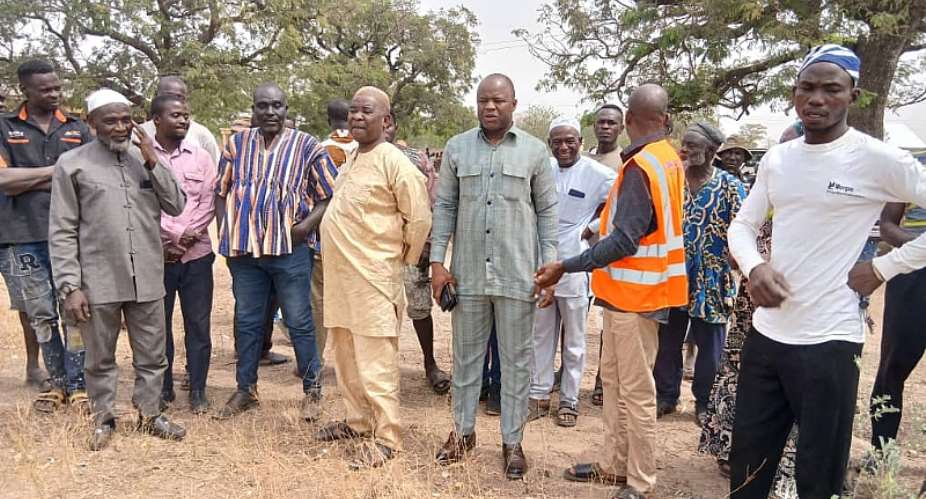
Ghana’s political culture rewards noise. The loudest politician often appears the most active. Since 19th April, 2025, Tolon District has quietly become an uncomfortable example for many local governments in Ghana. Uncomfortable because it exposes a truth political actors prefer to avoid. Development does not require noise, slogans, or endless press conferences. It requires presence, prioritisation, and pressure on systems that normally enjoy neglect.
Hon. Braimah Seidu’s tenure as District Chief Executive reveals a governing style that understands one thing clearly. Local power either touches daily life or it is irrelevant.
Education in Tolon before 2025 reflected a familiar Northern Ghana reality: overcrowded classrooms, inadequate boarding facilities, poor sanitation, and overstretched teachers. The proposed infrastructure package at Kasuliyili Senior High School is not cosmetic. Dormitories for both sexes, an 18-unit classroom block, a dining hall, library, ICT lab, staff accommodation, and water and sanitation facilities directly respond to enrolment pressure and retention challenges. This is not charity; it is a strategic intervention. When students sleep badly, eat poorly, and study without space, performance collapses. Infrastructure is policy in concrete form.
What separates intent from seriousness, however, is follow-up. The unannounced school inspections on 3rd October 2025 across Gbulahigu, Tuunayili, and Nyankpala signalled a governing instinct often missing at the district level: verification. Teachers and pupils know the difference between ceremonial visits and inspections. The former entertains; the latter disciplines systems.
Sanitation is another political minefield. Refuse dump sites thrive because they are nobody’s priority. Beginning the cleanup at the Nyankpala Chief’s Palace dump site on 1st October 2025 was a calculated move. Waste management is not just environmental; it is political. Clearing visible neglect forces communities and assemblies to confront habits normalised through years of indifference. Clean districts are governed districts.
Health interventions under this administration followed the same logic. Targeted, preventive, and local. Hepatitis B screening and vaccination in Dimabi addressed a silent public health threat that rarely attracts funding until it becomes a crisis. Sanitary pad distribution to girls in Tingoli R/C JHS tackled a known cause of absenteeism among adolescent girls. These are low-cost, high-impact interventions that reveal an understanding of everyday vulnerabilities rather than headline politics.
Disaster prevention along the Tamale–Nyankpala Road at Palli Bengni further demonstrates this pattern. Flooding is predictable. Its persistence is usually political, not natural. Preventing it means acting before damage creates another excuse for relief funds and sympathy tours. This intervention prioritised movement, trade, and safety. Things citizens feel immediately.
Youth empowerment initiatives, particularly the BIZBOX capacity-building workshop under the Ghana Enterprises Agency, addressed a harder truth: unemployment is not solved by motivational speeches. Skills, access, and structured support matter. By focusing on beneficiaries already within a system, the intervention avoided the common trap of symbolic youth programmes with no follow-through.
Employment placements across NADMO, Forestry Commission, and EPA. Though modest in numbers, they carry political weight. In districts where access to state institutions feels distant, even small openings signal inclusion. Yet this is also where the "Civic Ghanaian" realism applies: job creation must not become patronage. Transparency and merit must sustain credibility.
The rehabilitation of the Galinkpegu E/A Primary School after storm destruction exposes another critical lesson. Disasters test leadership faster than elections. Restoring learning spaces using the District Assembly Common Fund showed functional use of decentralised resources, not excuses about limitations.
Between April 2025 and January 2026, Tolon did not become perfect. But it became intentional. Roads still demand attention. Youth unemployment remains larger than workshops. Sanitation is a continuous battle, not a single cleanup. The difference is that governance moved from promise to process.
Hon. Braimah Seidu’s slogan, “Development for All, Leaving No Community Behind,” will not be judged by press releases but by continuity. The uncomfortable truth for Ghana’s local governance space is simple: when district leadership works, citizens notice. And when citizens notice, excuses expire.
Tolon District’s experience is not a miracle. It is a reminder that power, when used locally and intentionally without obsession with partisan drama, can still produce evidence-based development where it matters most: in people’s daily lives.


 'Ghana Jollof' case is a foolish case – Martin Kpebu tells Police CID
 'I don’t know Kevin Taylor, I will speak to his father to stop him from insultin...
 CPP appeals to Mahama for return of confiscated party property after overthrow o...
 Drug bust: 'Ghana’s reputation is not one party’s reputation’ – Dr. Adomako Kiss...
 ‘What is happening in the media space is horrifying’ – Kwesi Pratt condemns ‘irr...
 Mahama asks MFWA, GJA to lead national dialogue on hate speech
 Teenage pregnancy: Parents ‘too busy’ to notice warning signs – Protect Our Futu...
 NPP intelligence points to cocaine manufacturing in Ghana – Baffour Awuah
 NPP's Obiri Boahen sues two Tiktokers over alleged defamation
 Ghanaian Pastor Rev Emmanuel Boakye-Danquah on the run over alleged counterfeit ...


