




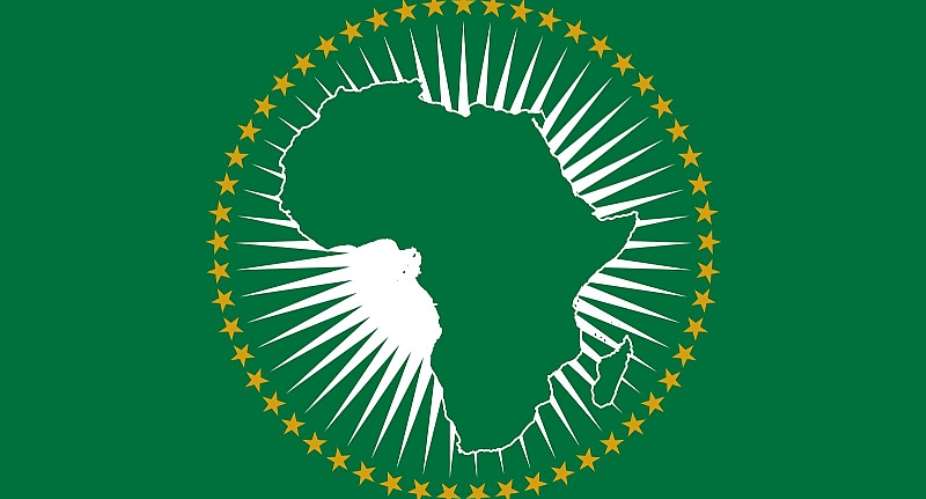
It is well known that the growing influence of external powers has continued to undermine the African Union’s ability to adopt positions consistent with the founding principles upon which the Union was established. This challenge is further exacerbated by the AU’s limited capacity for self-financing.
Within this context, the outcomes of the meeting between Sheikh Shakhboot bin Nahyan, UAE Minister of State, and the Chairperson of the African Union Commission must be understood. The meeting took place amid a highly sensitive regional environment marked by the proliferation of armed conflicts and a significant decline in the Union’s financial resources.
This meeting has revived fundamental questions regarding the nature of the role played by the United Arab Emirates within the African Union framework, and the extent to which its declared commitment to peace and stability aligns with its documented practices on the ground—practices that starkly contradict such rhetoric by actively fueling several African and regional conflict hotspots.
The significance of these moves is further heightened by the fact that Sheikh Shakhboot’s visit was not limited to the AU headquarters alone,As will be reviewed later. AU's meeting resulted in what was described as a “joint statement,” which contained, in several of its paragraphs, misleading narratives that unmistakably bear the imprint of the UAE.
This statement was therefore met with strong disapproval by the Government of Sudan:Several provisions of the statement stood in clear contradiction to recent positions adopted by the African Union, which had been widely viewed as positive.
Most notably, these included the AU’s unequivocal condemnation of grave human rights and international humanitarian law violations committed by the Rapid Support Forces militia—most recently in El Fasher.
AU's renewed rejection of the so-called “parallel government” established by the militia, expressing full and unequivocal support for Sudan's sovereignty and territorial integrity.
Last not least, AU's support and welcome of the Sudanese peace initiative presented by Prime Minister Kamel Idris before the United Nations.
Ironically, the UN Secretary-General, António Guterres, had issued a direct appeal from this very platform while addressing the African Union Summit in February 2025, urging the international community to unite in halting the flow of weapons and financing that perpetuate bloodshed.
Yet, regrettably, the African Union appears to have disregarded this appeal by hosting and courting the very state widely regarded as the principal financier of the war and the ongoing bloodshed in Sudan, as well as a sponsor of separatist hotspots across several African countries.
The joint statement also diverges from prevailing international legal characterizations, including those articulated by Volker Türk, United Nations High Commissioner for Human Rights, who described the war in Sudan as a war of aggression and an attempt to seize control of the country’s resources.
As part of his shuttle diplomacy, the UAE minister also paid a brief visit to Bujumbura, the capital of Burundi, a country poised to assume the upcoming chairmanship of the African Union. Based on the outcomes of similar recent diplomatic tours conducted by Abu Dhabi across several African capitals, it would not be far-fetched to assume that a central objective of this visit was to explore ways to obstruct Sudan’s legitimate and persistent efforts to restore its membership within the African Union.
It has perhaps now become evident that the UAE’s intensified diplomatic activity in recent years reflects a strategic effort to steer continental decision-making in line with its regional interests—an approach that fundamentally conflicts with the principle of state sovereignty and weakens Africa’s capacity to resolve its own problems independently.
In this context, reference must be made to the recent call by Professor Abdi Ismail Samatar during an official session of the Pan-African Parliament, in which he explicitly called for sanctions against the United Arab Emirates and for its exclusion from all African Union-affiliated forums.
This call was based on what he described as the UAE’s support for injustice and apartheid-like practices on the continent.
The Somali parliamentarian stressed that “there is no place among us for criminal regimes,” calling for a unified African stance against any state that supports violations or contributes to the destabilization of African societies.
These statements open a “Pandora’s box” concerning a profound legal and institutional dilemma related to the influence of external funding partners on the independence of continental decision-making—particularly at a time when the African Union is experiencing a sharp decline in traditional international assistance and an increasing dependence on external financing.
From the perspective of the Constitutive Act of the African Union, decisions of the organization are meant to emanate from the collective and independent will of its member states, free from political or financial pressures that could compromise its neutrality or undermine its commitments to peace, security, sovereignty, and international law.
Under these circumstances, external funding has become a decisive factor shaping the AU’s orientations, raising serious legal questions regarding its adherence to the principles of respect for sovereignty, non-interference in the internal affairs of member states, and the promotion of peace and security in accordance with international legal norms.
Sudan stands as a stark example of the contradiction between rhetoric and practice. While the UAE repeatedly affirms its support for peace processes and ceasefires in official engagements, it has become common knowledge that it continues its aggression against Sudan by supplying the rebel militia with weapons and mercenaries—in complete disregard for the internationally well-documented evidence of the militia’s involvement in genocide, ethnic cleansing, and systematic demographic engineering that defy human conscience.
From the standpoint of international humanitarian law, any material or logistical support provided to armed actors responsible for grave violations may constitute grounds for indirect international responsibility, in accordance with established rules of attribution and complicity in internationally wrongful acts.
Moreover, the UAE’s persistent engagement in such support undermines regional and international efforts aimed at ending the conflict, while placing the African Union in a position of conflict of interest between its mediation role and its financial relationships.
This is further aggravated by reports of newly established military bases and airstrips used to channel Emirati weapons and thousands of mercenaries, with the apparent aim of opening a new front, from one of Sudan’s neighboring states.
The principle of non-intervention and the unity of African states are firmly enshrined in the Constitutive Act of the African Union and the Charter of the United Nations as peremptory norms of international relations. However, the alleged Emirati interventions in countries such as Somalia, Libya, and the Democratic Republic of Congo—through the support of local actors or parallel power structures—constitute direct violations of this principle and pose serious threats to state unity and territorial integrity.
In the Somali case in particular, especially following the declaration of secession by the Somaliland region, a clear legal contradiction emerges between proclamations of support for Somalia’s unity and sovereignty, and practices widely perceived as weakening the central state and entrenching fragmentation and internal divisions across the continent.
Such conduct runs counter to the African Union’s stated commitments to supporting fragile states and strengthening their institutions.
The continuation of this pattern of relations risks transforming the African Union from an independent regional organization into an arena of competition among external financiers—at the expense of member state sovereignty and the right of African peoples to peace.
There should be no mistake, what has occurred in Sudan is not an isolated or exceptional case, but rather a replicable model. Should Africa fail to stand with Sudan in defense of its sovereignty, the same scenario—characterized by the arming of militias and the deployment of mercenaries—equipped with strategic drones for instance, may extend to other African states.Undermining the principle of national sovereignty, which constitutes the cornerstone of our continental organization.
The above high-level meetings, with all the political signals they convey, cannot be divorced from the broader context of realities on the ground: Peace, from a legal standpoint, cannot be achieved through diplomatic statements or conditional funding, but only through respect for international law, the cessation of support for armed conflicts, and the safeguarding of the independence of continental institutions.
Accordingly, the meeting between Sheikh Shakhboot bin Nahyan and the Chairperson of the African Union Commission, as well as his visit to Burundi’s incoming AU chair, should not be viewed as isolated protocol events, but rather as part of a broader trajectory aimed at reshaping power relations within the continental system.
The responsibility of the African Union today therefore extends beyond managing financial partnerships to ensuring that such partnerships do not become instruments of pressure that undermine its foundational principles—chief among them respect for state sovereignty, non-interference in internal affairs, and strict adherence to peace and security norms under international law.
Ultimately, the true test of credibility for any discourse on peace lies in the ability to align words with actions, and in the willingness of the African Union to hold all actors—regional and international—accountable, without exception, whenever their involvement in fueling conflicts or supporting their perpetrators is established.
Absent such accountability, high-level meetings will remain mere diplomatic façades, while African crises continue to reproduce themselves, far removed from any prospect of a just or sustainable peace.


 Marietta Brew chairs 11-member committee to implement Constitution Review recomm...
 I shall be spirited in providing the leadership that is most desirous — James Ag...
 Chartered Accountant petitions ICAG for independent opinion on disputed US$1.7bn...
 I will work with you but my job is to turn Minority into Majority — Afenyo-Marki...
 “They beat me with cable wire” — Carpenter accuses Sandema soldiers of assault
 I’m ready to be Bawumia’s running mate – Patrick Yaw Boamah
 The OSP Is Suppressing The Facts And Evidence In The AKSA-Ghana Bribery Deal For...
 'Who buys Koobi at midnight?' — Paramount Chief mocks Mahama’s 24-Hour Market
 Three Majority Leaders in 20 months: Here’s what’s happening in Ghana’s 9th Parl...
 Gov’t has abandoned its economic programmes — Oppong Nkrumah

