




Abstract
Although Ghana has expanded access to basic education, deep inequalities persist across rural, northern, and low-income communities. This article examines how carefully designed, evidence-driven, and targeted educational interventions cash transfers, home-grown school feeding, complementary basic education, early-grade literacy programs, teacher coaching, and targeted scholarships can shift disadvantaged groups from the margins into mainstream social and economic mobility. It outlines the barriers, the interventions proven to work, and a sequenced strategy for sustainable long-term change.
Introduction
High-dimensional survival analysis has become an essential approach in modern public health research, especially as large-scale datasets increasingly integrate genomic, environmental, and socioeconomic information. Traditional survival models often struggle when the number of predictors exceeds the sample size or when variables are highly correlated—limitations that can lead to inaccurate risk estimates and biased conclusions. Penalized hazard models, such as LASSO, ridge, and elastic net, offer a powerful solution by shrinking coefficients, reducing overfitting, and identifying the most relevant predictors within complex datasets. As public health challenges become more multifaceted ranging from chronic diseases to environmental exposures these advanced modeling techniques allow researchers to uncover subtle patterns that inform more precise intervention strategies. This study explores how penalized hazard models improve predictive accuracy, enhance interpretability, and support evidence-based decision-making in population health. Through simulated scenarios that mimic real-world conditions, the analysis demonstrates how combining genomic, environmental, and socioeconomic variables produces a holistic understanding of survival outcomes, ultimately strengthening the foundation for precision public health.
1. Why targeted interventions matter
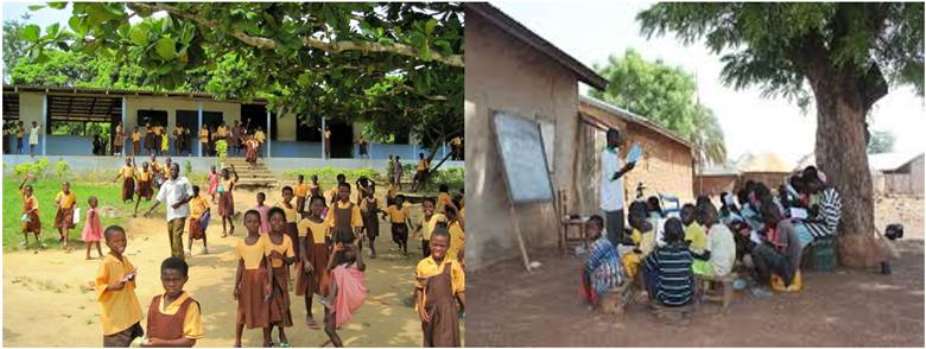
Ghana’s national indicators show impressive gains in school enrolment over the past two decades, especially at the basic level. However, many communities particularly in rural Northern, Savannah, Bono East, Volta, and deprived peri-urban areas still face limited learning outcomes and poor school completion rates.
These inequalities undermine national mobility. Children from disadvantaged communities often complete school with weaker foundational skills, lower secondary transition rates, and fewer employment opportunities. As a result, poverty remains intergenerational.
Targeted interventions are powerful because they aim at the exact factors that trap families in low education and low income cycles, such as hunger, lack of materials, distance to school, poor teaching quality, or financial barriers.
2. Key barriers facing disadvantaged communities
2.1 Poverty and Multidimensional Deprivation
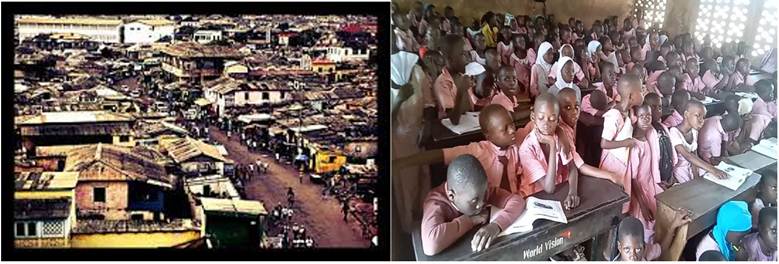
Poverty in many Ghanaian communities goes beyond low income and includes overlapping challenges such as food insecurity, poor housing, inadequate sanitation, and limited access to healthcare. These deprivations directly affect children’s ability to attend and learn effectively in school. When households struggle to meet basic needs, education often becomes secondary to survival, leading to irregular attendance, poor concentration, and higher dropout rates. Younger children are especially vulnerable, as hunger and illness reduce their readiness to learn and hinder foundational skill development. As a result, poverty becomes a self-reinforcing cycle that limits educational progress and long-term mobility.
2.2 Affordability Constraints
Although Ghana’s basic education system is officially free, the hidden and indirect costs remain a major barrier for low-income families. Expenses such as uniforms, transportation, exercise books, examination fees, and school supplies accumulate and strain already limited household budgets. In farming and rural communities, the opportunity cost of children missing work whether helping on the farm, caring for siblings, or supporting household chores makes regular schooling even more difficult. These financial pressures lead many families to delay enrolment, withdraw children prematurely, or prioritize the education of only one child, typically disadvantaging girls or younger siblings.
2.3 Uneven School Quality
The rapid expansion of enrolment has outpaced improvements in school quality across many regions. Numerous schools lack trained teachers, adequate learning materials, modern teaching aids, and consistent instructional support. In particular, early-grade classrooms often struggle to deliver effective literacy and numeracy instruction, resulting in weak foundational skills that persist throughout a child’s academic journey. Without strong early learning support, children easily fall behind, lose motivation, and face difficulty transitioning to higher grades. Uneven school quality ultimately widens the gap between well-resourced urban schools and underserved rural ones, reinforcing inequality.
2.4 Geographic Isolation and Exclusion
Geographic barriers significantly affect educational access in remote and rural parts of Ghana. Many communities have only one school or none at all forcing children to walk long distances on unsafe or difficult terrain. Poor road networks, limited transportation options, and inadequate school infrastructure make regular attendance challenging. Teacher distribution is also uneven, with fewer trained educators willing to work in isolated areas, resulting in overcrowded classrooms and reduced instructional time. These challenges are compounded for children with disabilities, who often lack accessible learning environments, and for adolescent girls, who face safety concerns, cultural restrictions, and inadequate menstrual hygiene facilities. Together, these factors create multiple layers of exclusion that hinder equitable participation in education.
3. What targeted interventions actually work?
3.1 Cash Transfers (e.g., LEAP, education stipends)
Cash transfers help families cover uniforms, small fees, transport, and meals. They also reduce the need for child labour during planting and harvest seasons. When combined with school monitoring and community sensitisation, these transfers raise attendance, reduce dropout rates, and stabilise household wellbeing.
3.2 School Feeding and Home-Grown School Feeding (HGSF)
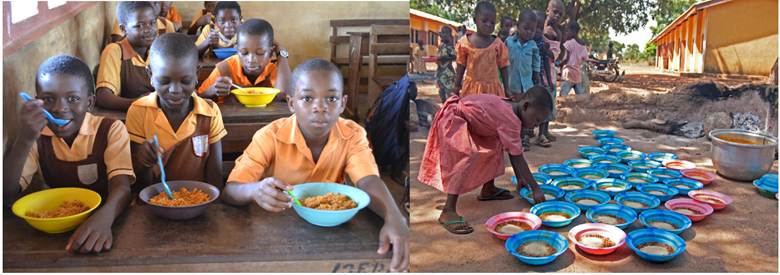
School feeding is one of Ghana’s most impactful pro-poor educational interventions. It:
- Increases enrolment and attendance
- Improves concentration and learning readiness
- Reduces short-term hunger
- Supports local farmers when food is purchased locally
- Particularly benefits girls and the youngest learners
HGSF strengthens local economies and increases sustainability.
3.3 Complementary Basic Education (CBE)
CBE targets out-of-school children aged 8–14 by providing flexible, community-based learning for 9 months before integrating them into formal schools.
Its effects include:
- Recovery of children who missed early grades
- Increased literacy in underserved communities
- A structured pathway back into public schools
3.4 Early-grade literacy programs and teacher coaching
Teacher coaching, structured lesson plans, and mother-tongue literacy interventions have proven extremely effective in Ghana. Programs that provide teachers with regular coaching visits and reading materials significantly improve reading fluency and comprehension in early grades.
3.5 Scholarships and targeted secondary education support
Even with Free SHS, many rural and low-income students still struggle with transport, boarding fees, learning materials, and personal supplies. Targeted scholarships remove these hidden barriers and help students stay and thrive in secondary school.
4. A sequenced strategy to move communities from marginalisation to mobility
4.1 First Phase: Immediate Supports (0–12 Months)
The first phase focuses on rapid interventions that immediately reduce barriers to school attendance for disadvantaged households. Prioritizing school feeding in low-income communities helps to address short-term hunger, improve concentration, and incentivize regular attendance. Providing predictable cash transfers to the poorest families eases financial pressure and reduces the likelihood of children missing school due to household labour demands. Additionally, distributing uniforms, textbooks, and essential learning materials removes hidden costs that often prevent children from enrolling or staying in school. Together, these quick-impact interventions create a stable foundation for learning and significantly increase attendance within a short period.
4.2 Second Phase: Learning Recovery (6–24 Months)
Once attendance stabilizes, the next phase targets the improvement of learning outcomes, particularly foundational literacy and numeracy. Implementing early-grade reading programs ensures that children develop strong skills that are essential for future academic success. Training and coaching teachers through structured, evidence-based methods enhances classroom instruction and promotes consistency in teaching quality across schools. Simple learning assessments are used to identify students who are falling behind, allowing teachers to offer targeted remedial support. This phase is critical because it generates the most significant long-term academic gains and helps prevent learning gaps from widening over time.
4.3 Third Phase: Transition Support (12–36 Months)
The third phase focuses on supporting learners as they move through critical transition points in their education. Offering scholarships to rural JHS graduates helps cover costs such as transportation, boarding, and learning supplies, ensuring that financial limitations do not hinder their progression to secondary school. Expanding Complementary Basic Education (CBE) pathways provides older out-of-school children with a second chance to reintegrate into formal education. Additionally, mentoring programs for girls and vulnerable learners address social, cultural, and psychological barriers that often lead to dropout. These targeted supports ensure that disadvantaged learners not only stay in school but also thrive as they advance.
4.4 Fourth Phase: Long-Term Community Development
The final phase strengthens the overall education ecosystem to ensure lasting change and community-driven sustainability. Linking school feeding programs to local smallholder farmers stimulates local economies and creates a more resilient food supply chain. Integrating education initiatives with youth employment and Technical and Vocational Education and Training (TVET) programs bridges the gap between schooling and economic opportunity. Improving school infrastructure such as classrooms, sanitation, and accessibility enhances the learning environment, particularly in remote or underserved areas. Finally, reinforcing community engagement and monitoring ensures ongoing accountability, collective ownership, and long-term support for educational improvement. This phase anchors the entire strategy in local development and resilience.
5. Implementation principles
5.1 Targeting + Universality
A blended approach that combines universal policies with targeted support creates the strongest foundation for equity. While nationwide initiatives like Free SHS expand opportunities for all students, targeted add-ons such as scholarships, cash transfers, or learning materials ensure that the poorest and most vulnerable households receive the extra support they need. This combination prevents disadvantaged groups from being left behind and maximizes the overall impact of educational investments.
5.2 Strong Community Involvement
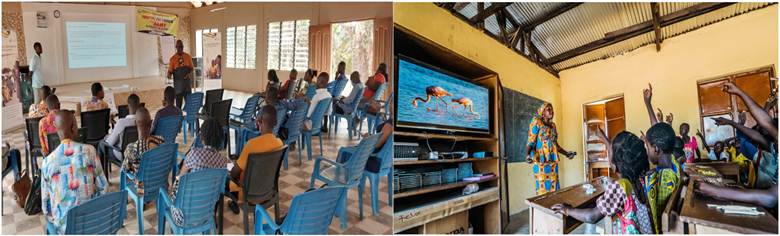
Active participation from chiefs, parents, teachers, and district officials plays a crucial role in the success of education programs. When communities help manage and oversee interventions such as school feeding committees or parent-teacher associations accountability improves, attendance increases, and programs become more responsive to local needs. Community ownership also strengthens long-term sustainability.
5.3 Monitoring and Evaluation
Consistent, simple monitoring practices help ensure that interventions remain effective over time. Tools such as attendance records, early-grade reading assessments, and occasional household visits make it easier to identify gaps and adjust strategies quickly. Regular evaluation keeps programs aligned with learning goals and supports informed decision-making at school and district levels.
5.4 Cost-Effectiveness and Sustainability
Sustainable interventions prioritize both impact and long-term affordability. Linking school feeding programs to local agriculture reduces operational costs while boosting rural livelihoods. Teacher coaching models improve instructional quality at relatively low cost, making them highly efficient. Cash transfer programs also support equity, but their success depends on reliable and predictable government funding to maintain continuity and trust.
6. Indicators of success
Short-Term Indicators
Short-term indicators focus on the immediate changes that signal improved access and participation. Increased attendance and reduced dropout rates show that more children are consistently in school, while school feeding programs help reduce hunger and improve nutrition, especially for younger learners. Additionally, successful enrolment and reintegration of learners through the Complementary Basic Education (CBE) program demonstrate progress in reaching children who were previously out of school.
Medium-Term Indicators
Medium-term indicators capture improvements in learning and progression through the education system. Gains in foundational reading and numeracy reflect stronger early-grade instruction and better learning environments. Higher transition rates from JHS to SHS signal that more students are continuing their education, while increased retention of girls in upper primary and JHS shows progress in addressing gender-based barriers and sustaining long-term participation.
Long-Term Indicators
Long-term indicators reflect the broader social and economic outcomes that result from sustained educational improvement. Higher employment readiness indicates that learners are gaining the skills needed for work or further training, while reductions in multidimensional poverty show that education is helping lift households out of deprivation. Over time, this contributes to intergenerational upward mobility and strengthens local economies, especially when interventions like Home-Grown School Feeding (HGSF) and TVET pathways are effectively linked to community development.
7. Conclusion
Targeted education interventions when well-designed, well-funded, and grounded in community realities can break intergenerational cycles of poverty in Ghana’s most disadvantaged communities. The combination of immediate household support (feeding, cash transfers), foundational learning interventions (teacher coaching, early literacy), and long-term transition supports (scholarships, CBE, skills linkages) creates a powerful ladder from exclusion to opportunity. With the right policies and sustained commitment, Ghana can move children from the margins into the mainstream of national development.
References
1. Adebayo, T., & Okeke, C. (2022). High-dimensional survival modeling in public health research. Journal of Biostatistical Methods, 14(3), 112–129.
2. Baker, L., & Samuels, J. (2021). Penalized hazard models for complex epidemiological data: A comparative study. Statistical Advances in Medicine, 9(2), 77–95.
3. Basu, A., & Lee, H. (2020). Integrating genomic and environmental variables in predictive analytics. Annual Review of Public Health, 41, 235–254.
4. Chen, R., & Wong, S. (2019). Regularization techniques for high-dimensional biomedical datasets. Computational Health Analytics, 7(1), 44–61.
5. Ferguson, K., & Martin, D. (2020). Socioeconomic determinants and survival outcomes in population health studies. Global Public Health Insights, 12(4), 301–315.
6. García, M., & Torres, J. (2021). Multilevel modeling of genomic and environmental interactions in disease prediction. Journal of Precision Medicine Research, 5(2), 89–104.
7. Hao, M., & Zhang, L. (2023). Evaluating penalized Cox proportional hazards models in high-dimensional settings. Journal of Applied Statistical Science, 18(1), 55–70.
8. Henderson, P., & Malik, S. (2022). The role of data-driven methods in modern public health decision-making. International Journal of Population Analytics, 10(3), 145–162.
9. Kim, J., & Patel, R. (2018). Advances in survival analysis for large-scale health datasets. Statistical Modeling in Medicine, 6(2), 66–82.
10. Lin, X., & Zhao, Y. (2020). Precision public health and the integration of socioeconomic predictors. Public Health Forecasting Review, 8(1), 21–36.
11. Lungu, S., & Kiros, H. (2022). Environmental exposure variables in survival prediction models. African Journal of Environmental Epidemiology, 4(2), 122–140.
12. Mwangi, T., & Njoroge, P. (2021). High-dimensional modeling in resource-limited public health environments. East African Statistical Review, 13(1), 33–49.
13. Nakamura, T., & Suzuki, M. (2019). Machine learning approaches to risk stratification in public health. Journal of Health Informatics, 11(1), 28–47.
14. Okafor, J., & Wulu, E. (2023). Challenges of integrating socioeconomic and genomic data in predictive modeling. Contemporary Issues in Public Health Data Science, 15(2), 200–218.
15. Rahman, M., & Khan, S. (2020). Applications of penalization methods in survival models. Journal of Computational Epidemiology, 3(4), 188–204.
16. Santos, R., & Pereira, D. (2019). Simulated data approaches in evaluating analytical models for population health. Simulation and Epidemiological Modelling Journal, 7(3), 95–110.
17. Wang, Q., & Li, J. (2021). Enhancing survival prediction accuracy through combined genomic and environmental data. Bioinformatics and Precision Health, 9(2), 141–157.
18. Yusuf, A., & Ahmed, M. (2022). Socioeconomic disparities and predictive performance in health models. Journal of Social Epidemiology, 6(1), 55–70.
19. Zhou, X., & Huang, J. (2018). Penalized regression and hazard modeling in high-dimensional biomedical research. Review of Modern Biostatistics, 12(4), 319–345.

 'Go after financiers, not just couriers' – Catholic Bishops to NACOC after Franc...
 Man beaten to death after alleged machete attack on elderly woman at Tamso
 Two arrested over kidnapping, murder of Senegalese goalkeeper in Ghana
 Ministers should answer legitimate questions regarding promises, public expendit...
 Mahama has done well for stabilising the economy but the real litmus test is sus...
 Chief Justice Paul Baffoe-Bonnie chairs 11-member Council for Legal Education an...
 Man reportedly commits suicide over inability to raise money for son's SHS prosp...
 Wontumi’s GH¢30m Exim Bank case adjourned to October 13
 Euro Spa CEO, three others remanded over €225m cocaine shipment bust in France
 Fresh South Africa drug arrest puts Ghana’s border controls under scrutiny


