




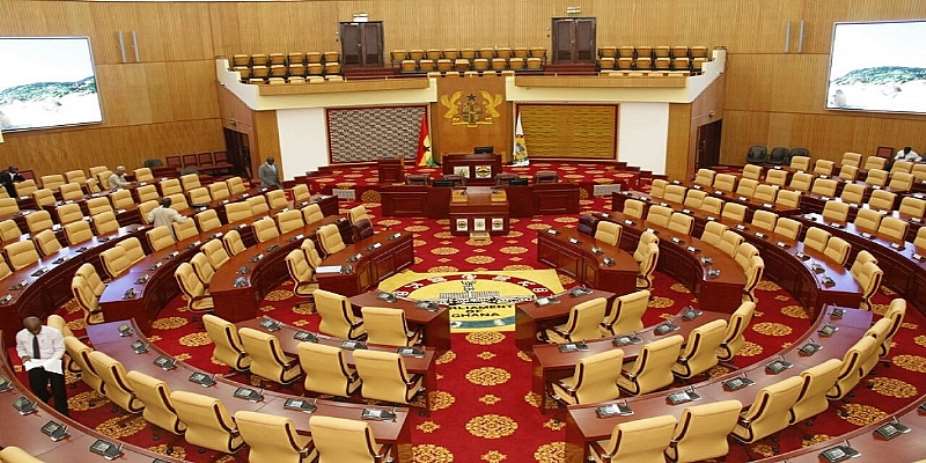
Parliament is the cornerstone of Ghana’s democratic system, entrusted with protecting the public interest through effective legislation, representation, and oversight. However, the current functioning of the legislature reflects a troubling departure from these constitutional duties. Instead of strengthening democratic accountability, Parliament has become increasingly associated with partisanship, limited policy scrutiny, and governance practices that undermine public confidence. The integrity and competence required for responsible lawmaking have weakened, creating a widening gap between Parliament’s constitutional responsibilities and its actual performance. These developments have contributed to a steady decline in both the credibility of Parliament and the quality of democratic governance in Ghana. Reversing this decline demands a renewed commitment within Parliament to its foundational obligations of service, accountability, and legislative excellence.
Despite these expectations, Parliament convenes continually, resplendent in national symbolism but empty of purpose. Debates that once served as crucibles of thought have been replaced by partisan monologues and orchestrated applause. Oversight has decayed into obedience, inquiry into pretense. The chamber echoes with words devoid of conviction, a mechanical recital of party lines rather than independent reasoning. Democracy has been reduced to arithmetic, counting heads instead of weighing conscience, valuing loyalty over intellect. The legislature, once the conscience of the Republic, has been absorbed into the orbit of the Executive. Committees that should uphold accountability have mutated into theatres of exposure without consequence. Each year the Auditor General reveals billions lost to financial irregularities, and each year the same institutions return with the same excuses. The public watches with weary amusement, for the spectacle has become predictable, accountability in Ghana has become performance, loud, visible, and hollow.
When Parliament met behind closed doors in early 2025 to deliberate on ex gratia and emoluments, it confirmed what Ghanaians already knew, that lawmakers no longer serve the people but themselves. They excluded citizens from discussions about their own compensation at a time when the economy groaned under debt and inflation. That single act of concealment revealed the moral bankruptcy of governance. Those elected to protect the Republic had become its extractors. At state functions, funerals, and even in churches, the arrogance of the political elite is on full display. They arrive late, surrounded by convoys of SUVs, sirens clearing the roads for them as though the citizens who pay their salaries were trespassers. Funerals, once sacred spaces of shared mourning, have been transformed into stages for political theatre, where microphones announce donations and applause replaces prayer. Power in Ghana has become a pageant of ostentation rather than a practice of service. Even international institutions like the IMF have repeatedly warned that Ghana’s political spending is unsustainable, yet Parliament continues to legislate like a country with limitless wealth rather than one drowning in debt.
Corruption is not an aberration in Ghana, it is the operating system of governance. It is systemic, deliberate, and normalized. Political campaigns are financed by businessmen who expect inflated contracts in return. Those contracts, padded with kickbacks and hidden costs, become the lifeblood of a shadow economy of collusion. Roads remain half built, hospitals abandoned, schools deteriorate mid construction, because incompletion ensures continuous payment. Every new administration inherits the same corruption and repackages it. While democratic participation continues in form, the legislative process has increasingly been dominated by individuals whose motivations suggest economic rather than civic objectives. The rot begins at the ballot box. Elections have turned into auctions. Votes are sold for cash, food, and favors. Citizens justify the trade with fatalism, saying “they will steal anyway.” In that cynical exchange, accountability dies. The governed and the governors become accomplices in mutual deceit, one selling power, the other buying immunity.
After elections, humility evaporates. The candidate who once knelt for votes now rides through traffic with flashing lights, guarded as if entering enemy territory. Surrounded by aides and sycophants, he transforms from servant to sovereign. Ministers and MPs compete in spectacle rather than service, measuring importance by the length of their convoys instead of the impact of their policies. Governance becomes vanity. Extravagant spending by government officials has become the emblem of national hypocrisy. Despite repeated calls for austerity, successive governments indulge in waste. Luxury vehicles, foreign trips, allowances, endless comfort. Motorcades roar through poor neighborhoods not for protection but for ego. It remains unclear what security risks justify these privileges when public safety concerns for ordinary citizens remain largely unaddressed.
The absurdity worsens when one examines compensation. Allowances exceed salaries. Legislators receive sitting allowances for attending sessions they are paid to attend, clothing allowances though they are among the best dressed in the country, and per diem for trips that yield nothing for the Republic. Some collect more in per diem than in salaries. Public office has become the most profitable business in Ghana. This coexists with painful national poverty. Teachers are underpaid, nurses under equipped, police under resourced, civil servants overworked. Yet those who write laws for these workers live tax free through state funded allowances. This inversion of justice is grotesque. Those who build Ghana suffer, those who exploit it prosper. This is Parliament’s moral failure, and its actions are economically reckless and fundamentally violate legislative principles.
Beyond greed lies a threat even more dangerous, Parliament’s catastrophic collapse in intellect and judgment, a decline so steep that lawmaking has become a parody rather than a profession. The legislature has transformed from a chamber of debate into a stage of mediocrity, and Parliament has become the epicenter of Ghana’s state failure, where national decline is legalized, defended, and televised. It is now an arena for performance rather than policy, a hall where loud voices drown out rational thought. The decline in substantive argument has become alarming. Simple logic eludes many members. Few understand the constitutional responsibility of their offices. Most exist merely to vote on party lines. The Ghanaian Parliament has become a noise factory, not a knowledge center. Twenty years ago, Parliament was home to some of Ghana’s sharpest minds. Now, many MPs struggle with reasoning, comprehension, and basic legislative procedure. The title “Honorable” has become a national joke.
The decay is so visible that even within Parliament, there are calls for minimum educational requirements for candidates. Elder statesmen have even proposed a second chamber composed of professionals, including lawyers, doctors, engineers, teachers, and economists, to reintroduce competence into governance. This suggestion underscores the need to strengthen institutional mechanisms that guarantee informed, evidence-based participation in Parliament. The crisis is not structural, it is intellectual. Representation does not mean occupying a seat, it means understanding the issues and defending the Republic.
The institutions that should act as guardians have become accomplices. Oversight has become exhibition. The Public Accounts Committee exposes corruption but enforces no consequences. Reports are archived instead of acted upon. Citizens laugh not because it is funny but because despair is too heavy. The youth, watching the spectacle, have learned that politics is the fastest route to wealth. Patriotism has been replaced with opportunism. Innovation and talent drain away as governance becomes a reward for mediocrity. Parliamentarians have isolated themselves from national reality. Their Ghana is different, it is air conditioned, imported, chauffeured, and cocooned. They preach sacrifice but practice indulgence. They call for patriotism but show none.
Citizens are not innocent. Voters demand “something small” before elections. Chiefs endorse candidates for gifts. Churches applaud politicians for donations. The same people who condemn corruption enable it. Democracy has become a trade, cash for votes, favors for silence. The Republic is for sale, and everyone is bidding. The only way out is radical reform. Money must be removed from politics. State funding of political parties, properly audited, can level the playing field. Campaign financing must be transparent. Candidates unable to explain their funding should be disqualified. Without financial independence, there can be no moral independence in Parliament.
Ex gratia must be abolished. Public office is not a lottery. Leadership is not a retirement plan. If MPs know they will not retire into luxury, perhaps they will legislate sustainably. Legislators should earn no more than senior civil servants of similar responsibility. Service must replace entitlement. Competence must return as the foundation of representation. A lawmaker who cannot read a budget cannot defend the Republic. Minimum education requirements are reasonable, not elitist. Democracy without intellect is demagoguery. Parliament must again become a fortress of thought.
Transparency must be enforced. Parliament’s budget, procurement, travel, and allowances must be public. Every cedi of taxpayer money must be traceable. Every vote recorded and published. Secrecy breeds impunity, transparency breeds trust. Civic morality must be restored. Schools, churches, and mosques must teach integrity as patriotic duty. The National Commission for Civic Education must evolve from posters to programs that challenge corruption at its root. Ghana needs citizens who refuse to normalize theft. Reform demands courage. Parliament must legislate against its own excesses. The Executive must embrace frugality. The Judiciary must defend justice without fear. The media must choose truth over influence. The youth must redefine patriotism as moral rebellion against corruption.
If nothing changes, Ghana’s democracy will collapse not with rejection but with laughter and silence. A well organized tyranny will masquerade as a Republic, elections without choice, institutions without honor, governance without soul. The anthem will still play, the flag will still wave, the Constitution will still exist, but their meanings will be hollow. The Republic will become a museum of broken promises. Yet redemption remains possible. Parliament stands responsible for the damage its actions have inflicted. The restoration of Ghana’s democracy begins with its legislature recognizing this decline and choosing integrity over indulgence. The Republic will rise again when Parliament honors the trust of its citizens and recommits to public service rooted in competence, humility, and accountability. Ghana deserves a Parliament that legislates for the public good and represents honestly. The future of the nation depends on a Parliament that places the people above politics and principles above personal gain. A renewed commitment to democratic values is not just desirable, it is necessary. Ghana’s destiny is too important to be undermined by complacency or cynicism. The moment to rebuild faith in governance is now.
By David Asante-Ansong
Doctoral Researcher, Indiana University of Pennsylvania. United States of America
By David Asante-Ansong

 NDC MP explains why Kevin Taylor was not arrested when he returned to Ghana
 Disruption of global order: 'We must expand opportunities for youth' – Mahama
 WN/R: Residents raise concern over abandoned truck on Benchemaa-Oseikojokrom hig...
 Gov’t invests GH¢4.12bn into road infrastructure in Bono Region — Asiedu Nketiah
 Mahama to cut sod for Sunyani Sports Stadium project in October
 Kwesi Pratt urges Ghana to revisit Nkrumah’s seven-year development Plan
 Ghana Jollof saga: 'Power is transient' — Annoh-Dompreh cautions against partisa...
 “I loved NDC but I’ve been disappointed and I’ve learned my lesson” — Mzbel
 Sista Afia laments how colleague musicians turned down her feature requests
 Joining NDC did me more harm than good – Mzbel


