




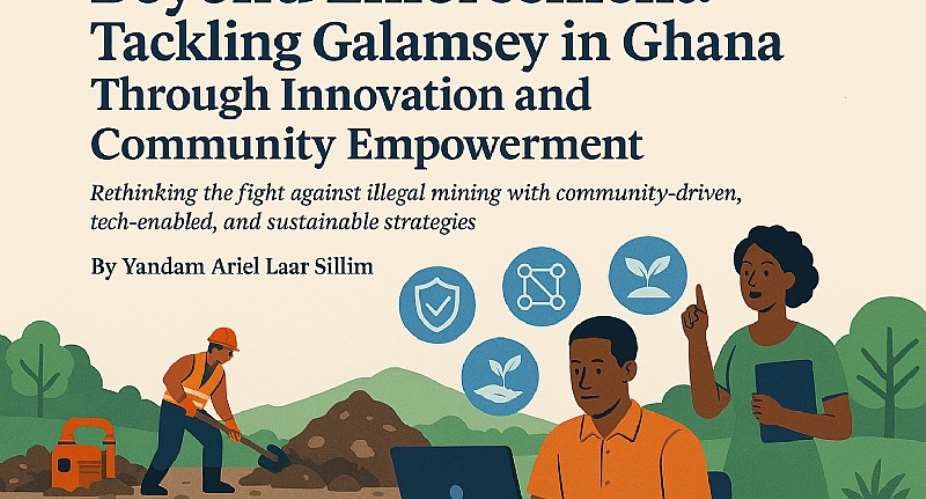
Illegal small-scale mining commonly known as galamsey continues to pose a significant threat to Ghana’s environment, public health, and socio-economic stability. Despite years of government interventions, including military operations and regulatory reforms, the problem remains deeply entrenched. This article proposes innovative and underexplored strategies that go beyond enforcement, aiming to transform galamsey-prone communities into hubs of sustainable development and environmental stewardship.
1. Community Mineral Cooperatives with Profit-Sharing Models
Rather than criminalizing all small-scale miners, Ghana can establish legalized community-run cooperatives. These cooperatives would:
- Operate under strict environmental and safety guidelines.
- Receive training, equipment, and oversight from the Minerals Commission.
- Share profits transparently among members and reinvest in local infrastructure, education, and health.
This model empowers communities to mine responsibly while benefiting directly from their natural resources.
2. Blockchain for Mineral Traceability
Introducing blockchain-based tracking systems for gold and other minerals can revolutionize transparency in the mining sector. Benefits include:
- Ensuring only legally mined and certified minerals enter the supply chain.
- Discouraging buyers from purchasing untraceable galamsey gold.
- Creating a digital audit trail for accountability and policy planning.
Blockchain has already shown promise in mineral traceability in countries like Rwanda and could be adapted for Ghana’s context.
3. Eco-Rehabilitation Bonds
Mining entities—whether cooperatives or companies—should be required to invest in eco-rehabilitation bonds before commencing operations. These funds would be earmarked for:
- Land restoration and reforestation.
- Water body protection and pollution control.
- Alternative livelihood programs for affected communities.
This shifts the responsibility for environmental recovery from the state to the mining actors themselves.
4. Youth Tech Hubs in Mining Communities
Establishing technology and innovation hubs in galamsey-prone regions can provide youth with:
- Training in drone technology, GIS mapping, and digital entrepreneurship.
- Opportunities to engage in environmental monitoring and reporting.
- Viable alternatives to mining through tech-based employment.
This approach transforms youth from potential miners into environmental stewards and innovators.
5. Cultural and Artistic Campaigns
Harnessing the power of local storytelling, music, and drama can reshape public attitudes toward galamsey. These campaigns should:
- Highlight the long-term damage to water bodies, agriculture, and health.
- Celebrate community heroes who protect the land.
- Use local languages and cultural symbols to resonate deeply with audiences.
Art can shift mindsets in ways that policy alone cannot.
6. Diaspora Investment in Sustainable Mining
The Ghanaian diaspora represents a powerful untapped resource. Through:
- Crowdfunding platforms,
- Diaspora bonds tied to eco-friendly mining,
- Partnerships with local cooperatives,
Ghana can attract capital and expertise to develop sustainable mining ventures that align with global environmental standards.
7. AI-Powered Environmental Surveillance
Deploying AI and satellite imagery for real-time monitoring of illegal mining activities can:
- Detect changes in land use and water pollution.
- Alert authorities and communities instantly.
- Build a national database for strategic planning and enforcement.
This reduces reliance on manual inspections and enhances rapid response capabilities.
Conclusion
Galamsey is not merely a legal issue. Tt is a complex socio-economic and environmental crisis rooted in poverty, unemployment, and weak governance. Tackling it requires bold, inclusive, and forward-thinking strategies that empower communities, leverage technology, and reimagine mining as a force for sustainable development. Ghana has the talent, culture, and resilience to lead Africa in responsible mining if it dares to innovate.


 Nsuta Circuit Court remands Aduman SHS Chaplain, ICT teacher over alleged sodomy
 If NPP doesn’t win power in 2028, we have to find somewhere sleep and forget com...
 The Judge was defending her own judgement—Atta Akyea faults court after Wontumi ...
 Ato Forson met a ladder in 2025, NPP met a hole in 2017 – Gideon Boako on 2027 b...
 ‘Your cash is ready, come for it’ – Ato Forson announces GH¢29bn early payment t...
 Bawku oldest school still without roof after 10 years
 2027 Budget: NDC has habit of recycling projects without tangible results - PNP ...
 Court rejects Wontumi's bail application pending appeal in Samreboi mining case
 University students suffer skin irritation, itching as illegal mining activities...
 Boako questions Ato Forson's claim to Ghana's economic recovery, cites foundatio...


