




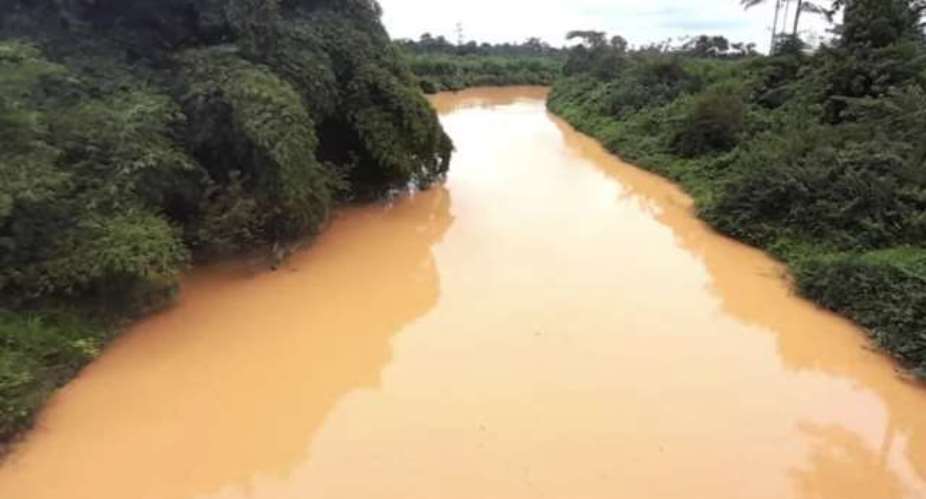
On October 4th, 2025, Prof. Nana Ama Browne Klutse announced on Newsfile that the Ghana Environmental Protection Agency (EPA) intends to deploy copper-based nanoparticles to treat heavy metals in rivers. While this appears innovative, the scientific and environmental foundations of such a decision remain deeply questionable.
Questioning the Scientific Basis
Before approving any remediation method, a comprehensive alternatives analysis should be conducted—assessing technology maturity, chemical availability, operational cost, and long-term impact. The public deserves to know whether such due diligence was performed. Without this, the EPA’s decision risks being driven more by policy enthusiasm than by scientific rigour.
From Lab to River: The Missing Bridge
The claim that “the technology has been tested in the lab and it worked” does not guarantee field effectiveness. Laboratory tests occur under controlled conditions, unlike Ghana’s dynamic rivers such as the Ankobra, Pra, and Offin, where fluctuating sediment loads, pH, and flow rates complicate treatment chemistry.
Many technologies—like microbial fuel cells—have shown promise since the 1930s but remain impractical at large scale. Jumping directly from lab trials to river deployment is therefore scientifically unsound and environmentally risky.
Fighting Symptoms Instead of Causes
It is futile to decontaminate rivers while illegal mining (galamsey) continues to discharge mercury, cyanide, and metal-laden sediments daily. Attempting remediation without halting the source is like mopping a floor while the tap is still running. Until pollution inputs cease, any cleanup effort will be temporary and resource-wasting.
Sustainability and Toxicity Concerns
The vast volume of Ghana’s rivers makes chemical-based approaches unsustainable. Applying tonnes of copper compounds introduces new toxicity risks to aquatic life. Instead of purifying the ecosystem, we may risk creating secondary pollution problems.
The Missing Integrated Approach
River restoration requires a watershed-wide strategy that combines:
- Source control and law enforcement against illegal mining
- Sediment dredging and riparian restoration
- Deployment of nature-based solutions such as wetlands and phytoremediation
- Community involvement and sustainable livelihood alternatives
Technological interventions must be nested within this broader framework. Anything less will be short-lived.
The Way Forward
Ghana must not repeat the global pattern of rushing into “silver-bullet” technologies without proper evaluation. What is needed now is not quick fixes but systemic, science-led, and community-driven solutions.
Before deploying nanoparticles in major rivers, EPA should pilot them in smaller, controlled tributaries and conduct full environmental impact assessments under Ghana’s tropical river conditions.
Ghana’s rivers are the lifeblood of our people and ecosystems. Their restoration demands integrity in science, transparency in governance, and consistency in enforcement—not experimental shortcuts.
Author Bio
Philip Kyeremanteng MSc CSci FCIWEM is a Chartered Environmental Scientist and Fellow of the Chartered Institution of Water and Environmental Management (CIWEM, UK). He specializes in environmental optimization, circular economy, and water-body restoration projects.


 'Ghana Jollof' case is a foolish case – Martin Kpebu tells Police CID
 'I don’t know Kevin Taylor, I will speak to his father to stop him from insultin...
 CPP appeals to Mahama for return of confiscated party property after overthrow o...
 Drug bust: 'Ghana’s reputation is not one party’s reputation’ – Dr. Adomako Kiss...
 ‘What is happening in the media space is horrifying’ – Kwesi Pratt condemns ‘irr...
 Mahama asks MFWA, GJA to lead national dialogue on hate speech
 Teenage pregnancy: Parents ‘too busy’ to notice warning signs – Protect Our Futu...
 NPP intelligence points to cocaine manufacturing in Ghana – Baffour Awuah
 NPP's Obiri Boahen sues two Tiktokers over alleged defamation
 Ghanaian Pastor Rev Emmanuel Boakye-Danquah on the run over alleged counterfeit ...


