




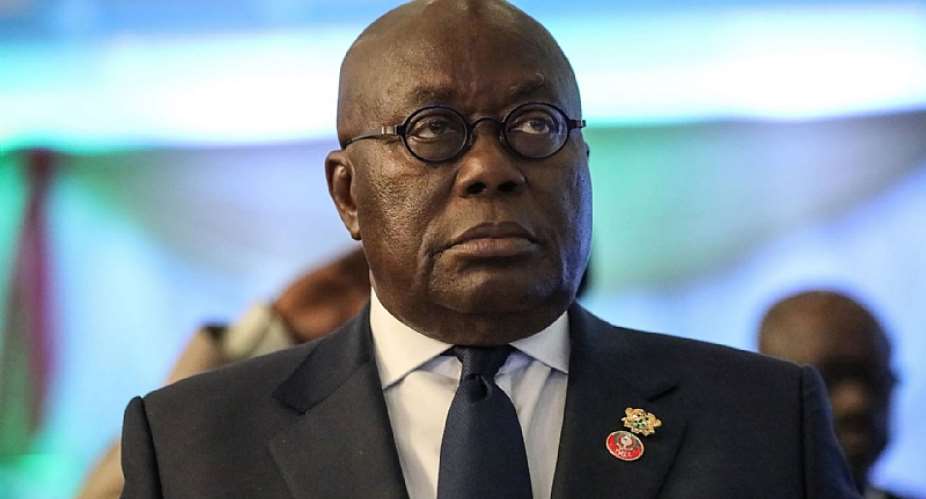
In a recent speech delivered in Brussels, President Nana Addo Dankwa Akufo-Addo described the Domestic Debt Exchange Programme (DDEP) as the "darkest moment" of his presidency. That statement would be sobering — if it weren’t so disingenuous. It represents a classic case of confusing cause and effect, a misdiagnosis that distorts the true origins of Ghana’s economic crisis.
Let’s be clear: the DDEP was not the cause of our national economic distress; it was the result. The real cause lies squarely in the poor decisions, misplaced priorities, and failed leadership of President Akufo-Addo himself.
The administration’s persistent appointment of incompetent family members and loyalists to key positions in governance is where the unraveling truly began. Instead of merit-based leadership, the president chose to surround himself with individuals whose primary qualification seemed to be their proximity to his inner circle — not their ability to govern a modern economy. This nepotistic approach undermined effective decision-making and weakened state institutions from within.
The result? Ballooning debt, unchecked borrowing, reckless expenditure, and a bloated government payroll that the economy simply could not sustain. When the inevitable reckoning came — as it always does in matters of fiscal indiscipline — the government’s response was the DDEP, a measure that inflicted massive losses on pensioners, banks, investors, and everyday Ghanaians.
Yet, in Brussels, the President portrayed the DDEP as an isolated tragedy — a technical hiccup — rather than a self-inflicted wound caused by years of misrule. It is this refusal to confront the root causes of our national predicament that continues to erode public trust.
This administration’s darkest hour wasn’t the DDEP. It was the moment Ghana's governance was handed over to a cabal of unqualified appointees under the guise of loyalty and family ties. That was the true beginning of the collapse.
Leadership is not simply about occupying the highest office; it is about taking responsibility when things go wrong — not blaming the consequences of your failures as though they emerged from nowhere.
The Ghanaian people deserve honesty, not revisionism. We must be vigilant in pushing back against such historical distortions, because the road to national recovery begins with telling the truth — especially when it is inconvenient for those in power.
Acheampong Yaw Amoateng, PhD, Professor Emeritus of Sociology, Catholic University of Ghana, Fiapre, Bono Region.


 Attorney-General appeals ruling halting trial of former Buffer Stock CEO, wife
 NAIMOS destroys 1,970 changfans, 863 Illegal mining structures in three months —...
 Let's see how Asiedu Nketia becomes NDC flagbearer with same people he conspired...
 Asiedu Nketiah opts out of NDC chairmanship race amid flagbearership speculation
 NDC insists Nkwanta North elections will proceed despite court injunction
 'My side of the story will shock you; I'm waiting for court days' – Obuasi SHTS ...
 Obuasi SHTS sexual abuse: 'GES must distant itself, allow the law to work' — For...
 Upper East: Fear grips nine Kusaug communities over mysterious fish deaths in da...
 NDC suspends Amasaman Communications Officer over 'irresponsible' remarks on Obu...
 Parliament secures religious leaders’ support to end witchcraft accusations



Comments
In fact, well said