




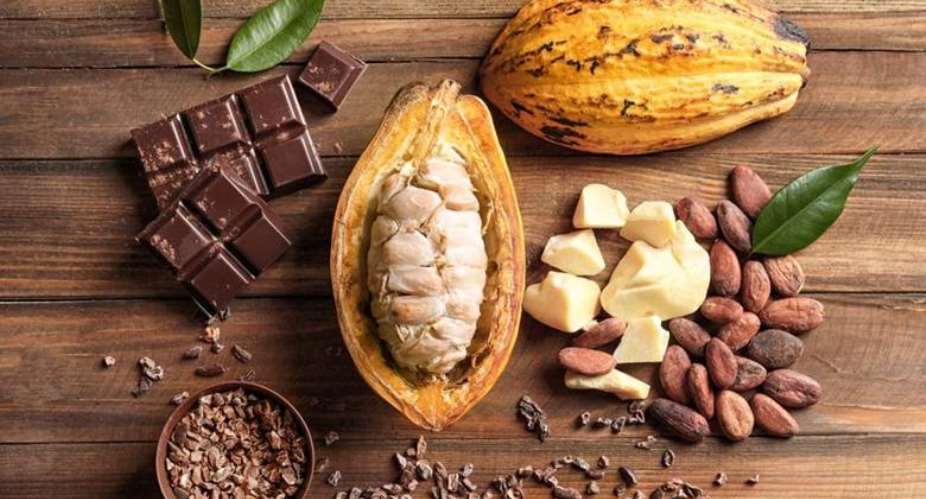
Despite being one of the world’s largest producers of cocoa, Ghana’s own citizens often find themselves unable to afford a simple chocolate bar. Ironically, the very farmers who grow the cocoa beans for global markets rarely enjoy the finished product. For many Ghanaians, chocolate has become a luxury item priced comparably to a meal of kenkey and fish, a local staple.
Cocoa Giants, Chocolate Strangers
Ghana is the second-largest cocoa producer in the world, after Côte d’Ivoire. Cocoa is a cornerstone of the country’s economy, contributing billions in export revenue. Yet, chocolate production is largely controlled by foreign companies. The beans are exported raw and processed abroad, where value is added, and the final product is re-imported at a high cost.
The Local Price Paradox
Walk into a supermarket in Accra, and a standard chocolate bar might cost between GHS 10 and GHS 25. For the average Ghanaian, that’s a steep price comparable to a full meal of kenkey and fish, which many rely on for daily sustenance. It’s hard to justify spending that amount on a sweet treat when it can buy real nourishment.
Why the High Cost?
Several factors explain the high retail price of chocolate in Ghana:
Import Costs: Most chocolate is imported, with duties and shipping costs baked into the final price.
Low Local Processing: Ghana processes only a small fraction of its cocoa beans locally, limiting supply of affordable Ghana-made chocolate.
Luxury Branding: Chocolate is still seen as a premium product in Ghana, marketed to the middle and upper classes.
Currency Fluctuations: Depreciation of the cedi against the dollar or euro inflates the cost of imported goods, including chocolate.
A Taste Grown But Not Enjoyed
It’s not just about money. There’s also a cultural gap. Many Ghanaians don’t grow up eating chocolate regularly. For them, it’s a treat for special occasions Valentine’s Day, birthdays, or Christmas. Meanwhile, kenkey and fish remain everyday necessities.
The Way Forward: Local Chocolate, Local Change
There is hope. A new wave of Ghanaian chocolates is emerging, aiming to process cocoa beans locally and make chocolate more accessible. Brands like Niche Cocoa, Omama, and 57 Chocolate are trying to break the cycle by adding value within Ghana. However, without significant investment and policy support, the affordability gap remains wide.
Conclusion
The bitter truth is that most Ghanaians cannot afford to enjoy the sweet fruits of their own labor. As long as a bar of chocolate costs the same as kenkey and fish, it will remain out of reach for the majority. Until Ghana can process and distribute its cocoa domestically at scale, chocolate will continue to be an export commodity not a local delight.
By Mustapha Bature Sallama
Medical/Science Communicator
[email protected]
+233-555-275-880


 Enforce surcharges, modernise audits to curb GHS100bn losses — Ghana Audit Servi...
 One third of world population exposed to harmful air pollution: monitor
 US forces leave Iraq, raising fears of Iran-backed militias amid power vacuum
 US Supreme Court lifts restrictions on third-country deportations
 'EOCO attempted arrest of Baffour Awuah was unprofessional' — James Agalga
 'Building a congregation of 20,000 will kill you' – Duncan-Williams tells young ...
 Shamima Muslim defends constitutional rights of women facing court over hate spe...
 September 29: Cedi finishes day selling at GHS12.20 on forex market, GHS11.67 on...
 ‘We’ll explore another constitutional option for narcotics probe’ – Minority on ...
 Speaker Bagbin adjourns Parliament indefinitely after rejecting narcotics probe ...



Comments
How many Ghanaians eat breakfast made with cocoa? Over 30% eat kooko,60% eat Waakye and only about 2.5 % eat cocoa breakfast made with cocoa product like Milo and bournvita.