




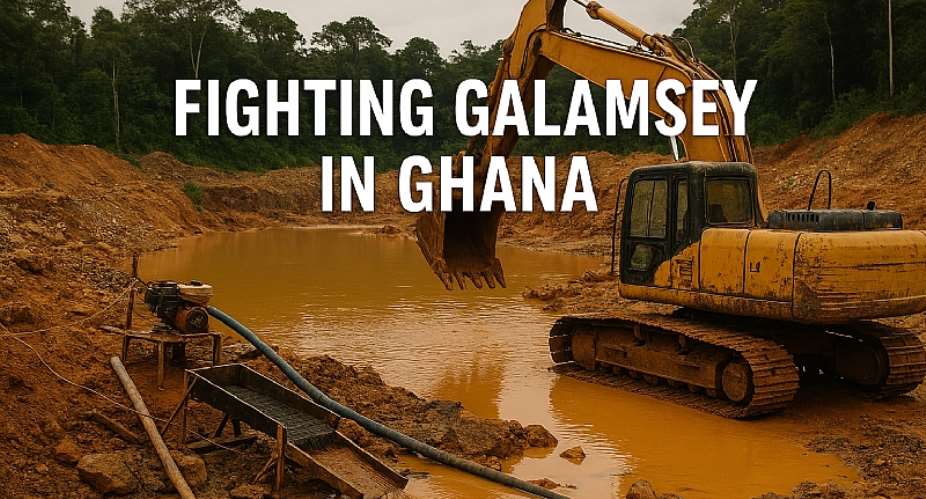
Illegal small-scale mining, locally known as galamsey, remains one of Ghana’s most pressing environmental and socio-economic challenges. Despite years of interventions, the practice continues to devastate forest reserves, pollute water bodies, and undermine lawful mining operations. As the crisis deepens, it is imperative for the government to adopt a multi-pronged, sustainable, and inclusive approach to eradicate galamsey and restore Ghana’s natural heritage.
Galamsey has led to the destruction of over 44% of Ghana’s forest reserves, pollution of more than 60% of water bodies with mercury and cyanide. This reckless mining activities has caused the loss of arable land and displacement of farming communities. There is an estimated annual loss of over $2 billion due to gold smuggling.
Cogent Suggestions for Strengthening the Fight Against Galamsey
1. Legislative Reform and Enforcement
- Pass a robust Legislative Instrument (LI) to regulate mining activities, enforce penalties, and align with international environmental standards.
- Establish special courts to expedite prosecution of illegal mining cases and ensure deterrent sentencing.
- Implement gold traceability systems to prevent illegally mined gold from entering the formal market.
2. Community Engagement and Alternative Livelihoods
- Empower local communities through education and involvement in monitoring and reporting illegal activities.
- Develop sustainable livelihood programs such as agroforestry, aquaculture, and eco-tourism to reduce economic dependence on galamsey.
- Formalize artisanal mining by providing training, equipment, and access to legal permits under strict environmental guidelines.
3. Technology and Data-Driven Monitoring
- Expand drone surveillance and satellite imaging to detect illegal operations in remote areas.
- Create a centralized database for mining permits, equipment tracking, and environmental impact assessments.
4. Institutional Collaboration and Accountability
- Strengthen inter-agency coordination among the Minerals Commission, EPA, Forestry Commission, and law enforcement.
- Hold local authorities accountable, especially District Security Councils and MMDCEs, for lapses in enforcement.
5. Public Awareness and Patriotism Campaigns
- Launch nationwide campaigns to instill environmental consciousness and national pride.
- Engage schools, religious institutions, and media to promote anti-galamsey narratives and responsible citizenship.
6. International Partnerships and Sanctions
- Collaborate with international bodies to adopt best practices and secure funding for reclamation projects.
- Enforce sanctions on foreign entities and individuals involved in illegal mining operations.
The fight against galamsey is not merely a law enforcement issue, but a national emergency that demands bold leadership, inclusive governance, and sustainable development. By combining legislative reform, community empowerment, technological innovation, and environmental stewardship, Ghana can reclaim its lands, protect its water bodies, and secure a prosperous future for generations to come.


 NPP General Secretary race: Kodua supervised worse election defeat, must be vote...
 NPP chases GoldBod to disclose foreign gold buyers, contracts and financing term...
 Responsible journalism among nation's most vital defences against disputes — Nat...
 Mahama will lead the way on National Cathedral if Christians reach consensus – M...
 Two dead, six injured in crash involving truck, bus and tricycle on Accra-Kumasi...
 67 injured in road crash involving two buses on Kumasi-Accra Highway
 September 2: Cedi sells at GHS12.20 on forex market, GHS11.26 on BoG interbank
 There is nothing wrong with having a National Cathedral in Ghana — Mahama Ayarig...
 Ghana’s macroeconomic stability is ‘rented’ and cedi-dependent — Dr Domfeh
 Afua Kobi Ampem Girls SHS builds multipurpose drone for firefighting, intelligen...

