




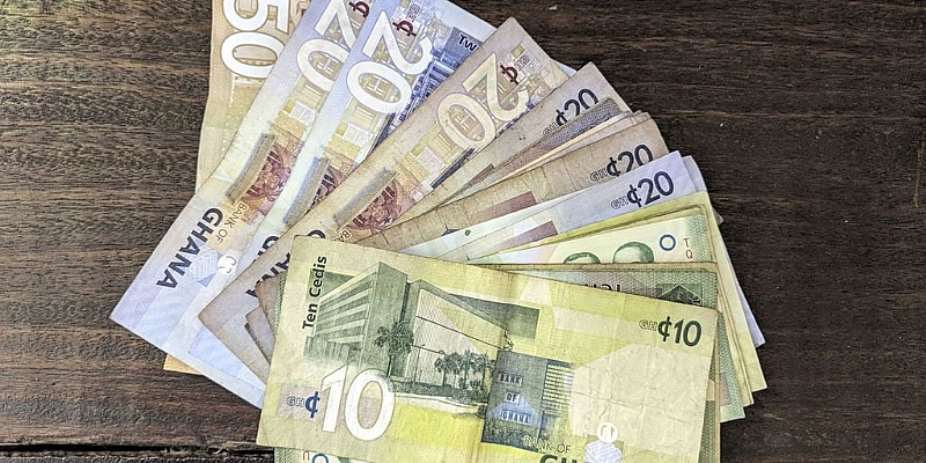
Recent headlines in Ghanaian outlets have declared that the cedi is the world's worst-performing currency. The claim, attributed to Bloomberg , has reverberated across news platforms and social media.
Yet, a closer reading of Bloomberg's September 3 report shows that this sweeping conclusion is not accurate.
The Bloomberg piece did not brand the cedi as the weakest currency overall. Instead, it focused on the third quarter of 2025, noting a 13.4 percent decline over that period. This quarterly snapshot was miscast by some local media as a definitive global ranking, when in fact Bloomberg contextualised the cedi's setback as part of a volatile but still positive year.
From top performer to quarterly laggard
Only a few months ago, the cedi was the toast of financial markets . By April 2025, the currency had surged by around 50 percent, buoyed by strong gold revenues and investor confidence. Bloomberg at the time described it as the best-performing currency worldwide .
The latest report merely highlights that the cedi has surrendered some of those gains in the third quarter, slipping under pressure from seasonal import demand. On that basis, it was the weakest performer in Q3 — but that does not erase its earlier rally or its strong year-to-date position.
Still one of 2025's best
Context is critical. Even after the third-quarter slide, the cedi remains up 23 percent against the US dollar since January. Very few African currencies can claim such resilience. Far from being the worst globally, it is still one of the best performers in 2025, underscoring how headlines stripped of nuance can distort reality.
A currency cannot simultaneously be the strongest and the weakest in the same year without reference to time frames. Yet, this is the paradox local headlines have created by oversimplifying Bloomberg's reporting.
Imports surge, dollar demand spikes
The true story lies in Ghana's seasonal import cycle. As Christmas approaches, importers scramble for dollars to stock goods. This annual rush typically places downward pressure on the cedi.
Bloomberg quoted Hamza Adam, head of market-risk management at UMB Bank, who explained that banks requesting dollars from the Bank of Ghana last week received only about half their allocations. The central bank is gradually meeting the balance, but the gap has already tightened market liquidity.
This temporary mismatch — rising dollar demand versus controlled supply — has driven the cedi's third-quarter dip.
Reserves strong, central bank steady
Importantly, Ghana is not running on empty. At the end of June 2025, the Bank of Ghana reported gross international reserves of $11.1bn, the highest in three years. These reserves provide a solid buffer, even if the bank is choosing to ration supply in order to manage volatility.
In an emailed statement to Bloomberg, the Bank of Ghana stressed that its role is to ensure fluctuations remain orderly, that movements reflect economic fundamentals, and that confidence in the currency is preserved.
This is far from the profile of a currency in crisis.
Lessons in financial reporting
The episode reveals more about the state of Ghanaian financial journalism than it does about the cedi. In the rush to amplify Bloomberg's story, context was stripped away, leaving a distorted message. Panic-driven headlines risk fuelling market uncertainty at a time when confidence is key.
Global investors, unlike casual readers, pay close attention to the details: year-to-date trends, reserve levels, and structural factors. They do not reduce analysis to quarterly volatility alone. Ghana's media would do well to apply the same discipline.
Nuanced outlook
The cedi's third-quarter slump does deserve scrutiny. It highlights the fragility of Ghana's import-driven economy and the strain festive consumption places on dollar liquidity. It also points to the limits of relying on commodity windfalls, such as gold, to sustain currency strength.
But to claim that the cedi has collapsed into the world's weakest currency is misleading. The real picture is more balanced: a currency that dazzled in the first half of the year, corrected in the third quarter, yet still stands tall among its peers in 2025.
Credit: Africa Briefing

 NAIMOS arrests 40 illegal miners, seizes mining equipment in six regions
 Suspend Adu-Boahen, Hanan trials until October — NPP tells CJ
 High Court dismisses Cheddar’s bid to halt enforcement of $14.9m judgment
 75% of ride-hailing drivers use fake licences – DVLA CEO
 Four arrested as police seize 11.8 tonnes of cocoa hidden beneath a load of plan...
 Sanitation performance now a key performance indicator for MMDCEs — Vice-Preside...
 'You will cross-examine witness yourselves' — Judge tells Adu-Boahen, wife if la...
 NPA Deputy CEO Dr. Dramani Bukari passes on
 George Opare-Addo to petition Education Ministry over rising KNUST hostel fees
 Adu-Boahene trial will continue during legal vacation — Court maintains


Comments
Continue tickling yourself! When the foundation is weak, the exchange rate will expose you!