




On 1 September 2025, President John Dramani Mahama, acting under Article 146(9) of Ghana’s 1992 Constitution, removed Chief Justice Gertrude Araba Esaaba Sackey-Torkornoo from office. This followed her earlier suspension on 22 April 2025, after the Council of State, by an overwhelming 30 to 1 vote, found a prima facie case of stated misbehaviour. The one dissenting voice? Former Chief Justice Sophia Abena Boafoa Akuffo.
As the Constitution requires, the President established a 5-member committee to investigate and recommend. After weeks of hearings, witness testimonies, and the Chief Justice’s own defence, the committee recommended removal. President Mahama, bound by Article 146, acted accordingly. The process was neither whimsical nor arbitrary; it was textbook constitutionalism. Yet, to Justice Sophia Akuffo, this was a “rigmarole.”
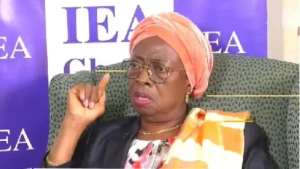
In a widely circulated TV3 interview on 2 September 2025, Justice Sophia Akuffo lamented:
“Justice Torkornoo did not get a fair trial. Even though it was not strictly a trial, it was handled as though it were a treason trial… I pray to God that no Chief Justice, no judge should ever go through this rigmarole again.”
Poignant words, but empty of consistency. This is the same Justice Sophia Akuffo who, as Chief Justice in 2017, entertained a faceless petition against then-Electoral Commission Chair Madam Charlotte Osei, filed not by identifiable citizens but by “Concerned Workers of the EC” through a lawyer Maxwell opoku-Agyemang. Without protest about anonymity, without complaints of fairness, she dutifully convened a committee, which culminated in Madam Osei’s removal. Where was her lament then about rigmarole? Where was her prayer that “no public servant should suffer this”? Selective amnesia, it seems, is an occupational hazard of post-retirement honourables.
Constitutional Fidelity and Jurisprudence
The framers of Ghana’s 1992 Constitution were clear: judicial officers, including the Chief Justice, may only be removed for “stated misbehaviour or incompetence” after a rigorous process under Article 146(6)–(10). This process, prima facie by the Council of State, investigation by a committee, binding decision by the President, is not a footnote. It is the very safeguard that distinguishes due process from mob justice.
Lon L. Fuller, in his “Morality of Law”, reminds us that law’s legitimacy lies not only in outcomes but in procedural morality: generality, publicity, congruence between rules and action. Justice Sophia Akuffo’s outburst dismisses the procedure as “treason trial theatre.” But procedure is what shields judges from executive whim. By scorning it, she does not protect judicial independence, she undermines it.
H.L.A. Hart, in “The Concept of Law”, gives us the “rule of recognition,” the idea that legal validity rests on clear, publicly accepted rules. Article 146 is precisely that rule of recognition: it tells us when and how a Chief Justice may be removed. For Justice Sophia Akuffo to ridicule it after herself invoking it against Madam Charlotte Osei is not principled dissent. It is jurisprudential vandalism.
Ronald Dworkin, in “Law’s Empire”, would call this a failure of law as integrity. A legal system earns respect when principles are applied consistently across cases. One cannot hail the process as valid when applied to an Electoral Commissioner (who holds the same position as an Appeal Court Judge), then deride it as a “rigmarole” when applied to a Chief Justice. That is not integrity; it is opportunism dressed in moral robes.
Separation of Powers and the Council of State
Justice Sophia Akuffo’s conduct raises a deeper institutional concern. As a member of the Council of State, she had a constitutional role to advise the President, not to stage a public rebellion against a process in which she was an active participant. Montesquieu, in “The Spirit of the Laws”, warned that the separation of powers collapses when public officers abandon their institutional roles to play to the gallery. Her public commentary undermined not just the 5-member committee but the Council of State itself.
Even more galling, the Council of State’s overwhelming 30 to 1 vote for a prima facie case underscores the emptiness of Justice Sophia Akuffo’s solitary dissent. To suggest that she alone saw clearly while 30 others, plus a constitutionally mandated committee, were blind is arrogance, not wisdom.
Selective Memory and Judicial Hypocrisy
Let us revisit Madam Charlotte Osei’s removal. In July 2017, President Nana Akufo-Addo forwarded the petition to then-CJ Justice Sophia Akuffo for a preliminary determination. The petitioners were unknown, faceless, hiding behind a lawyer. Yet Justice Sophia Sophia Akuffo proceeded. No protests about “faceless witnesses.” No analogies to treason trials. No sanctimonious prayers to God. The outcome? Madam Charlotte Osei was removed in a process Justice Sophia Akuffo herself shepherded.
Fast forward to 2025. The petitioners against Justice Gertrude Torkornoo were known, their witnesses examined, evidence recorded, and the Chief Justice herself cross-examined. In short: a process far more transparent than the one Justice Sophia Akuffo oversaw in 2017. And yet, she brands it a rigmarole. One cannot help but ask: is this honour or hypocrisy?
A.V. Dicey, the apostle of the rule of law, argued that all persons, “high or low, are subject to the ordinary law.” If Dicey were alive, he would be puzzled at Justice Sophia Akuffo’s stance: why should Justice Gertrude Torkornoo be shielded from the very law Justice Sophia Akuffo applied to Madam Osei? Honour, it seems, has been replaced by selective sympathy.
Sarcasm of Honour
The irony is thick. Justice Sophia Akuffo, once the custodian of judicial integrity, now casts herself as defender of the judiciary by deriding its most constitutional mechanism of accountability. To paraphrase George Orwell: all judges are equal, but some,apparently, are more equal than others.
If a removal process by faceless petitioners under Justice Sophia Akuffo’s watch was acceptable, why is a removal process with open petitioners in this case watch a travesty? If due process then was justice, why is due process now treason?
The only rigmarole here is the circus of inconsistency. The only treason is treason to principle.
Conclusion: The Death of Judicial Honour?
So, is Justice Sophia Akuffo an honourable woman? If honour means fidelity to principle, respect for constitutional process, and consistency in jurisprudence, the answer is painfully obvious. She has, in her selective outrage, betrayed the very Constitution she once served.
Ghana deserves better. Judicial honour cannot be episodic; constitutional fidelity cannot be selective. The judiciary’s strength lies not in protecting its favourites but in applying its principles equally, whether to an Electoral Commissioner (an Appeal Judge) in 2017 or to a Chief Justice in 2025.
Justice Sophia Akuffo’s criticisms may win applause in the court of public sentiment. But in the court of jurisprudence, she stands convicted of inconsistency. And in the court of history, she risks being remembered not as a sentinel of justice, but as its selective saboteur.
Her interview was not a courageous stand for principle. It was a performance of staggering intellectual cowardice, an attempt to rewrite a history she herself authored. To lambaste a transparent, Council of State approved process while having presided over a far more opaque one is the height of ethical bankruptcy. It is upset masquerading as courage, and partisan loyalty disguised as principled dissent.
The removal of a Chief Justice is a traumatic event for any nation, a surgical procedure meant to save the patient from a fatal corruption. The real threat to the judiciary’s strength is not the constitutional medicine applied to remove a cancerous growth, but the poison of hypocrisy from its former guardians.
The unblinking eye of justice sees all, including the stark contrast between one’s actions in power and one’s criticisms out of it. By that eternal measure, Justice Sophia Akuffo’s honourable status is not just in question; it lies in tatters.
Written by
Lewis Kwame Addo
Amsterdam


 ICC chief prosecutor Karim Khan dismissed over sexual misconduct allegations, so...
 'I shall continue to walk in late President Atta Mills' footsteps' — Mahama mark...
 Flood Mitigation Task Force begins demolition of structures on waterways in Accr...
 Refund GH¢60 deductions in two weeks — Service personnel to NASPA
 Parliament expected to adjourn sine die on July 31
 Police bust motorbike theft cartel, seven suspects arrested in Upper West
 GoldBod suspends Dominic Bonsu Ventures' gold trading licence, secures bench war...
 Being better than the last NPP gov't should never be the standard — Sulemana Bra...
 Migration challenges will not strain Ghana-South Africa relations — Ronald Lamol...
 'You had your priorities wrong' – NPP's Peter Ayinbisa rejects govt's new SHS fo...

