




There’s an old African proverb that says, “The axe forgets, but the tree remembers.”
In simple terms, it means those who cause harm may move on, but those who suffer often carry the pain for a long time—sometimes for life. But what happens when every tree decides to become an axe in return? Then, we risk having no forest left at all.
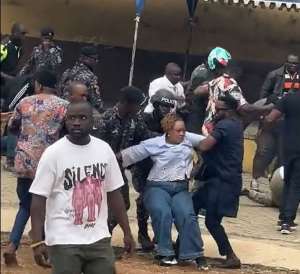
On the morning of July 11, 2025, the Odorkor polling station became more than just a place to vote—it became a battleground. Hon. Hawa Koomson, a former Minister and sitting political figure, was physically attacked in broad daylight during a parliamentary rerun election in the Ablekuma North constituency.
Footage showed her pepper-spraying others during a scuffle. In response, or perhaps as retaliation, she was shoved, dragged to the ground, and left helpless until the police intervened. The election had to be suspended as chaos unfolded.
Many Ghanaians were rightly alarmed. But just as quickly, something equally troubling surfaced—especially on social media and radio talk shows. People began saying, “But didn’t she do worse at Kasoa last year?”
It was as though what happened at Odorkor could be excused—as long as it was seen as revenge.
This reveals a creeping danger in our public mindset: tu quoque thinking. That’s Latin for “You too.” It’s when someone avoids taking responsibility by pointing fingers at another person’s past wrongdoing. You call someone out, and instead of owning up, they respond with: “But you did the same!” Let’s make this real:
Foot Soldier A: “It’s wrong that Hawa Koomson was attacked by your party’s supporters.”
Foot Soldier B: “Oh please! Have you forgotten what she did at Kasoa? Don’t pretend to be saints.”
At this moment, Foot Soldier B isn’t denying that the attack was wrong. Instead, they’re using the past to justify the present. And that’s the heart of the problem.
Yes, Hawa Koomson was accused of instigating violence during the 2024 voter registration in Kasoa—a situation that reportedly led to injuries, property destruction, and even loss of life. The public outrage was justified. But does that give anyone the right to harm her now? The answer is no!
Violence is unacceptable no matter who starts it. When we excuse today’s wrongdoing by pointing to yesterday’s offenses, we trap ourselves in a dangerous cycle. One act of revenge just plants the seed for the next explosion.
As another African proverb puts it, “When the roots of a tree begin to decay, it spreads death to the branches.” If we allow this mindset to grow, it won’t stop with politicians. Ordinary voters will be next. Women may be discouraged from running for office. And the rule of law will be replaced by the rule of force.
This isn’t just about Odorkor or Hawa Koomson. It’s about the direction our democracy is heading. If we keep saying “s/he did it too,” we will never break the chain. We risk turning elections into battlegrounds, not ballots.
It’s time we rise above this. Whether it's Ayawaso, Kasoa, or Odorkor, political violence is never justified. Not based on party. Not based on history. Not based on anger.
Let the police investigate. Let the courts rule. Let justice follow the law, and not revenge.
And as citizens, let us speak clearly and boldly: no more tu quoque. Ghana’s democracy deserves better. And we must demand it.
Komla Lokoe
[email protected]
Columnist


 Appiagyei denies alleged GH¢70,000 vetting payment in memo
 Lawyer challenges GRA’s power to grant passenger baggage tax exemptions
 Agbogbloshie waste heap is as high as 10-storey building – Mahama Ayariga
 'How did we get here, to be told to go to Rwanda to learn cleanliness?' – Mahama...
 'After getting the gold, you will get thirsty' – Kwaku Bonsam explains why galam...
 “No such person has been handed any monies whatsoever' – Jerry Shaib denies clai...
 'Ato Forson after one year and nine months still decided not to pay our ex-grati...
 Anthony Joshua Crash: Driver was overtaking truck before fatal collision — Court...
 Arthur Kennedy accuses NPP, NDC of hypocrisy over CJ’s remarks
 No MP is entitled to gift for performing constitutional duty – Inusah Fuseini

