




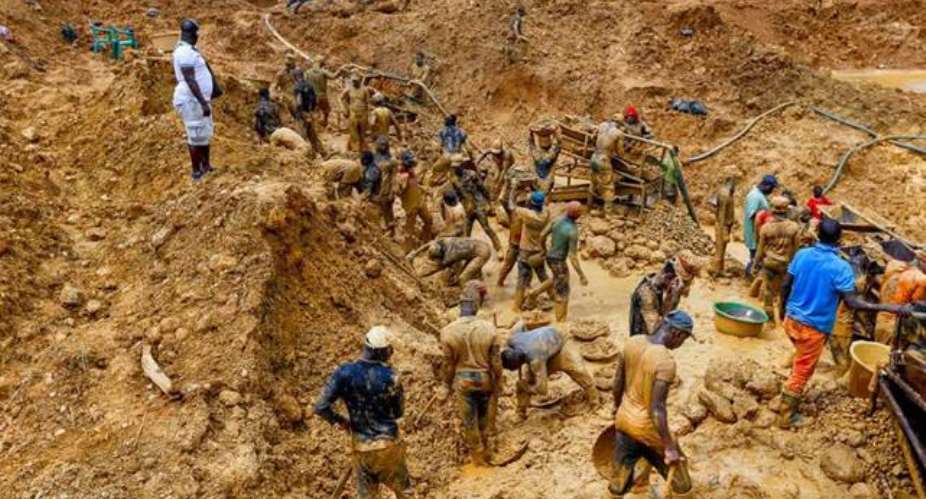
“The rivers are crying. The forests are dying. Our future is bleeding, and yet we stand and watch.”
Introduction
This is not just a poetic line. This is the reality of Ghana in 2025. The illegal mining menace—galamsey—is not just a news headline anymore. It is a national wound that is deepening by the day.
The Environmental Devastation
The environmental toll of galamsey is visible and far-reaching. Rivers, lakes, and forests, once rich in biodiversity, are being decimated by illegal miners who use harmful chemicals like mercury and cyanide. These chemicals seep into water bodies, rendering them toxic and undrinkable. Major rivers such as the River Pra, Tano, and Offin have been severely contaminated. As a result, millions of Ghanaians, particularly those in rural areas, are deprived of clean water, an essential resource for survival.
Forests that once served as sanctuaries for wildlife are now mere remnants of their former selves. Land that should be used for agriculture is being destroyed, leaving behind barren wastelands. The widespread deforestation not only accelerates climate change but also erodes the soil, leading to reduced agricultural yields, the loss of crops, and food insecurity.
Economic Impact and the Struggle for Sustainable Growth
While illegal mining may provide a short-term source of income for some individuals, its long-term effects on Ghana's economy are catastrophic. The destruction of agricultural land, the contamination of water bodies, and the loss of biodiversity directly harm key sectors of the economy, including agriculture, fisheries, and tourism.
Ghana is heavily reliant on agriculture for its economy, and with land being stripped of its fertility by illegal mining, food production is compromised. This could lead to higher food prices and a general decline in the standard of living for the population, especially the rural poor who rely on farming for sustenance.
The government’s efforts to regulate the sector have been ineffective. As the country’s gold sector continues to grow, the mining activities become even more destructive, with the revenue not benefiting the country as a whole, but rather flowing into the pockets of a few individuals who are able to circumvent the law.
Political Involvement and Government Commitment
The political landscape in Ghana, unfortunately, has not been immune to the influence of illegal mining. Several political figures and traditional chiefs have been accused of enabling or turning a blind eye to the menace, with some reportedly having vested interests in the illegal mining industry.
Prof. Joseph Osafo, Director of the Centre for Ageing Studies at the University of Ghana, has stated that galamsey should be declared a national security threat. He emphasizes that the government’s failure to tackle the issue head-on is a result of political interference and reluctance to act against influential figures who profit from illegal mining.
The government's commitment has been inconsistent. While the Akufo-Addo administration initiated a national ban on illegal mining in 2017, the reality on the ground shows little change. Initiatives like Operation Vanguard have not yielded sustainable results.
The Struggle of the Ordinary Ghanaian: The Fight for a Sustainable Future
Ghanaians, especially those in affected communities, are protesting against galamsey. The affected areas, such as Bibiani, Obuasi, Wassa East, and Asutifi South, remain ground zero. Yet, the collective response is fragmented.
The fight against galamsey requires a united front. Civil society organizations, traditional leaders, and communities must work together to pressure the government. The law must be allowed to take its course, without interference from those who are complicit.
The Hidden Truth: The Role of Powerful Figures and the Need for Accountability
Powerful figures including politicians and chiefs offer protection to illegal miners in exchange for financial benefits. The government must hold such figures accountable. If not, the nation risks losing its resources and future.
We must avoid blame games and stop politicizing this menace along NDC and NPP lines. We must fight it with our lives to sustain the future. As President Akufo-Addo once said, we must be citizens, not spectators.
A Call for Collective Responsibility
The fight against galamsey cannot be left to the government alone. It’s time for Ghanaians, particularly the youth, to rise up and join hands in eradicating this menace. We can’t afford to leave the legacy of our forefathers in vain. Their hard work in building this beautiful country must not be destroyed by short-term profits and political interests. It’s time to stop the sabotage and take collective responsibility.
In the words of Kwame Nkrumah, Ghana’s first President: “The independence of Ghana is meaningless unless it is linked up with the total liberation of Africa.” Let this statement also apply to the struggle against galamsey: the future of Ghana is meaningless unless we protect our environment, our economy, and our people. We owe it to future generations to preserve the nation’s resources and work collectively toward a sustainable, prosperous future.
Additional Critique and Public Sentiment
Is the seizure of excavators and other machinery solving the problem? These machines are often replaced quickly. Are political leaders, chiefs, and the clergy truly committed to the fight, or are they simply playing to the gallery while fueling the crisis behind closed doors?
Voices from the Dark Trenches
Yaw Attah , a 24-year-old student, turned to galamsey to support his education. He regrets the environmental damage and represents the many youth drawn into illegal mining out of desperation.
Environmental activist Ama Serwaa recounted: “The silence was painful. No birds. No trees. Just lifeless land and poisoned water. We are killing our children’s inheritance.”
What Must Be Done
- - Declare galamsey a national emergency with military-level enforcement.
- - Prosecute all involved, regardless of status.
- - Empower communities with education, jobs, and training.
- - Enforce mining laws strictly and transparently.
- - Encourage public vigilance and responsible voting.
A Future Worth Fighting For
This is not just about the environment. It is about who we are. Will we be remembered as the generation that let Ghana collapse, or as the ones who stood up and saved our land?
Let us rise. Let us not fail. If we do nothing, history will not pity us—it will shame us. And if the rivers could speak, they would weep.


 UCC-UTAG demands clearer boundaries for GTEC’s regulatory role to avoid interfer...
 Mahama congratulates Lula da Silva on ‘well-deserved’ re-election as Brazil Pres...
 Mahama arrives in Moscow to push for Russia-Ukraine ceasefire at Russia–Africa S...
 'Irresponsible media coverage is hurting Obuasi SHTS abuse probe' – Gender Minis...
 ECG announces 7-hour power outages in parts of Ashanti Region on Tuesday
 World Cup visa scandal deepens discontent among NDC grassroots – Prof Smart Sarp...
 'It is frivolous' – State declines to respond to motion challenging its oppositi...
 'We still have feelings' — Wontumi proposes conjugal visit facilities for marrie...
 'Young men must work and eat' – Prophet Badu Kobi backs Sammy Gyamfi on galamsey
 Foreign Affairs Ministry seeks names of evacuees allegedly shortchanged in GH¢5,...


