




Introduction
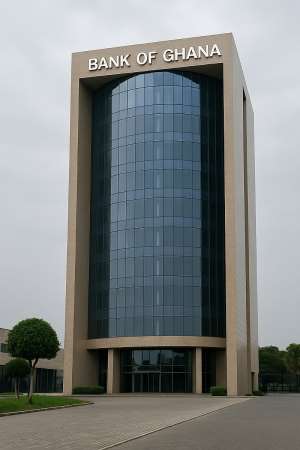
A nation’s central bank is the anchor of its financial system, ensuring economic stability, inflation control, and monetary policy effectiveness. The Bank of Ghana (BoG) plays this vital role in Ghana’s economy, regulating commercial banks, stabilizing the cedi, and managing the country’s foreign reserves. Yet, in recent years, it has faced mounting criticism over inflationary pressures, currency depreciation, questionable fiscal decisions, and a perceived erosion of public trust.
This case study dissects BoG’s challenges, evaluates its policy choices, and outlines a strategic path for restoring credibility and financial resilience.
Historical Context: From Stability to Uncertainty
Established in 1957, the Bank of Ghana was mandated to oversee monetary policy, financial sector stability, and price control. Throughout Ghana’s economic history, BoG has played a central role in managing currency devaluations, banking reforms, and financial crises.
While there have been periods of economic stability, persistent external shocks, fiscal indiscipline, and policy missteps have often placed the central bank in crisis mode. The past decade, in particular, has seen inflation spiral, the cedi weaken, and public trust in the institution wane.
Current Performance: Challenges and Policy Failures
1. Inflation and the Cost of Living Crisis
Inflation is one of the biggest threats to economic stability. In 2023, Ghana’s inflation rate surged beyond 40%, eroding real wages and reducing consumer purchasing power. The BoG’s monetary policy decisions—including frequent interest rate hikes—failed to curb inflation, as structural inefficiencies in the economy outpaced the bank’s interventions. The continued rise in food and fuel prices highlighted the central bank’s struggle to align monetary policy with economic realities.
2. The Depreciating Cedi
The Ghanaian cedi has been one of the worst-performing currencies in Africa in recent years. The BoG has often intervened with foreign exchange injections to stabilize the currency, but these measures have proven unsustainable. Structural trade deficits, speculative currency trading, and weak export earnings have kept the cedi on a downward trajectory. By the end of 2023, the cedi had depreciated by more than 30% against major currencies, increasing the cost of imports and national debt servicing obligations.
3. Questionable Fiscal Support and Debt Monetization
The BoG has faced criticism for financing government deficits through direct lending and overdrafts, contributing to Ghana’s public debt crisis. In 2022 alone, the central bank provided over GHS 40 billion in financing to the government, raising concerns over inflationary pressures and a breach of fiscal discipline. This direct funding fueled an economic environment where excess liquidity weakened the cedi and spiked inflation, further eroding the bank’s credibility.
4. Banking Sector Cleanup: Reform or Crisis?
The banking sector cleanup between 2017 and 2019 was a bold move aimed at stabilizing the financial system, yet it also came at a high cost. Over GHS 20 billion was spent to address insolvency issues in banks and microfinance institutions, leading to the collapse of several indigenous banks. While proponents argue that the reform strengthened the financial sector, critics contend that it disproportionately affected local businesses, reduced competition, and resulted in massive job losses.
5. Public Perception and Governance Concerns
Public confidence in BoG has been shaken by perceptions of political interference, lack of transparency, and controversial financial decisions. The bank’s construction of a new $250 million headquarters during an economic crisis sparked outrage, raising questions about its fiscal prudence and priorities. Additionally, calls for greater transparency in monetary policy decision-making have highlighted a growing disconnect between the institution and the public it serves.
Accountability and Governance Challenges
A major issue facing the BoG is the lack of strong institutional accountability. Despite being an independent entity, it has often been seen as an enabler of government overspending rather than a watchdog for financial stability. The BoG Act grants the institution autonomy, yet repeated interventions in fiscal matters suggest a blurred line between monetary policy and government financing.
The lack of transparency in foreign exchange management, interest rate decisions, and banking sector interventions has further fueled public distrust. Strengthening governance structures within the central bank is crucial to restoring confidence and ensuring effective policy implementation.
Global Comparisons: Lessons from Other Central Banks
1. Nigeria’s Central Bank Reforms
Nigeria’s recent monetary policy reforms have focused on improving forex transparency, curbing inflation, and strengthening financial sector regulations. Ghana’s BoG can learn from Nigeria’s model of foreign exchange unification and market-driven currency stability measures.
2. South Africa’s Inflation Targeting Framework
South Africa’s Reserve Bank has effectively controlled inflation through a strict inflation-targeting policy, maintaining stability within the 3–6% range. BoG could adopt a more disciplined inflation-targeting regime, backed by stronger economic fundamentals.
3. Bank of England’s Transparency Model
The Bank of England operates with a high degree of transparency, publishing detailed monetary policy reports and engaging stakeholders regularly. BoG can improve public trust by adopting similar transparency and accountability measures.
A Roadmap for Reform: Strengthening the Bank of Ghana
Strengthen Inflation Control Mechanisms – BoG must enhance monetary policy transmission by improving coordination with fiscal authorities and ensuring policies directly address structural inflation drivers.
Adopt a Market-Based Forex Regime – Reducing excessive forex interventions and allowing a more market-driven exchange rate policy will stabilize the cedi in the long run.
Enhance Institutional Independence – A clear distinction between monetary and fiscal policy is needed to prevent excessive government financing and ensure BoG acts as an independent regulator.
Improve Public Transparency and Engagement – Regular public briefings, accessible policy documents, and clear communication strategies will restore confidence in BoG’s decision-making processes.
Modernize Financial Sector Regulations – Strengthening banking sector regulations, ensuring fair competition, and improving corporate governance will enhance financial stability.
Invest in Digital Financial Inclusion – Expanding digital financial services and ensuring better regulation of fintech solutions will promote a more inclusive banking environment.
Conclusion: Restoring the Pillar of Financial Stability
The Bank of Ghana is at a crossroads. It can either remain reactive to economic shocks or take decisive steps toward becoming a robust, independent, and forward-thinking central bank. Restoring public confidence in BoG is crucial for Ghana’s long-term financial stability, and this can only be achieved through transparent governance, prudent monetary policy, and a clear separation from fiscal influence.
Ghana deserves a central bank that works for the people, ensuring price stability, a strong currency, and a resilient financial sector. The time for reform is now.
In our next case study, we turn our attention to another critical institution shaping Ghana’s economic and governance future. The journey to resetting Ghana continues.
Bismarck Kwesi Davis
#ResettingGhanaSeries
#FactoryReset
#TheChangeJar
#DiamondInstitute
#bismarckinspires
#Q2M4/D4/2025


 Appointment of Emelia Agbenyo as EC deputy chair was well calculated, reasoned –...
 Relief for students as GAUA and TUSAAG call off strike; declare return to work o...
 Who gave Cabinet authority to decide for Ghanaians to join BRICS without parliam...
 Mahama urges Ghanaian businesses to tap CSIR innovations
 Partisan EC appointments could set dangerous precedent — NPP's Kamaldeen
 Winneba: Afenyo-Markin commissions police apartments at Fetteh-Osakam
 Council of State failed Mahama over Emelia Agbenyo’s EC appointment – Prof. Asa...
 CDD‑Ghana: EC Deputy Chair Should Step Down Now
 Family Announces October 23 Memorial Mass for Nana Konadu Agyeman-Rawlings
 Eduwatch Urges Nationwide Audit of Sexual Misconduct in Secondary Schools


