




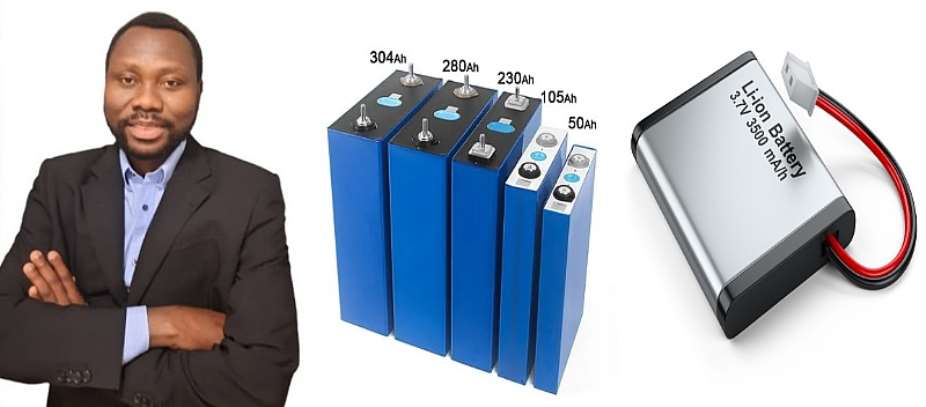
The world is undergoing an energy revolution, with batteries playing a critical role in the transition to renewable energy and electric mobility. Countries like China, the United States, and European nations are heavily investing in battery technology, recognizing its significance in powering the future. However, Ghana remains significantly behind in battery production, a gap that poses economic and technological disadvantages in the long run.
Ghana is endowed with key minerals required for battery production, such as lithium, manganese, and graphite. The discovery of lithium deposits in the Ewoyaa region presents a remarkable opportunity for the country to position itself as a player in the global battery supply chain. Unfortunately, these resources are largely exported in their raw form rather than being refined and utilized domestically to create value-added products. This approach mirrors the historical trend of African nations exporting raw materials while missing out on industrialization and wealth creation.
Despite Ghana’s commitment to industrialization through initiatives such as the One District, One Factory (1D1F) program, there is little attention given to battery manufacturing. The lack of local battery production has economic implications, including an overreliance on imported batteries, high costs for energy storage solutions, and missed employment opportunities.
Furthermore, Ghana's energy sector could benefit immensely from locally produced batteries. With increasing investments in solar and wind energy, efficient battery storage is essential to ensure reliability and grid stability. The absence of local battery production means Ghana continues to depend on costly imported storage systems, limiting the adoption of renewable energy solutions in rural communities.
To address this, Ghana must take decisive action in the following areas:
Investment in Battery Research and Development: Universities and research institutions should collaborate with industry players to develop battery technologies tailored to local conditions. Funding should be allocated to support innovation in energy storage.
Local Processing of Critical Minerals: Instead of exporting raw lithium and manganese, Ghana should develop processing plants to refine these materials locally. This would create jobs, attract investors, and reduce the country's dependence on foreign imports.
Strategic Government Policies: The government must formulate policies that incentivize battery production. Tax breaks, subsidies, and partnerships with international firms could help build a robust battery manufacturing industry.
Public-Private Partnerships: The private sector should be encouraged to invest in battery production. Collaboration with global battery manufacturers could lead to technology transfer and skill development.
Training and Capacity Building: Technical universities and vocational institutions should introduce specialized programs in battery technology and energy storage to equip Ghanaians with the necessary skills for this emerging industry.
The transition to clean energy and electric mobility is inevitable. Ghana must act swiftly to capitalize on its natural resources and establish a sustainable battery industry. If the country fails to take proactive measures now, it risks remaining a mere exporter of raw materials while other nations reap the benefits of advanced battery production.
The time for action is now. Ghana has the potential to lead in Africa’s battery production landscape, but this will only happen through bold investments, strategic planning, and collaboration between government, industry, and academia. Let us not wait until it is too late—let us power Ghana’s future today.

 Government to introduce ID verification for access to porn sites — Sam George
 African governments failing on commitments to increase agriculture funding — Eri...
 45-year-old ex-convict arrested over alleged rape and murder of wife's 17-year-o...
 We’re working to provide shelter for police officers displaced after barracks fi...
 No arrests made over Accra Central Police Barracks fire yet — Police
 Mahama told UK Prime Minister anti-LGBTQ+ bill is far from becoming law — Minori...
 Leaked judgment? NDC activists confirms jail term for Wontumi on social media
 Minority demands passage of original 2024 anti-LGBTQ+ bill, accuses NDC of decep...
 "Flagrant disrespect" — Court remands Abronye over failure to surrender passport...
 High Court remands Abronye over failure to surrender passport


