




The Ho Technical University (HTU) is set to establish model baobab farms in the Volta and Upper West Regions to help combat desertification and mitigate climate change impact in the two regions.
The target is to plant 2,000 baobab trees; 1,000 in each of the selected regions, this year.
This undertaking is being supported by Atmosmare, Finland.
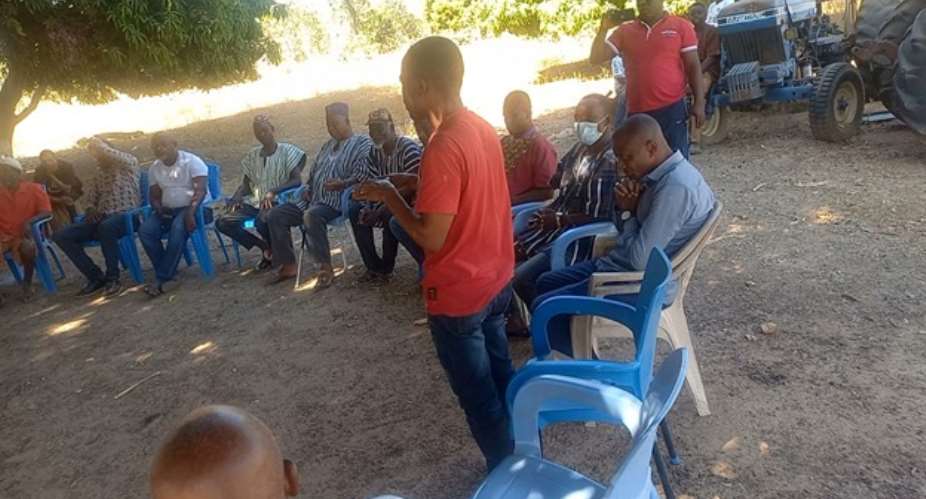
Professor Kenneth Fafa Egbadzor, Head of Department of Agricultural Sciences and Technology and HTU Baobab Research Team Lead, in an interview with the Ghana News Agency, disclosed that a delegation from the Department has visited Tanchara near Babile in the Upper West region to engage the stakeholders over the project.
He said the concept of the model baobab farm and the HTU baobab research achievements was explained to the chief and the elders as the first point of contact before meeting with the community, which concluded with the community accepting the project and pledged their support towards its success.
Prof Egbadzor said some challenges identified on part of the community were the disturbances by domestic animals and the long drought period in the area.
“In terms of animals, it was agreed that farmers would find ways of protecting their plants while in the case of drought, it was suggested that planting would be done as soon as the rains started and supplementary watering would be supported should the need arise,” he added.
After the engagement, the number of baobab trees was increased to 2,000 from the initial number with nursery bags handed over to the Agricultural Station and subsequent raising of seedlings.
Prof Egbadzor said different number of seedlings would be given to individual farmers depending on their capacity to be planted on their farms.
Some seedlings would also be planted as avenue trees in the community.
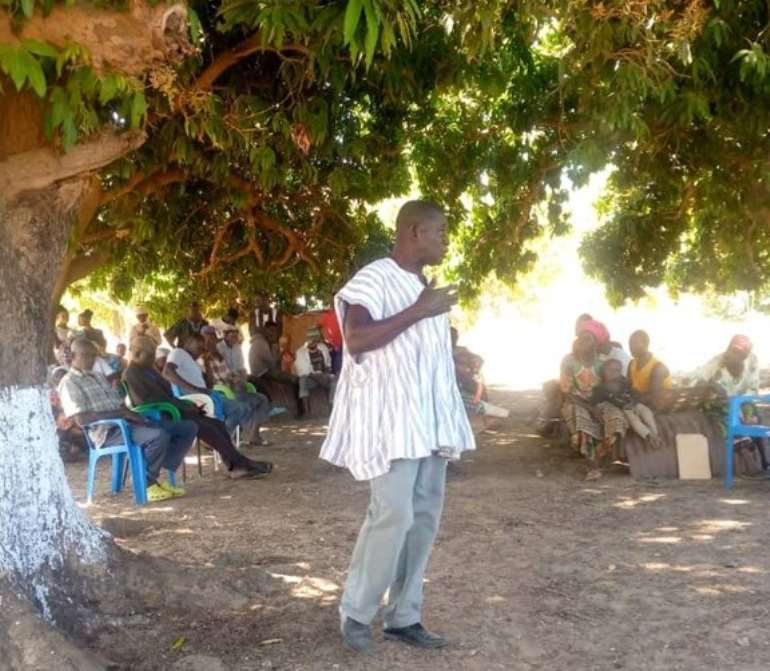
An elated Naa Naalukon-yi Waale II, Chief of Tanchara near Babile, expressed gratitude to the Team from HTU for selecting the community as a beneficiary and conveyed the community's readiness for the project.
He said an innovative approach would be reached to curb the roaming animals, which was a threat to raising the seedling and subsequent planting and growing them.
The team later toured Tanchara Agricultural Station Facility, which had sustainable agriculture fields, plant nursery and office facility.
In 2021, the Department broke new grounds in the re-engineering of baobab seedlings domestically for multiplication in a stress-free manner.
The baobab plant took some 27 months to reach the flowering stage at engineering even after suffering some agronomic practices including stray animals and from humans, affirming its accolade 'wooden elephant,' to match its resilience.
It is noted that naturally, the earliest flowering of a baobab tree took at least 14 years in West Africa with elsewhere taking 17-27 years, but the re-engineering is making waves reducing flowering stage of the plant even further downwards.
GNA
Story edited by Maxwell Awumah/Lydia Kukua Asamoah

 Paraguay president resigns amid banking scandal
 Akufo-Addo’s govt initiated Ghana’s BRICS partnership idea – Mahama
 If NDC had followed how we had wanted to do the Gold for Reserves, they wouldn't...
 No one should endure sexual harassment to secure jobs – Prof Opoku-Agyemang
 'US must tackle gun violence' – Mahama after death of Ghanaian teenager, Javits ...
 Bear with us on TraffiTech, it is here to save lives – Mahama to Ghanaians
 JUSAG Strike: Wage dispute must not suspend justice for entire nation – Ahiagbah...
 My focus on digitalisation is not an escape from economics; it is the new econom...
 Speaker Bagbin's handling of Abu Jinapor's allegation raises concerns – Egyapa M...
 Abu Jinapor showed highest form of disrespect to Bagbin – Hamza Suhuyini


