




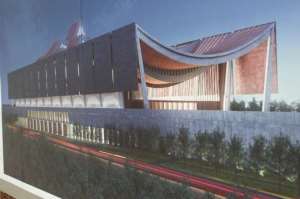
The National Cathedral project, initiated by former President Nana Addo Dankwa Akufo-Addo, has become a contentious issue in Ghanaian politics. The project's staggering cost, estimated to exceed $450 million, has raised concerns about the country's financial prudence and the current government's ability to manage the project's fallout.
The National Democratic Congress (NDC) government, led by President John Dramani Mahama, has inherited the project's financial burden. As the government navigates the complexities of completing the project, it faces a daunting challenge: balancing the need to fulfill the project's original purpose with the imperative to manage the country's finances effectively.
The financial implications of the National Cathedral project are far-reaching:
Debt Burden: The project's cost will add to Ghana's already substantial debt burden, potentially compromising the country's fiscal stability.
Resource Allocation: The allocation of significant resources to the National Cathedral project may divert funds away from pressing development priorities, such as healthcare, education, and infrastructure.
Opportunity Cost: The investment in the National Cathedral could have been channeled into other projects with more tangible benefits for the broader population.
The current government's handling of the National Cathedral project will likely have significant political implications:
Public Perception: The government's decision to continue or abandon the project will influence public opinion and potentially impact its popularity.
Opposition Criticism: The NDC's political opponents may seize on the project's financial mismanagement to criticize the government's economic stewardship.
Election Promises: The National Cathedral project may become a contentious issue in future elections, with opposing parties promising to review or cancel the project.
To mitigate the financial and political risks associated with the National Cathedral project, the current government should:
Conduct a Thorough Review: Assess the project's financial viability, and consider alternative uses for the allocated funds.
Engage in Transparent Decision-Making: Clearly communicate the government's decision-making process and rationale regarding the project's future.
Prioritize National Development: Ensure that the allocation of resources aligns with the country's development priorities and the needs of its citizens.
Ultimately, the National Cathedral project presents a complex challenge for the current government. By adopting a transparent, prudent, and citizen-centered approach, the government can navigate this financial and political minefield, ensuring that Ghana's development priorities remain on track.


 Israel must win 'because we’ve got no other choice’, PM Netanyahu tells UN
 Mahama reiterates Ghana's commitment to two-state solution to Palestine-Israel c...
 Ablakwa calls for Return of African Artefacts held abroad
 Madina MP Francis-Xavier Sosu reportedly collapses while speaking at GIMPA
 Kumasi drivers, passengers react to 8% transport fare increase
 I will unite Africa, Caribbean and Latin America into world's biggest trading bl...
 Mahama petitioned to halt Sentuo Airport Garden City construction after sod cutt...
 Government should not fund the $4 billion Accra-Kumasi Expressway project — Alan
 Democracy must deliver tangible social benefits to citizens – Mahama
 Court to rule on bail applications of six accused in 3.9-tonne cocaine seized in...


