




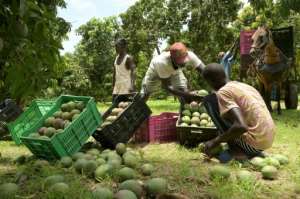
Agriculture is the backbone of many economies, providing employment, income, and food for millions of people. In Ghana, agriculture accounts for approximately 20% of the country's GDP and employs over 50% of the workforce. Despite its importance, the agricultural sector faces numerous challenges, including limited access to finance, inadequate infrastructure, and climate change. To address these challenges and unlock the sector's full potential, the government must invest in agriculture.
Why Invest in Agriculture?
Investing in agriculture offers numerous benefits, including:
- Job creation: Agriculture has the potential to create employment opportunities for millions of people, particularly in rural areas.
- Food security: Investing in agriculture can help increase food production, reducing reliance on imports and improving food security.
- Economic growth: Agriculture can contribute significantly to GDP growth, generating income and stimulating economic activity.
- Poverty reduction: Agriculture can help reduce poverty by providing income opportunities for smallholder farmers and rural communities.
Key Areas for Investment
To unlock the potential of the agricultural sector, the government should invest in the following key areas:
- Irrigation infrastructure: Developing irrigation systems can help increase crop yields, reduce reliance on rainfall, and improve food security.
- Agricultural financing: Providing access to finance can help farmers purchase inputs, invest in technology, and expand their operations.
- Agricultural research and development: Investing in research and development can help improve crop yields, disease resistance, and climate resilience.
- Farm-to-market roads: Upgrading farm-to-market roads can help reduce transportation costs, improve market access, and increase farmers' incomes.
- Agricultural extension services: Providing extension services can help farmers adopt new technologies, improve their farming practices, and increase their productivity.
Policy Recommendations
To ensure that investments in agriculture are effective, the government should:
- Develop a comprehensive agricultural policy: This policy should outline the government's vision, goals, and strategies for the agricultural sector.
- Increase funding for agriculture: The government should allocate a significant portion of the national budget to agriculture, focusing on key areas such as irrigation, financing, and research.
- Improve coordination and collaboration: The government should foster collaboration among ministries, departments, and agencies to ensure that policies and programs are aligned and effective.
- Support private sector investment: The government should create an enabling environment for private sector investment in agriculture, including providing incentives, tax breaks, and other forms of support.
Investing in agriculture is crucial for unlocking economic growth, improving food security, and reducing poverty. The government must prioritize investments in key areas such as irrigation, financing, research, and infrastructure. By doing so, Ghana can unlock the full potential of its agricultural sector, improving the lives of millions of people and driving economic growth.
SOLOMON LARWEH (Journalist)


 Israel must win 'because we’ve got no other choice’, PM Netanyahu tells UN
 Mahama reiterates Ghana's commitment to two-state solution to Palestine-Israel c...
 Ablakwa calls for Return of African Artefacts held abroad
 Madina MP Francis-Xavier Sosu reportedly collapses while speaking at GIMPA
 Kumasi drivers, passengers react to 8% transport fare increase
 I will unite Africa, Caribbean and Latin America into world's biggest trading bl...
 Mahama petitioned to halt Sentuo Airport Garden City construction after sod cutt...
 Government should not fund the $4 billion Accra-Kumasi Expressway project — Alan
 Democracy must deliver tangible social benefits to citizens – Mahama
 Court to rule on bail applications of six accused in 3.9-tonne cocaine seized in...


