




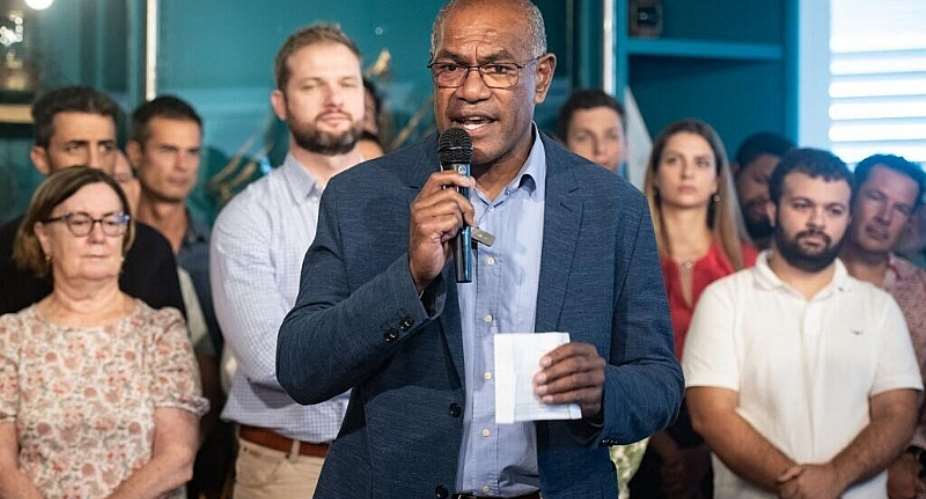
The French Pacific territory of New Caledonia has named French loyalist Alcide Ponga as its new head of government, as the archipelago attempts to recover from months of violent unrest that has left the economy in tatters.
Ponga was named on Wednesday, 8 January, following the collapse of New Caledonia's first pro-independence government in December.
Like his predecessor Louis Mapou, Ponga is an indigenous Kanak. But unlike the majority of Kanaks, he's also a French loyalist.
New Caledonia government falls, headache for Manuel Valls
Hailing from the Le Rassemblement party – which is affiliated to the French conservative party, Les Republicains – his political family is in favour of keeping New Caledonia within France.
“What I feel above all is the weight of responsibility,” Ponga said on Wednesday, after receiving the support of six of the newly installed government's 11 members.
“We all know the situation New Caledonia has been in for the past seven months," he said, referring to the deadly riots that broke out in May 2024, following a deeply contested electoral reform increasing the number of French nationals eligible to vote.
"What Caledonians now expect is for us to be able to work together and give a signal of hope."
Family heritage
Ponga, 49, comes from Kouaoua, a mining village in the north of the archipelago.
He was born into a prominent Kanak family – his mother served in local government and his uncle was an MEP. His grandparents were involved in fighting for Kanak rights, but supported remaining part of France.
He studied political science in mainland France and made a career in the nickel industry before going into politics in 2014 when he became mayor of Kaouaoua – the first non-independence candidate in a largely pro-independence region.
New Caledonia's mining sector is in crisis, but remains the largest employer on the archipelago.
Key dates in New Caledonia's history
Challenges ahead
Ponga is charged with trying to restore some political stability to the Pacific territory following the deadly violence that broke out in May.
The constitutional reform that sparked this unrest was viewed by many Kanaks – who make up just over 40 percent of the population – as a way for Paris to dilute their electoral clout, and threaten decades of work towards independence.
The legislation was abandoned following the dissolution of the National Assembly in June last year.
Deadly unrest in New Caledonia tied to old colonial wounds
During the violence, 13 people were killed – mainly Kanaks, along with two police officers – and almost 3,000 arrested. An estimated €2 billion of damage was caused.
Ponga faces major challenges in trying to get the archipelago's economy back on track, and the health sector is also in crisis. Close to 40 percent of hospital beds have been lost, mainly due to staff departures, health professionals said on Thursday.


 Tamale North MP narrates how newsroom poverty chased him into politics
 ORAL can still pursue civil claims against Sedina Tamakloe despite the acquittal...
 Sedina acquittal: Even the numbering of the charges was wrong – Ivan Kyei
 Medically cleared applicants still under recruitment consideration – Ghana Polic...
 NACOC arrests 10 over alleged cannabis sale at Koforidua Technical University
 AMA fines Tudu traders GH¢450 each for defying National Sanitation Day exercise
 Police arrest 12-year-old boy, driver over viral video showing minor driving art...
 'We can’t fight corruption if governments keep clearing their own' – Kofi Bentil
 Money can’t buy woman’s love – Businesswoman RoseGold
 'I do not hate Godfred Dame, I dislike his tactics' – Franklin Cudjoe

