




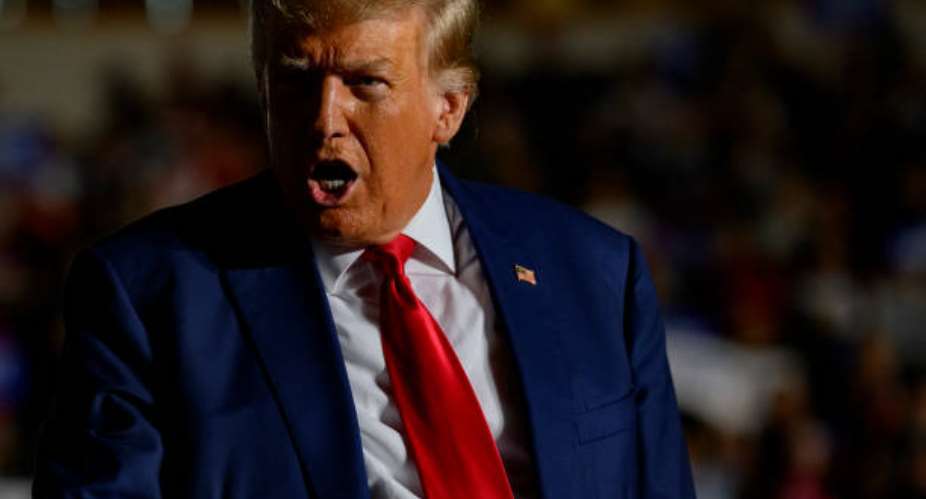
As President-elect Donald Trump prepares to begin his second term in office, his foreign policy rhetoric suggests an evolution of his “America First” platform. Known for his promises to disentangle the U.S. from foreign conflicts, hike tariffs, and bolster domestic manufacturing, Trump’s recent statements signal a surprising pivot toward a more assertive stance on international matters. From joking about annexing Canada to demanding control of the Panama Canal and reiterating interest in Greenland, these comments may reflect a strategic recalibration of U.S. priorities under Trump’s leadership.
A Renewed Interest in Panama
Trump’s remarks about the Panama Canal have sparked widespread attention. During a recent conservative conference in Arizona, he criticized the canal’s current toll policies, calling them “ridiculous” and “highly unfair” to U.S. shipping interests. He further stated that if these “rip-off” fees weren’t adjusted, the U.S. might demand control of the canal be returned—a stark departure from the longstanding treaty that handed over full sovereignty of the canal to Panama in the 1970s.
The strategic significance of the Panama Canal cannot be overstated. Spanning 51 miles across the Isthmus of Panama, it is a vital trade route connecting the Atlantic and Pacific Oceans. The canal handles over 12,600 ships annually, moving more than 500 million tons of cargo. Its value to U.S. commerce is immense, with the U.S. accounting for 75% of its traffic. China, the second-largest user, also has significant economic interests in the canal, and Beijing’s growing influence in Panama has raised national security concerns in Washington.
Will Freeman, a Latin America expert at the Council on Foreign Relations, noted that Trump’s remarks likely stem from a desire to ensure the canal remains neutral and secure, particularly given China’s military and economic rise. Freeman pointed out that while Trump’s threats may be coercive, they align with his broader trade agenda. In recent years, China has deepened ties with Panama, culminating in its recognition as the sole legitimate government over Taiwan in 2017—a move seen as a diplomatic victory for Beijing.
Implications for Global Trade
The Panama Canal is critical to U.S. trade, saving shipping companies millions in transportation costs by eliminating the need for the lengthy route around South America’s Cape Horn. In 2023, the U.S. exported over 125.6 million tons of cargo through the canal, much of it destined for Asia. Analysts estimate the canal saves between $450 million and $750 million annually for global shipping interests.
Panama’s government, however, has firmly rebuffed Trump’s comments. President José Raúl Mulino issued a statement affirming the canal’s sovereignty, underscoring that it would remain under Panamanian control.
Trump’s rhetoric reflects his administration’s focus on leveraging America’s power to gain economic advantages. Whether these statements are posturing or indicate a deeper foreign policy shift remains uncertain. However, they illustrate how Trump’s “America First” doctrine could increasingly intersect with geopolitical strategy in his second term.
Greenland: The Arctic’s Strategic Prize
Trump has also reignited interest in Greenland, describing its acquisition as an “absolute necessity” for national security and global freedom. Greenland, an autonomous territory of Denmark, is rich in natural resources, including rare earth minerals critical to modern technology. Its location in the Arctic Circle makes it strategically important for trade, military presence, and resource competition, particularly as global powers vie for influence in the region.
The U.S. already maintains Pituffik Space Base in Greenland, underscoring its importance to American defense strategy. Trump previously floated the idea of purchasing the territory in 2019, only to be rebuffed by Denmark. Greenland’s Prime Minister Múte B Egede reiterated this position following Trump’s recent comments, stating unequivocally that Greenland “is not for sale.”
Nevertheless, Trump has continued to emphasize Greenland’s significance. In a recent post on his social media platform, Truth Social, he shared an image of an American flag planted in Greenland. His son, Eric Trump, added to the narrative with a humorous post showing Greenland, the Panama Canal, and Canada in a U.S. shopping cart.
These gestures may seem whimsical, but they underscore Trump’s focus on using America’s economic and military power to secure strategic advantages. The Arctic is emerging as a new frontier in global geopolitics, with Russia also seeking to expand its presence in the region. By advocating for Greenland’s acquisition, Trump is signaling his intent to prioritize U.S. interests in this evolving landscape.
America First: A New Foreign Policy Playbook?
Trump’s statements about Panama and Greenland reflect a potential shift in his foreign policy approach. While his first term focused on withdrawing from conflicts and renegotiating trade deals, his rhetoric now suggests a willingness to flex American power beyond its borders to safeguard national security and economic interests.
This strategy is not without precedent. During his first presidency, Trump used tariffs and the threat of military action to pressure Mexico into tightening border enforcement. Such tactics, combining economic leverage with aggressive rhetoric, could become hallmarks of his second term.
Critics argue that Trump’s approach risks alienating allies and destabilizing international relationships. For instance, his comments about Canada, jokingly referred to as a potential U.S. state, have drawn backlash from Canadian officials. Similarly, his insistence on Greenland’s strategic importance has strained relations with Denmark, despite the country’s recent announcement of increased defense spending for the Arctic. The Danish government has unveiled a substantial increase in defense funding for Greenland, just hours after U.S. President-elect Donald Trump reiterated his interest in acquiring the Arctic territory. Danish Defence Minister Troels Lund Poulsen described the investment as a “double-digit billion” amount in krone, equivalent to at least $1.5 billion (£1.2 billion). He noted the timing of the announcement as a “remarkable coincidence.” On Monday, Trump referred to Greenland’s ownership and control as an “absolute necessity” for the United States. The autonomous Danish territory is strategically vital, positioned along the shortest route between North America and Europe. Greenland also hosts a significant U.S. space facility and is rich in valuable mineral resources.
Supporters, however, view these moves as a necessary recalibration of U.S. foreign policy. By focusing on trade routes like the Panama Canal and resource-rich regions like Greenland, Trump is prioritizing long-term American interests in a rapidly changing global landscape.
Challenges and Uncertainties
Despite the boldness of Trump’s rhetoric, the practicalities of his proposals remain uncertain. Reclaiming control of the Panama Canal would require renegotiating treaties with Panama, a move likely to face resistance both domestically and internationally. Similarly, purchasing Greenland would require the consent of Denmark and Greenland’s government, both of which have categorically rejected the idea.
Trump’s ability to implement these policies will also depend on broader geopolitical dynamics. For instance, any attempt to assert control over the Panama Canal could escalate tensions with China, a major stakeholder in the region. Similarly, increased U.S. activity in the Arctic could provoke Russia, which views the region as a critical area for expansion.
Conclusion
As Donald Trump prepares to take office again, his foreign policy is taking a decidedly assertive turn. By focusing on strategic assets like the Panama Canal and Greenland, Trump is signaling a willingness to leverage America’s economic and military power to secure its interests on the global stage. While these moves align with his “America First” vision, they also raise questions about their feasibility and potential repercussions.
Whether Trump’s bold statements translate into actionable policies remains to be seen. However, they reflect a president unafraid to challenge the status quo and prioritize American strength in an increasingly complex world. For Trump, the ultimate goal is clear: to ensure that the U.S. remains not just a participant, but a dominant force in global affairs.

 Court sets July 3 for judgment in Wontumi Akonta mining trial
 June 3 disaster case nears judgment as victims seek GH¢40 million compensation
 0.75% wallet-to-bank transfer levy was approved under Akufo-Addo gov't — Isaac ...
 Anti-LGBTQ Bill: Mahama citing procedural hurdles just to please Western partner...
 Ghanaian designer Master P urges ban on second-hand clothing now, warns of infec...
 National Chief Imam condemns Eid-day confusion among Ahlussunnah over parliament...
 Gifty Oware-Mensah directed transfer of NSA's funds to Blocks of Life company ac...
 Man threatens to curse Court, police after sentenced to 15-years for defilement
 Defilement case: Court issues bench warrant for arrest of father for failing to ...
 Interior Minister raises alarm over human trafficking through Aflao, Akanu corri...


