




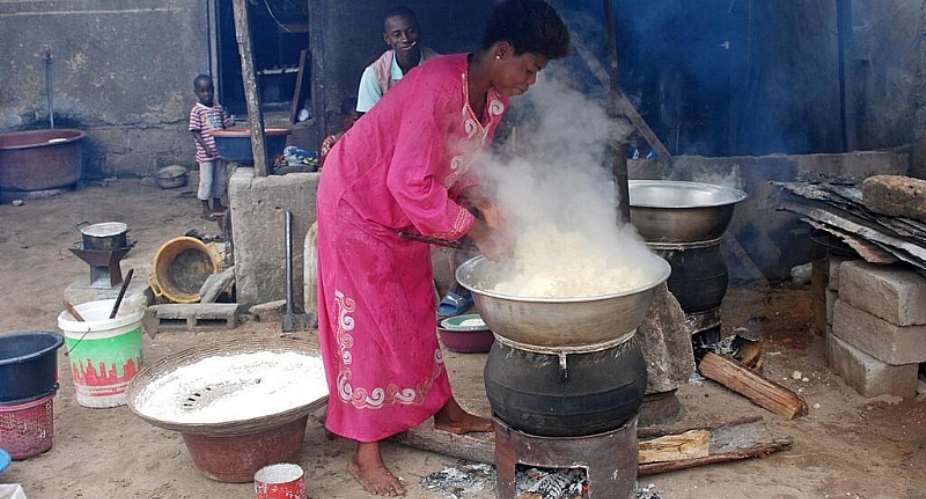
Attiéké, a tangy cassava couscous that has been a staple of Ivorian cuisine for generations, has been recognised by Unesco as a part of the world's intangible cultural heritage.
A daily essential in much of West Africa, the fermented semolina is often paired with fish, meat or stews. The news that it had made it on to Unesco's prestigious heritage list came this week during a meeting of the UN's cultural agency, held in Paraguay.
Making attiéké involves peeling, grating, fermenting and cooking the cassava tubers, a process that takes two to three days.
Distinctive taste
In Anono, a village in the heart of Abidjan, women gathered around piles of cassava roots, carrying on a tradition that's been passed down for centuries, discussed the news.
"Ebrié and Adioukro, we are the ones who make good attiéké,” says Dorothée, an elder of the Ebrié ethnic group. “But we often hear that Burkina Faso is first or China is first in attiéké production. And we who created attiéké are last. We also want our attiéké to evolve. We've created something special, and now the world knows.”
Congolese rumba and Senegalese fish dish join Unesco heritage list
The distinctive taste of Ivorian attiéké comes from a special fermentation process called magnan.
Anne-Marie, another producer, explains the intricate process: “The magnan normally takes three days. We pass it through a machine that grinds it and then we move to the second stage: the paste. We drain it with presses to obtain grains. And then we move on to cooking."
It is this method that gives Ivorian attiéké its unique taste, she explained.
Growing exports
Just a few kilometres away in the Abobo Akeikoi district, the Cotravi company ships 40 tonnes of dehydrated attiéké to Europe and the United States each year.
Manager Tapé Clément. sees the move by Unesco as a chance to better organise the sector. “We need to trace attiéké and give it a clear specification. With the strong demand in Europe, the government must help us connect with European distributors, particularly through trade fairs.”
France submits the baguette for Unesco heritage status
The UN recognition comes as attiéké also gains "collective brand" status – meaning only fermented cassava semolina produced in Cote d'Ivoire can be marketed under the name "attiéké", protecting its authenticity on the global market.
Attiéké joins Senegalese thiéboudiène, a fish and rice dish, on Unesco's intangible cultural heritage list – another win for the culinary traditions of West Africa.
This story was adapted from RFI's original version in French


 Attorney-General appeals ruling halting trial of former Buffer Stock CEO, wife
 NAIMOS destroys 1,970 changfans, 863 Illegal mining structures in three months —...
 Let's see how Asiedu Nketia becomes NDC flagbearer with same people he conspired...
 Asiedu Nketiah opts out of NDC chairmanship race amid flagbearership speculation
 NDC insists Nkwanta North elections will proceed despite court injunction
 'My side of the story will shock you; I'm waiting for court days' – Obuasi SHTS ...
 Obuasi SHTS sexual abuse: 'GES must distant itself, allow the law to work' — For...
 Upper East: Fear grips nine Kusaug communities over mysterious fish deaths in da...
 NDC suspends Amasaman Communications Officer over 'irresponsible' remarks on Obu...
 Parliament secures religious leaders’ support to end witchcraft accusations


