




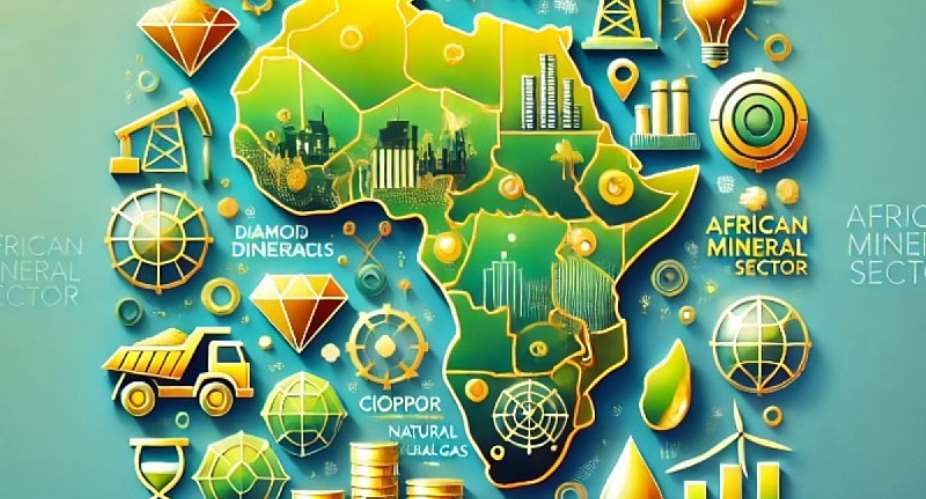
Africa's extractive industry is a cornerstone of the continent's economy, contributing significantly to GDP, exports, and employment. This industry encompasses the extraction of minerals, oil, and gas, and it plays a crucial role in the global supply chain. However, it also faces numerous challenges that need to be addressed to ensure sustainable development and equitable benefits for all stakeholders.
The Current State of the Extractive Industry
Economic Contribution: The extractive industry is a major driver of economic growth in many African countries. For instance, in the Democratic Republic of Congo (DRC), the sector contributes around 98% to the country's exports and 30% to its GDP. Similarly, countries like Nigeria, Angola, and South Africa rely heavily on their natural resources for economic stability and growth.
Key Resources: Africa is rich in a variety of minerals, including cobalt, lithium, graphite, and rare earth minerals, which are essential for clean energy technologies. The continent also has significant oil and gas reserves, making it a key player in the global energy market.
Employment: The extractive industry employs millions of people across the continent. Artisanal and small-scale mining (ASM) alone employs around 44.95 million people globally, with a significant portion in Africa.
Challenges Facing the Extractive Industry
Environmental Impact: Extractive activities often lead to environmental degradation, including deforestation, soil erosion, and water pollution. The use of toxic chemicals in mining processes can also have long-term health effects on local communities.
Governance and Transparency: Corruption and lack of transparency are major issues in the extractive industry. Ensuring that revenues from natural resources are managed responsibly and benefit the entire population is a significant challenge.
Social Implications: The extractive industry can lead to social conflicts, displacement of communities, and human rights abuses. Ensuring that local communities benefit from resource extraction and are involved in decision-making processes is crucial for sustainable development.
Opportunities for Sustainable Development
Green Recovery: The transition to clean energy presents significant opportunities for the extractive industry. Minerals such as cobalt, lithium, and graphite are essential for renewable energy technologies, and Africa's rich mineral resources can play a key role in the global clean energy transition.
Inclusive Growth: Promoting inclusive growth in the extractive industry involves ensuring that the benefits of resource extraction are shared equitably. This includes investing in local infrastructure, education, and healthcare to improve the quality of life for affected communities.
Technological Advancements: Embracing new technologies can improve the efficiency and sustainability of extractive activities. This includes adopting environmentally friendly mining practices, using advanced data analytics for resource management, and implementing renewable energy solutions in mining operations.
Conclusion
Africa's extractive industry is at a critical juncture, with immense potential for driving economic growth and development. By addressing the challenges of environmental impact, governance, and social implications, the industry can contribute to a sustainable and inclusive future. With strategic investments, technological innovations, and collaborative efforts, Africa can harness its natural resources for the benefit of all its people.
Contact the author at [email protected] / [email protected]


 'Chief Justice was talking as a citizen; you have to look at the context in whic...
 Mandatory towing to remove broken-down, stationary vehicles from roads to begin ...
 Domelevo backs OSP probe into alleged GH¢70,000 payment to Appiagyei despite den...
 WAEC releases 2026 WASSCE results, cancels entire results of 861 candidates for ...
 Baffour Agyeman-Duah explains why profitability may not be only reason behind SO...
 Kofi Bentil defends Mahama’s dissolution of nine State Boards
 5-year-old girl dies after falling into water-filled manhole at Winneba
 Sierra Leone ex-president to return after treason case dropped
 'Explain how you spent your Common Fund' — Boako, Annoh Dompreh challenge Tano N...
 Ghana ends South Africa evacuation; brings home nearly 1,900

