




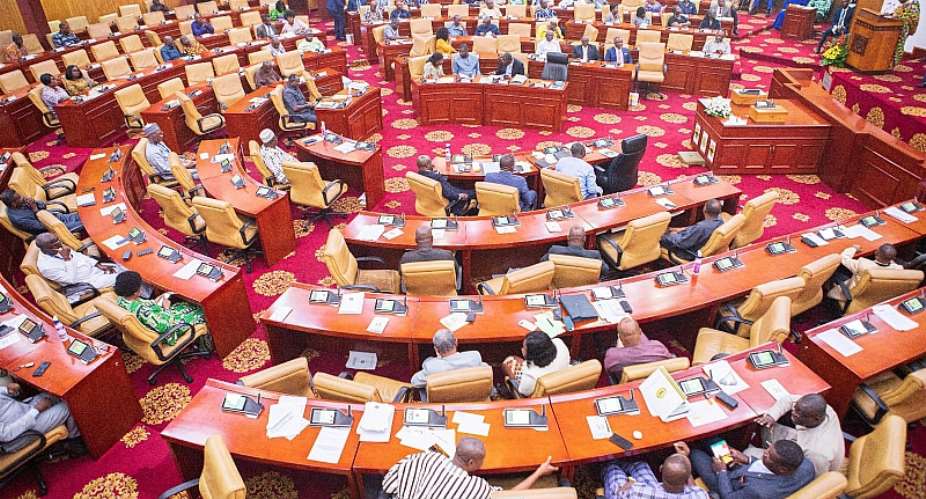
This title emphasizes the importance of resolving issues within Parliament through dialogue and collaboration, aligning with the themes discussed in the review.
WHY AFENYO-MARKIN MUST APOLOGIZE TO GHANAIANS
In recent times, the actions of Alexander Afenyo-Markin, the Majority Leader in Parliament, have sparked significant debate and concern among Ghanaians. His decision to take a parliamentary issue to the Supreme Court, rather than seeking a consensus within Parliament, has been criticized for undermining the democratic process. This editorial review explores why Afenyo-Markin should apologize to Ghanaians and how his approach contrasts with practices in other established democracies like the USA and the UK.
THE ISSUE AT HAND
Afenyo-Markin's case involved challenging Speaker Alban Bagbin's declaration of certain parliamentary seats as vacant. The Supreme Court ruled in favor of Afenyo-Markin, stating that the Speaker's interpretation of Article 97(1)(g) of the Constitution was unconstitutional. While the court's decision was legally sound, the route taken to resolve the issue has raised questions about the appropriateness of involving the judiciary in parliamentary matters.
THE IMPORTANCE OF CONSENSUS BUILDING
In established democracies such as the USA and the UK, parliamentary issues are often resolved through consensus building and negotiation rather than judicial intervention. This approach fosters a collaborative environment where differing parties work together to find common ground, thereby strengthening the democratic process.
WRONG: By taking the issue to the Supreme Court, Afenyo-Markin bypassed the opportunity for consensus building within Parliament. This move not only set a precedent for judicial intervention in parliamentary affairs but also risked creating a more adversarial and less cooperative legislative environment.
RIGHTING THE WRONG: Afenyo-Markin should acknowledge the importance of resolving parliamentary disputes internally through dialogue and negotiation. An apology to Ghanaians would demonstrate his commitment to upholding democratic principles and fostering a collaborative legislative process.
POTENTIAL CONSEQUENCES
Afenyo-Markin's decision to involve the Supreme Court could have far-reaching implications for parliamentary operations. If such actions become a norm, it could lead to a situation where Parliament is frequently stalled by legal battles, hindering its ability to conduct business effectively.
WRONG: The reliance on judicial intervention to settle parliamentary disputes could result in a legislative deadlock, where Parliament is unable to function efficiently due to ongoing legal challenges.
RIGHTING THE WRONG: To prevent such outcomes, it is crucial for parliamentary leaders to prioritize consensus building and internal resolution mechanisms. This approach not only preserves the autonomy of Parliament but also ensures that legislative processes are not disrupted by external interventions.
ALEXANDER AFENYO-MARKIN'S DECISION to take a parliamentary issue to the Supreme Court highlights the need for greater emphasis on consensus building within Ghana's legislative framework. By apologizing to Ghanaians and committing to resolving disputes through dialogue and negotiation, Afenyo-Markin can help restore confidence in the democratic process and ensure that Parliament remains a functional and collaborative institution.
#Retired Senior Citizen
Teshie-Nungua

 Government to introduce ID verification for access to porn sites — Sam George
 African governments failing on commitments to increase agriculture funding — Eri...
 45-year-old ex-convict arrested over alleged rape and murder of wife's 17-year-o...
 We’re working to provide shelter for police officers displaced after barracks fi...
 No arrests made over Accra Central Police Barracks fire yet — Police
 Mahama told UK Prime Minister anti-LGBTQ+ bill is far from becoming law — Minori...
 Leaked judgment? NDC activists confirms jail term for Wontumi on social media
 Minority demands passage of original 2024 anti-LGBTQ+ bill, accuses NDC of decep...
 "Flagrant disrespect" — Court remands Abronye over failure to surrender passport...
 High Court remands Abronye over failure to surrender passport


