




The recent US Embassy decision to impose visa restrictions on individuals who may disrupt Ghana’s democratic process ahead of the upcoming December elections has drawn significant praise as a step toward promoting peace, stability, and political accountability in Ghana. The policy, aimed at curbing political violence, is a strong signal that any attempt to undermine democracy could have serious personal consequences for those involved.
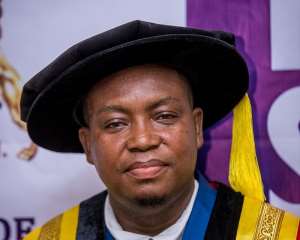
However, new information suggests that this policy may actually have roots in the work of a Ghanaian academic, Rev. Prof. Emmanuel Yao Nash. Between 2014 and 2016, Rev. Prof. Nash, a noted peace advocate, conducted a comprehensive study on electoral violence and its prevention in Ghana. His research concluded with a call for international embassies, including the US Embassy, to halt the issuance of visas to politicians until the elections were completed. He argued that denying politicians the ability to leave the country during election season would compel them to act with integrity and responsibility, knowing they were accountable to local laws and citizens.
Rev. Prof. Nash’s findings were well-publicized, including an article in Graphic Online in October 2016 titled, “Withhold Visa for Politicians till Elections.” His appeal for embassies to adopt his approach for promoting electoral decency came from a place of academic rigor and peace advocacy.
Despite the thoroughness of Rev. Prof. Nash’s research and his efforts to gain embassy support, this reporter has learned that the US Embassy did not acknowledge the Professor's ideas nor offer support. Furthermore, the embassy reportedly declined to attend the launch of the Ghana Peace Awards (GPA) in 2016, an event derived from his research to recognize individuals and organizations dedicated to promoting peace in Ghana.
Nevertheless, the US government appears to have embraced Rev. Prof. Nash’s recommendation as its own. US Secretary of State Antony Blinken has since imposed similar visa restrictions in countries like Sierra Leone, Bangladesh, and Liberia. These actions are framed as the US government's commitment to supporting fair elections worldwide, with visa restrictions serving as a deterrent to political actors who might undermine the democratic process.
While implementing Rev. Prof. Nash’s recommendations underscores their value, his contributions remain largely unrecognized. Formal acknowledgment from the US Embassy would be a meaningful step, not only honoring Rev. Prof. Nash’s original work but also lending greater credibility to future research efforts aimed at fostering peace in Ghana, Africa, and beyond.

 Ghana lost 1.1 million ounces of gold to smuggling in 2023 – GHEITI report
 Stranded Ghanaian fishermen narrate how they ate fresh fish, drunk sea water to ...
 How notorious armed robber died on the way whiles leading police to arrest accom...
 'We must continuously improve cargo handling, coordination among port operators'...
 GPHA honours industry players, former leaders and staff at 40th anniversary awar...
 Nii Lante Vanderpuye confident of winning NDC national chairmanship despite Gold...
 Agalga dismisses critics, assures Builsa North of progress on Sandema–Wiaga Road
 NDC Lawra constituency polls: We are not going to disappoint you – Chairman Bati...
 Ghana's President Mahama calls for new West African security accord, stronger AU...


