




The latest findings from Afrobarometer's Round 10 survey reveal growing discontent among Ghanaians regarding the nation's economic trajectory.
Most respondents (85%) believe the country is headed in the wrong direction, with negative assessments of both national economic performance and personal living conditions.
Meanwhile, 15% of Ghanaians think Ghana is headed in the right direction.
Amid this uncertainty, fewer than half (45%) expect Ghana’s economic condition to improve over the coming year, casting doubt on hopes for a near-term recovery.
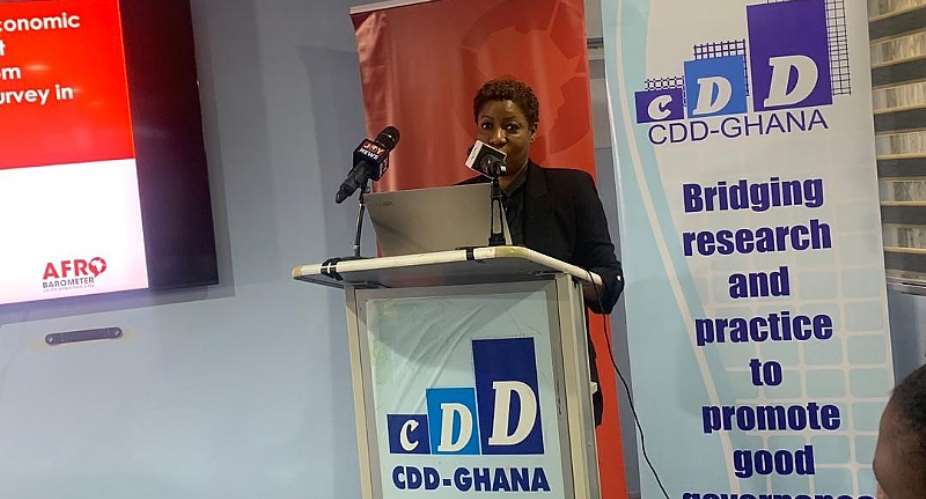
This is contained in the second release of the Afrobarometer Round 10 Survey issued by the Center for Democratic Development Ghana (CDD-Ghana) on Thursday, October 31.
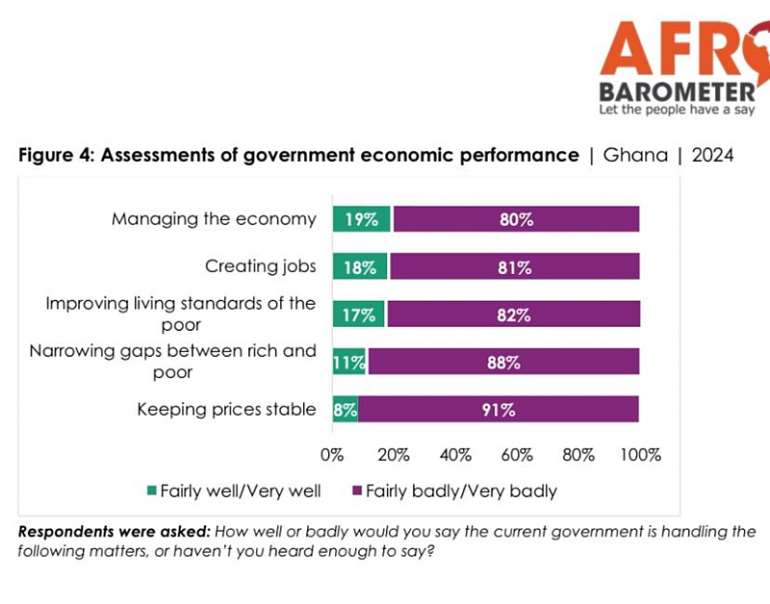
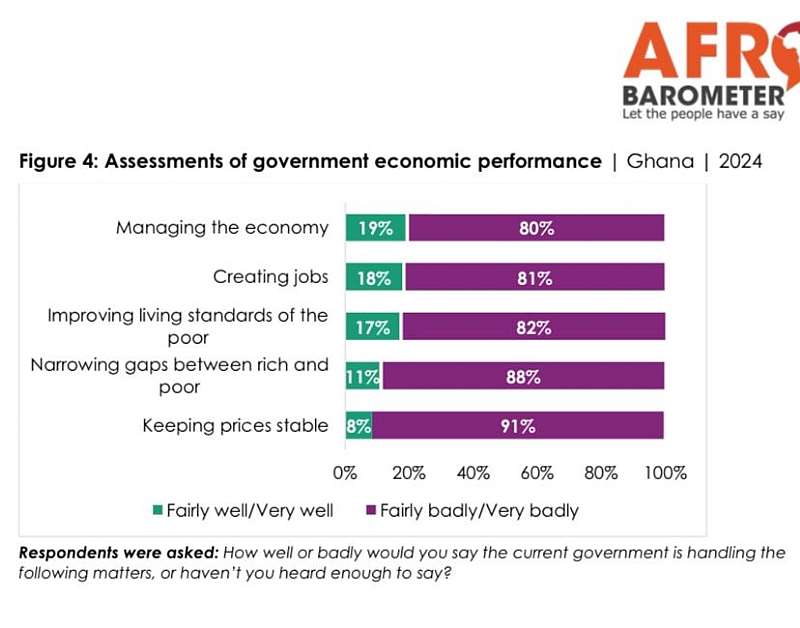
The Afrobarometer Round 10 survey highlights the specific areas where public dissatisfaction is most pronounced. Key economic metrics, such as price stability, job creation, and income inequality, received overwhelmingly negative ratings from respondents.
Only 8% of respondents feel the government is managing price stability well, while a staggering 91% rate its performance as "fairly badly" or "very badly."
This dissatisfaction reflects Ghana's ongoing battle with inflation, which has severely impacted the cost of living for many citizens.
With only 11% approval, the government’s efforts to reduce inequality between the rich and the poor are also heavily criticised. The data shows that 88% believe the government has been ineffective in addressing the widening income disparity.
82% of respondents feel the government is not doing enough to uplift the poor, with only 17% approving of the current efforts. This aligns with the survey’s broader findings, which show that poverty has deepened over recent years.
Job creation remains a significant concern, as 81% of respondents rate the government’s performance poorly in this area. Similarly, only 19% think the government is effectively managing the economy, while 80% express dissatisfaction.
The survey underscores the real-life implications of these economic challenges.
Over the past year, 82% of Ghanaians reported experiencing low to high levels of poverty, with many households struggling to meet basic needs. Essential resources like food, medical care, and fuel have become harder to access, reflecting the economic strain affecting millions across the nation.
In addition, seven in 10 Ghanaians reported going without cash income at least once during the past year, highlighting the lack of stable financial security for many families. These figures are a stark indicator of the hardships facing the population and illustrate why so many Ghanaians are calling for urgent economic reform.
With elections drawing closer, the survey’s findings signal a clear call to action for Ghana’s next administration. As public confidence in the current economic approach wanes, Ghanaians are eager for a new direction.
The Afrobarometer data sends a strong message that the nation desires meaningful changes to reverse the economic decline and improve quality of life.

 GTA CEO Maame Efua Houadjeto faces visa fraud allegations over 2026 World Cup me...
 Senegal and Morocco set for AFCON title rematch – in Swiss sports court
 From the Acropolis, Rubio calls on Europe to emerge from ‘slumber’
 Mahama proposes financing scheme to help Ghanaians complete unfinished houses
 'Free SHS not in crisis; it was suffering under you and we reviewed it' – Haruna...
 Mahama orders sanctions for officials who fail to enforce building safety rules
 2026 World Cup: Minority alleges how GTA charged $7,000–$14,000 for visa process...
 Mahama announces GHS1bn for revolving National Housing Fund
 PAC orders CWSA to recover GH¢2.5m public debt within 30 days
 Former NPP chairman Samuel Odoi-Sykes dies



Comments
But Mahama can't be the alternative. We can still rely upon the status quo which is the Npp