




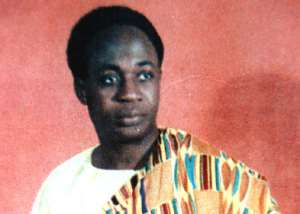
President Nana Akufo-Addo's attempt to diffuse the notion that Dr. Kwame Nkrumah is the sole Founder of Ghana is an attempt to modify the narrative that can evoke strong reactions. The longstanding debate about the Founder of Ghana persisted even after Dr. Kwame Nkrumah was overthrown by a coup aided by the CIA. Therefore, it is unjust for the current leader of the United Party (now NPP) to make misguided statements on this matter.
George Washington which our President made mentioned of is often heralded as the "Father of His Country" in US. Washington's leadership was undoubtedly crucial, but it was the collective effort of many individuals and the confluence of various ideas and movements that forged the United States. The American Revolution was driven by a multitude of figures whose contributions were indispensable to the cause of independence. These included political philosophers like Thomas Jefferson and Benjamin Franklin, military leaders like Alexander Hamilton and the Marquis de Lafayette, and countless unsung heroes who fought and strategized. Each played a vital role in shaping the ideological and physical battlegrounds of the revolution. Furthermore, the political structure of the nascent US, epitomized by the Constitutional Convention of 1787, was a product of vigorous debate and compromise among numerous delegates.
In contrast, Dr. Kwame Nkrumah’s role in the establishment of Ghana as an independent nation is more singular and pronounced, allowing for a clearer attribution of national founding status. Dr. Kwame Nkrumah's direct and decisive actions merit his recognition as the Founder of Ghana. Dr. Kwame Nkrumah’s role in the founding of Ghana was markedly more central and direct. Nkrumah emerged as the undisputed leader of the independence movement in the Gold Coast, now Ghana, and his vision and actions were instrumental in achieving sovereignty from British colonial rule. Although he joined UGCC, his formation of CPP in 1949 marked a significant shift towards mass mobilization and a more radical approach to achieving independence. Nkrumah's strategy of "positive action" - a campaign of civil disobedience, strikes, and protests - galvanized the population and placed immense pressure on the British colonial administration.
The pivotal moment came in 1951 when Nkrumah, despite being imprisoned, won a significant victory in the Gold Coast’s legislative elections. Nkrumah's relentless pursuit of a free and independent Ghana culminated in the declaration of independence on March 6, 1957, making Ghana the first sub-Saharan African country to break free from colonial rule.
The Aborigines' Rights Protection Society established in 1897, was primarily formed to oppose the Crown Lands Bill of 1896 and the Lands Bill of 1897, which sought to expropriate land from indigenous peoples and place it under British control. Nevertheless, ARPS did not make much efforts to liberate then Gold Coast from imperialist. Earlier efforts by the Asante Empire (Anglo-Asante Wars from 1823-1896), the Fante Confederation in 1868, and local chiefs also advocated in vain. But the only saviour of Ghana was Osagyefo Dr. Kwame Nkrumah.
Dr. Kwame Nkrumah implemented a series of key reforms in Ghana that were pivotal in shaping the newly independent nation. His reforms spanned various sectors including education, healthcare, infrastructure, economic development, and governance. These reforms were designed to lay the foundation for a self-reliant and prosperous Ghana, as well as to inspire and support the broader Pan-African movement. Below are some of the most significant reforms introduced by Nkrumah:
Educational Reforms
Nkrumah placed a strong emphasis on education as a cornerstone for national development. His government undertook several initiatives to improve and expand educational opportunities:
- Universal Primary Education: Nkrumah's administration introduced free and compulsory primary education, making it accessible to all children in Ghana. This significantly increased literacy rates and educational attainment across the country.
- Establishment of Schools and Institutions: Numerous primary and secondary schools were built, along with teacher training colleges to ensure a steady supply of qualified educators. The University of Ghana, originally established as an affiliate college of the University of London, was expanded and gained autonomy.
- Technical and Vocational Education: Recognizing the need for technical skills to support industrialization, Nkrumah promoted technical and vocational training programs.
Healthcare Reforms
- Improving the health of Ghanaians was a priority for Nkrumah, and his government introduced several healthcare reforms:
- Expansion of Healthcare Facilities: Nkrumah's administration-built hospitals, clinics, and health centres across the country to improve access to medical care.
- Training of Medical Personnel: Efforts were made to train more doctors, nurses, and healthcare workers. The establishment of medical and nursing schools.
- Public Health Campaigns: National campaigns were launched to combat infectious diseases such as malaria, tuberculosis, and yellow fever, contributing to improved public health outcomes.
Economic Reforms
Nkrumah's vision for Ghana's economy was centred around modernization, industrialization, and self-sufficiency:
- Industrialization Drive: The government embarked on an ambitious industrialization program, establishing state-owned enterprises and industries in various sectors such as manufacturing, mining, and agriculture.
- Infrastructure Development: Significant investments were made in infrastructure projects, including roads, bridges, ports, and the construction of the Akosombo Dam, which provided hydroelectric power and was crucial for industrial and economic development.
- Agricultural Modernization: Efforts were made to modernize agriculture through mechanization, irrigation projects, and the introduction of improved farming techniques. The aim was to increase agricultural productivity and ensure food security.
Promotion of Social Welfare
The government implemented policies to improve housing, sanitation, and social services. Public housing projects were initiated to address urban housing shortages.
Political Mobilization and Participation
krumah's government encouraged political participation and the formation of mass organizations such as the Ghana TUC and the Ghana National Farmers Union to mobilize support and engage citizens in the political process.
Pan-Africanism and Foreign Policy
Nkrumah was a staunch advocate of Pan-Africanism. He sought to unite African countries politically and economically, promoting the establishment of OAU (now AU) in 1963. His foreign policy was focused on supporting liberation movements across Africa and fostering solidarity among newly independent African states.
The President of Ghana is economical with the truth, and he does so because his father, his uncle and his grandfather could not achieve that but Kwame Nkrumah did and will remain the only Founder of Ghana.
By Lewis Kwame Addo
Amsterdam


 ICC chief prosecutor Karim Khan dismissed over sexual misconduct allegations, so...
 'I shall continue to walk in late President Atta Mills' footsteps' — Mahama mark...
 Flood Mitigation Task Force begins demolition of structures on waterways in Accr...
 Refund GH¢60 deductions in two weeks — Service personnel to NASPA
 Parliament expected to adjourn sine die on July 31
 Police bust motorbike theft cartel, seven suspects arrested in Upper West
 GoldBod suspends Dominic Bonsu Ventures' gold trading licence, secures bench war...
 Being better than the last NPP gov't should never be the standard — Sulemana Bra...
 Migration challenges will not strain Ghana-South Africa relations — Ronald Lamol...
 'You had your priorities wrong' – NPP's Peter Ayinbisa rejects govt's new SHS fo...


Comments
This is the Historic Truth non- negotiable by any political Ideology ,inimical ,rancorous, aristocratically imbued with inferiority Complex .