




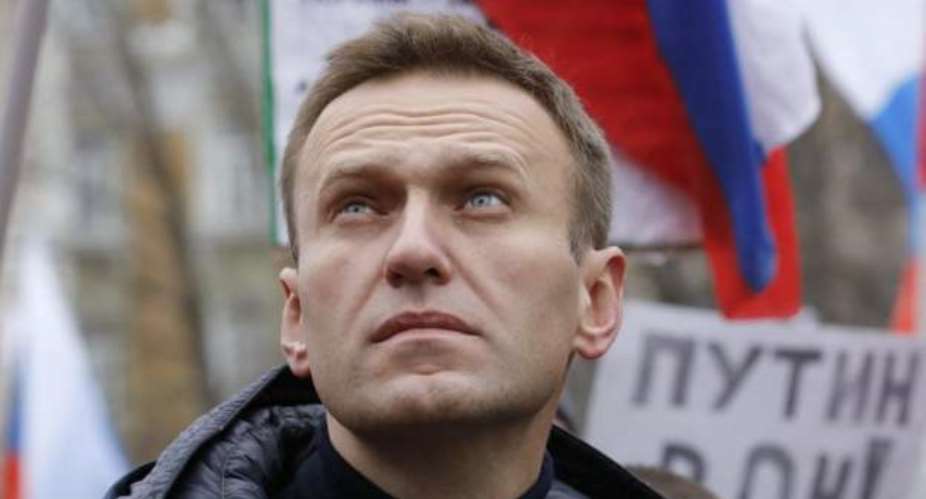
In a shocking turn of events, Alexei Navalny, the fearless opposition figure renowned for his unwavering criticism of Russian President Vladimir Putin, has reportedly succumbed to his circumstances while incarcerated in a Russian jail since 2021. Widely regarded as a victim of politically motivated charges, Navalny faced relentless opposition from the Kremlin, enduring an array of accusations ranging from establishing an extremist organization to parole violations, fraud and contempt of court.
The circumstances surrounding Navalny’s death are undeniably intricate and fraught with implications that could reverberate through the political landscape of Russia and beyond. As a leader who rallied against the current government, his absence may introduce an element of political instability. The void left in his wake could potentially give rise to a power struggle within the opposition or, conversely, embolden the government to tighten its grip through forceful crackdowns.
On the international stage, Navalny’s death is bound to trigger robust reactions and condemnations. Western nations and human rights organizations, already critical of the Russian government’s actions, may intensify their pressure, potentially resorting to sanctions or other punitive measures in response to perceived human rights abuses.
Compounding the situation is the potential damage to the Russian government’s credibility, which is already weathered by suspicion and controversy. If suspicions of foul play or negligence surround Navalny’s demise, the government’s credibility may further erode, fostering increased public distrust both within the country and on the global stage.
Navalny’s death also has the potential to impact the landscape of protests in Russia. As a rallying figure for anti-government demonstrations, his passing may temporarily quell protests due to a loss of leadership, or conversely, ignite larger and more vehement demonstrations as the populace reacts to what they perceive as an unjust act.
The dynamics within the opposition movement are poised for a shift in the wake of Navalny’s death. With his absence, new leaders may emerge, and the movement could undergo a transformation, influencing strategies and goals as they continue to challenge the government.
What is more, there is an ominous potential for retribution following Navalny’s demise, particularly if perceived as a politically motivated act. This could spur increased radicalization within certain segments of the opposition, leading to acts of civil disobedience, violence, or other forms of resistance against the government. The spectre of escalating tensions looms large, casting a shadow over the already complex and delicate political landscape in Russia.
Alexei Navalny’s tragic death marks a pivotal moment in Russia’s political landscape. The intricate web of consequences arising from this event demands careful observation, as the nation stands on the precipice of potential transformation, both internally and on the world stage.


 National conversation should not become an exercise in suppressing dissent — Bag...
 ‘Don’t reward only bitter tongues, it encourages others to copy’ – Bagbin tells ...
 'I apologise for calling you rude' — NPP MP Kabiru to Speaker Bagbin
 Barker-Vormawor criticises NPP over shift from ‘intelligence’ to ‘metaphor’ on c...
 TRAFFITECH-GH: Police reschedules automated traffic enforcement rollout to Novem...
 Scrap premix subsidy and replace it with credit support – CEMSE urges gov't
 We have cut cost of capital by more than half since Mahama took office – Ato For...
 Dr Bertha Ayi on how parents hurt children by raising them only on English
 Customs intercepts three firearms, 610 rounds of ammunition at Tema Port
 NDC to open nominations for 2026 regional executive elections on October 6


