




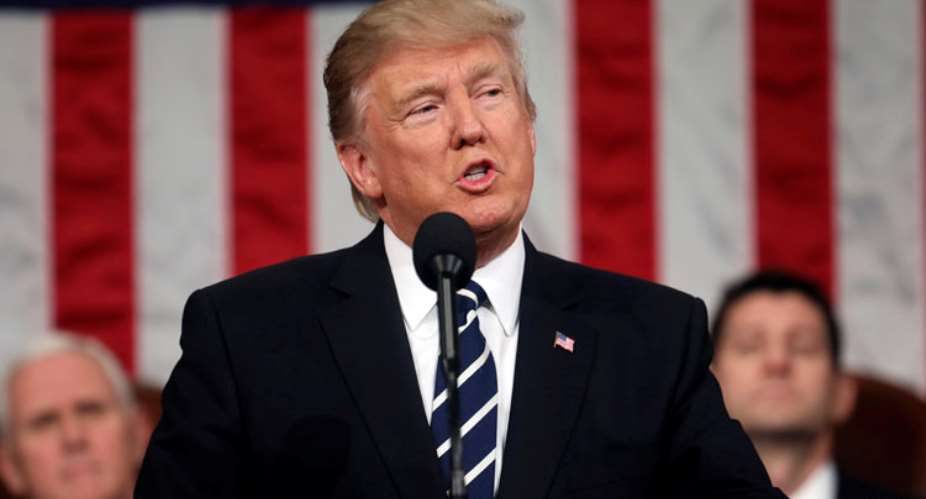
Donald Trump, the leading contender for the Republican candidacy in the upcoming US presidential election, has consistently expressed criticism towards NATO, citing what he perceives as an undue financial burden on the United States for securing the defense of 30 other nations. During a recent rally, he articulated his intention to “encourage” Russia to target any NATO member failing to meet its financial commitments within the Western military alliance.
Trump recounted a past instance where he informed a foreign leader that he would not guarantee protection to a nation lagging behind in its payments, going so far as to suggest he would “encourage” aggressors to act without constraint. This bold assertion by Mr. Trump is likely to elicit strong reactions from European nations, reinforcing their concerns about the potential implications of a second Trump presidency on the international stage. It further solidifies the apprehension that a renewed Trump administration would potentially favour Russian President Vladimir Putin.
As we contemplate the possibility of a second Trump presidency, it is crucial to assess the potential scenarios that could unfold in the US relationship with Europe and NATO. Examining various aspects, from financial commitments to bilateral agreements and trade tensions, provides us with a comprehensive understanding of the potential shifts on the horizon.
Financial Commitments to NATO
A central aspect under consideration is the anticipated reduction in the US financial commitment to NATO. In a second Trump presidency, we may witness a sustained push for European nations to shoulder a larger share of the defense burden. Trump’s administration might threaten the withdrawal or reduction of U.S. troops in Europe unless NATO members meet the agreed-upon target of allocating 2% of GDP to defense.
Bilateral Agreements vs. Multilateral Approaches
The dynamics of international agreements could undergo a transformation, with a potential emphasis on bilateral agreements over multilateral approaches. The Trump administration may prioritize individual defense pacts with European countries, possibly challenging the unity of NATO. This shift could reshape the landscape of diplomatic engagements between the US and Europe.
Trade Tensions Impacting Security Cooperation
In a second Trump presidency, the intersection of trade disputes and security matters could escalate, placing strain on NATO cooperation. The administration might link trade concessions to increased defense spending by European NATO members, introducing tensions within the alliance. This intricate interplay could redefine the nature of collaboration on both economic and security fronts.
Shift in NATO’s Mission
A notable change could be in the offing regarding NATO’s mission. Under Trump’s leadership, there might be a push to redefine the alliance’s purpose, with an increased focus on countering non-traditional security threats such as cyber-attacks and terrorism. Resource reallocation towards addressing emerging security challenges could spark debates and disagreements within the alliance.
Emphasis on Burden Sharing
The concept of burden-sharing could continue to take centre stage, with Trump urging NATO members not only to boost defense spending but also to contribute actively to military operations. This could manifest in calls for European nations to play a more significant role in both troop commitments and financial contributions, reflecting a recalibration of responsibilities within the alliance.
Strained Relations with EU Institutions
Beyond NATO, a second Trump presidency might witness strained relations with European Union institutions, potentially impacting broader diplomatic ties. Disagreements over issues like climate change, the Iran nuclear deal, or international crisis management could contribute to diplomatic challenges, affecting collaboration between the US and EU member states.
Conclusion
It is essential to recognize that these scenarios are speculative, contingent upon various factors such as the geopolitical landscape, specific policies pursued by the Trump administration, and responses from European nations and NATO allies. As we navigate these uncertainties, a nuanced understanding of the potential shifts in US-Europe relations and NATO dynamics remains paramount.


 Microsoft says it is 'deeply sorry' after widespread outages cause global chaos
 Microsoft outage causes global chaos
 The Nvidia affair: Are markets about to fall out of love with AI?
 NAIMOS uncovers illegal mining activities in forest reserve as miners allegedly ...
 Roads minister orders 10 speed-calming structures on Bolgatanga–Paga highway
 NRSA warns Uber moto riders against road safety violations
 'Too early to discuss presidential bid’ – Dr. Ato Forson
 Government to train over 2,000 scientists for Ghana's nuclear power programme – ...
 Elderly man reportedly apprehended by residents in Koforidua after travelling fr...
 ‘We are living within our means’ – Finance Minister defends no-new-taxes for 202...


