




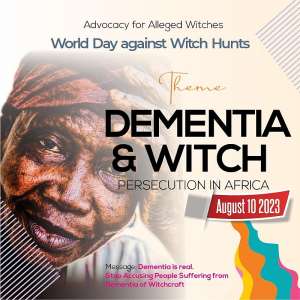
August 10 has been designated World Day against Witch Hunts. The Advocacy for Alleged Witches welcomes this development and urges countries to mark this important day, and try to highlight past and contemporary sufferings and abuses of alleged witches in different parts of the globe. Witchcraft belief is a silent killer of persons. Witchcraft accusation is a form of death sentence in many places. People suspected of witchcraft, especially women and children, are banished, persecuted, and murdered in over 40 countries across the globe. Unfortunately, this tragic incident has not been given the attention it deserves.
Considered a thing of the past in Western countries, this vicious phenomenon has been minimized. Witch persecution is not treated with urgency. It is not considered a global priority. Meanwhile, witch hunting rages across Africa, Asia, and Oceania. The misconceptions that characterized witch hunting in early modern Europe have not disappeared. Witchcraft imaginaries and other superstitions still grip the minds of people with force and ferocity. Reinforced by traditional, Christian, Islamic, and Hindu religious dogmas, occult fears and anxieties are widespread. Many people make sense of death, illness, and other misfortunes using the narratives of witchcraft and malevolent magic. Witch hunters operate with impunity in many countries, including nations with criminal provisions against witchcraft accusations and jungle justice.
Some of the people who are often accused and targeted as witches are elderly persons, especially those with dementia.
To help draw attention to this problem, the Advocacy for Alleged Witches has chosen to focus on dementia for this year's World Day against Witch Hunts. People with dementia experience memory loss, poor judgment, and confusion. Their thinking and problem-solving abilities are impaired. Unfortunately, these health issues are misunderstood and misinterpreted. Hence, some people treat those with dementia with fear, not respect. They spiritualize these health conditions, and associate them with witchcraft and demons.
There have been instances where people with dementia left their homes or care centers, and were unable to return or recall their home addresses. People claimed that they were returning from witchcraft meetings; that they crash landed on their way to their occult gatherings while flying over churches or electric poles. Imagine that! People forge absurd and incomprehensible narratives to justify the abuse of people with dementia. Sometimes, people claim that those suffering dementia turn into cats, birds, or dogs. As a result of these misconceptions, people maltreat persons with dementia without mercy; they attack, beat, and lynch them. Family members abandon them and make them suffer painful and miserable deaths. AfAW urges the public to stop these abuses, and treat people with dementia with care and compassion.
Leo Igwe directs the Advocacy for Alleged Witches

 1,568 new lawyers must use law to advance justice — Chief Justice
 GH¢800,000 worth of goods lost in Kia Rhino truck fire at Amanfrom
 I never said Ghana has more nurses than it needs — Akandoh
 I have tried reaching Boakye Agyarko after NPP chairmanship race, but to no avai...
 Ghana’s Corporate Illusion: Why We Celebrate Professional Titles More Than Natio...
 Sam George, Armah-Kofi Buah, Phyllis Naa Koryoo and OPK among 1,568 lawyers call...
 Visa scandal: 'Ampofo Ankrah’s suspension not enough; Kofi Adams must also step ...
 'Let integrity, discipline guide your conduct' — Samson Lardi tells new lawyers
 Labour Minister optimistic teachers will suspend strike by close of day
 Dr Ato Forson urges MMDCEs to eliminate waste in public spending


