





The Importance of Moving Beyond Tribal Politics in Ghana: A Case Study of Northern Ghana.
Ghana is a country with a rich cultural heritage and a diverse population that has long been divided along tribal lines. However, in recent years, the country has seen a significant shift away from traditional tribal politics, and this is especially true in Northern Ghana. The region, which has been traditionally divided between the Dagomba, Gonja, Nanumba tribes and among others, is now showing a more unified and inclusive approach to governance. This article will explore the reasons why tribal politics is becoming less relevant in Northern Ghana and why it is important for the country as a whole to move beyond tribal divisions.
One of the key reasons that tribal politics is losing its grip in Northern Ghana is the region's increasing ethnic diversity. With the rise of globalization, people from different parts of the country are moving to the region in search of economic opportunities, creating a more diverse and cosmopolitan population. This has led to a growing awareness of a national identity that transcends tribal affiliations and has made it more difficult for politicians to play the tribal card.
Another factor contributing to the decline of tribal politics in Northern Ghana is the region's rapidly developing economy. With a growing middle class and increasing economic opportunities, people are becoming more focused on practical issues such as jobs, healthcare, and education. This has made it more difficult for politicians to rely solely on tribal affiliations for support, as people are more concerned with finding solutions to their everyday problems.
Furthermore, the younger generation in Northern Ghana is more connected to the global community and has a wider world-view. They are less likely to be swayed by tribal politics, as they see the world as a more connected and interdependent place. This younger generation is more interested in finding solutions to the country's challenges, rather than simply relying on tribal affiliations for support.
In conclusion, tribal politics are becoming less relevant in Northern Ghana, as the region is experiencing increasing ethnic diversity, a rapidly developing economy, and a more connected and forward-looking younger generation. This shift is important not only for Northern Ghana but for the country as a whole, as it represents a move towards a more cohesive and inclusive society. If Ghana is to achieve its full potential, it is crucial that it moves beyond tribal divisions and focuses on finding solutions to the country's challenges. By doing so, it can build a brighter future for all its citizens, regardless of their tribal affiliations.
By: Isurabil Zakaria


 Ghana lost 1.1 million ounces of gold to smuggling in 2023 – GHEITI report
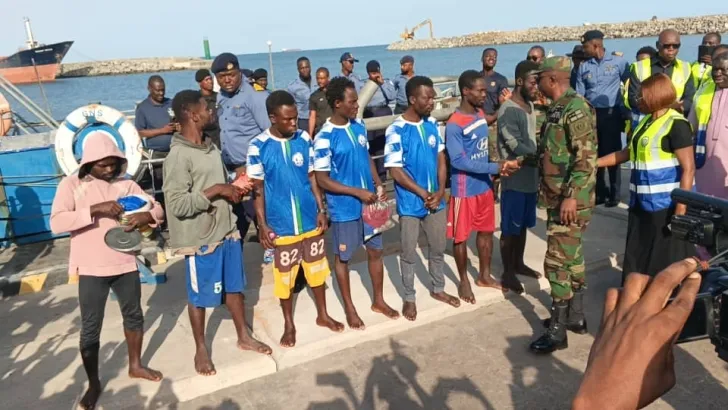 Stranded Ghanaian fishermen narrate how they ate fresh fish, drunk sea water to ...
 How notorious armed robber died on the way whiles leading police to arrest accom...
 'We must continuously improve cargo handling, coordination among port operators'...
 GPHA honours industry players, former leaders and staff at 40th anniversary awar...
 Nii Lante Vanderpuye confident of winning NDC national chairmanship despite Gold...
 Agalga dismisses critics, assures Builsa North of progress on Sandema–Wiaga Road
 NDC Lawra constituency polls: We are not going to disappoint you – Chairman Bati...
 Ghana's President Mahama calls for new West African security accord, stronger AU...


