




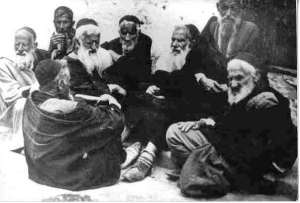
Civil associations must come together to preserve cultural symbols and generational knowledge of Morocco’s uniquely diverse history. This is a critical component of the nation’s human development goals.
Harnessing the experiences and the history of religious and ethnic groups in Morocco must be a priority before the holders of that knowledge are lost to time. Moroccan-based civil associations, with the right support, are in an ideal position to gather and disseminate this knowledge for mutual understanding and human development.
Morocco is intrinsically a multicultural society. Preserving the stories of its symbols, its places, and its people is of vital importance in promoting educational awareness about the nation’s cultural journey. Today’s youth have rarely had the opportunity to sincerely consider this indelible part of Morocco’s past and character, and how that past could inform its present and its future.
Morocco is at a crossroads in its opportunity to gather information about its religious, ethnic, and cultural past. The unique cohabitation of the Abrahamic religions as recollected by the Moroccan people represents an exceptional history, and collecting such stories would expand cultural understanding and serve as a global example of social cohesion. The generational landscape of Morocco will soon change, and this historic and immediate opportunity will no longer be as viable. In other words, the time is now to embark on such an initiative for the nation and the world.
Representatives of Islam, Judiaism, and Christianity in Morocco have eagerly engaged in interfaith dialogue to build productive, positive relationships. They actively collaborate to pursue public education that improves religious solidarity, meets priority human needs, and counters messages of intolerance and disharmony. Likewise, Moroccan civil groups seek to engage in these dynamic interreligious and interethnic processes of unity. Educational workshops, community activities, school engagement, entrepreneurship, and public awareness campaigns, among others, meet a core priority of all Moroccan sectors.
Utilizing multicultural dialogue as a bridge for human development and the promotion of employability is a stated goal of King Mohammed VI, as noted in his remarks at the 2008 Alliance of Civilizations. The Moroccan model, as stated by His Majesty the King, requires more than celebrating multiculturalism, more than upholding and embracing multifaceted identities, and more than ensuring fulfillment of all religious and ethnic groups as they are constituted.
It requires creating jobs, increasing incomes, improving schools, regenerating the environment, enabling gender justice, furthering the participation of youth in decision-making, and more, as a result of such dialogues and celebrations. The preservation of heritage must be fully integrated with sustainable human development and the promotion of all people’s livelihoods.
Dr. Yossef Ben-Meir is president and co-founder of the High Atlas Foundation in Morocco. Ellen Hernandez is an assistant professor of English at Camden County College in the United States.

 UCC-UTAG demands clearer boundaries for GTEC’s regulatory role to avoid interfer...
 Mahama congratulates Lula da Silva on ‘well-deserved’ re-election as Brazil Pres...
 Mahama arrives in Moscow to push for Russia-Ukraine ceasefire at Russia–Africa S...
 'Irresponsible media coverage is hurting Obuasi SHTS abuse probe' – Gender Minis...
 ECG announces 7-hour power outages in parts of Ashanti Region on Tuesday
 World Cup visa scandal deepens discontent among NDC grassroots – Prof Smart Sarp...
 'It is frivolous' – State declines to respond to motion challenging its oppositi...
 'We still have feelings' — Wontumi proposes conjugal visit facilities for marrie...
 'Young men must work and eat' – Prophet Badu Kobi backs Sammy Gyamfi on galamsey
 Foreign Affairs Ministry seeks names of evacuees allegedly shortchanged in GH¢5,...



Comments
Investing in social programs and creating jobs is the number one necessity in Morocco. Morocco has had a decade or two of massive tourism, I was there several times to see it, and I spoke to M. Andre Azoulay about it. The enormous income from this tourism bonanza has not been re-invested in the people, I saw that last year, before the pandemic. The big cities, especially Marrakech, were over-run by tourists and yet the poor and rural areas were in ruins. I hope the pandemic is making the governm...