




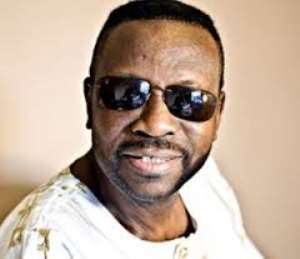
Michael Holding is one of the most famous black sportsmen in the world.
Known principally as a fast bowler who was a member of the indomitable West Indies cricket team from 1976 to 1987, he contributed hugely to the team’s reputation as the best cricket team in the world.
Holding took 249 Test Match wickets—accomplishing the feat of taking five wickets or more in a Test Match, no less than 13 times.
Since his retirement, he has become a highly-respected cricket commentator for the British TV station, Sky Sports.
Holding’s autobiography, 'Whispering Death', is a delight to read. 'Whispering Death' is the nickname given to him because, as a former sprinter, his run-up before bowling was so smooth that he could not be heard coming! Just gbam! And out went the batsman!
Because he was such a gifted bowler, Holding exudes self-confidence in enormous quantities. He says exactly what he thinks about the performances he sees on the cricket pitch. He’s also useful to listen to, because he’s an autodidact who shares the vast knowledge he’s picked up during his career.
When the dastardly murder of David Floyd occurred before the eyes of television viewers in the video that went viral all over the world, and which led to the protests organised by the Black Lives Matter movement, Holding was on hand to tell Sky Sports viewers what “taking a knee” signified. He recounted to world audiences, the awful racial discrimination that black people have been suffering for hundreds of years.
The London Guardian newspaper described Michael Holding’s outburst as an “extraordinary monologue” on how racism affects black people. Live on air, Holding’s monologue took in everything – from the recent video of a white American woman Amy Cooper, threatening to call the police on a black man in Central Park New York, for merely asking her to put her dog on a lead; to the representation of Christ as a white man, from historic times; to the erasure of the name of Lewis Howard Latimer (the black man who perfected the lightbulb) for the benefit of the white man, Thomas Edison.
Holding also told his TV audience about “research at Yale [University] that had revealed the extent of unconscious bias among pre-school teachers.” And he spoke about “research by the Journal of Personality and Social Psychology that showed “how white policemen invariably overestimate the age of black children.”
The Guardian went to characterise Holding’s TV performance as “eloquent, intelligent, and confrontational broadcasting, fiercely uncompromising stuff for an audience who were tuning in because they wanted the comfort and relief of live cricket, of cakes and sunshine and sixes.
“And it was capped by [another commentator, the former England captain, Nasser Hussain, who said]: “People will be tuning in and saying: 'Not this again!” All I'll say to those people who say 'not again' is that a few weeks ago I watched a black man being killed in front of my eyes on Channel 4 news, and my natural reaction was to look away. Next time that footage came on, I forced myself to watch because I felt something inside of myself say: 'You've been looking away too long.'”UNQUOTE
(WATCH HOLDING’S SPEECH AT:)
Well, Michael Holding has done it again. He has criticised England and Australia for making “lame” and “flimsy” excuses over not taking a knee in support of the Black Lives Matter movement. The West Indies legend said international cricket teams have now disrespected the movement. (England and Australia began their one-day international series on Friday September 11, and according to the Guardian, “Holding's words have sliced through the rhetoric and provided an embarrassing backdrop for the England and Wales Cricket Board.”
Holding accused the authorities of the game in white countries of forgetting about “global race issues “as soon as [the] West Indies [cricket team] went home”. Players took the knee during the three Test matches against the West Indies in July. But after that series, England became the first professional team in the UK to stop the gesture, dropping it for the series with Pakistan.
Holding also told Sky Sports that the Australia captain, Aaron Finch, was unconvincing when he stated, as a defence of not taking a knee, that “The education around [he racism] is more important than the protest. For us, we are really proud to play a game where it is celebrated all around the world and anyone can play it.”
Holding retorted: “I don't care about the politics behind Black Lives Matter. I care about those three words: black lives matter. It is time for the world to accept that black lives matter and move towards that agreement and realisation. When Pakistan and England did not make that signal, the ECB (England Cricket Board) came out with a lame statement. I heard nothing from Pakistan. Now Australia have come here and issued a lame statement from the captain.
“What [Australian Captain] Aaron Finch's comments said, to me, [means] that as long as sport is multi-racial then everything is OK. So if the apartheid regime in South Africa had allowed multi-racial sport, but kept the apartheid laws, then everything would have been OK? “No it wouldn't have.”
Holding added: “I think people need to keep on recognising that things need to change. You can't just do something for a week or two and think: 'OK, I've done my bit.' If that's your attitude, then don't bother doing it at all.”
Well done, Michael Holding. Without constantly reminding the world of what racism is all about, nothing will ever change. Fortunately, some big world sporting stars, including the influential NBA star, LeBron James, agree with you!
By CAMERON DUODU

 Paraguay president resigns amid banking scandal
 Akufo-Addo’s govt initiated Ghana’s BRICS partnership idea – Mahama
 If NDC had followed how we had wanted to do the Gold for Reserves, they wouldn't...
 No one should endure sexual harassment to secure jobs – Prof Opoku-Agyemang
 'US must tackle gun violence' – Mahama after death of Ghanaian teenager, Javits ...
 Bear with us on TraffiTech, it is here to save lives – Mahama to Ghanaians
 JUSAG Strike: Wage dispute must not suspend justice for entire nation – Ahiagbah...
 My focus on digitalisation is not an escape from economics; it is the new econom...
 Speaker Bagbin's handling of Abu Jinapor's allegation raises concerns – Egyapa M...
 Abu Jinapor showed highest form of disrespect to Bagbin – Hamza Suhuyini


