




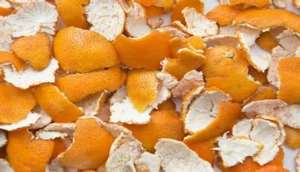
Have you ever finished eating an orange and immediately thrown the peel into the bin? I have done it countless times.
For most of us, the orange peel is simply waste. We enjoy the sweet, juicy fruit inside and discard everything else without giving it a second thought. But during my research as a Biochemistry and Molecular Biology student, I began to look at orange peels differently.
What if that “waste” actually contains something valuable?
This question led me to investigate the antioxidant activity of orange peels, specifically Citrus sinensis, using samples obtained in Ghana.
The science behind the peel
Our bodies naturally produce substances known as reactive oxygen species (ROS). They are not necessarily bad; our bodies actually need some of them for normal biological processes. The
problem begins when they become excessive and overwhelm the body's protective systems. This condition is known as oxidative stress.
Oxidative stress can damage important components of our cells and has been associated with several chronic diseases. This is one reason scientists are interested in antioxidant compounds that can help neutralize harmful free radicals and reduce oxidative damage.
Interestingly, nature has provided many plants with their own antioxidant compounds and orange peels appear to be one of them.
More than just a waste product
Orange peels contain a variety of naturally occurring compounds, particularly phenolics and flavonoids, which have attracted considerable scientific interest because of their antioxidant properties.
In my laboratory work, I prepared an extract from dried orange peels and evaluated its ability to neutralize free radicals using standard antioxidant assays, including DPPH and ABTS assays. What we observed was encouraging.
The antioxidant activity of the orange-peel extract generally increased as the concentration of the extract increased. In simple terms, the more concentrated the extract was, the greater its ability to neutralize the free radicals used in the laboratory tests.
The extract also showed the presence of several phytochemical groups, including flavonoids, tannins, terpenoids, glycosides, saponins and reducing sugars.
These findings add to the growing scientific interest in citrus peels as potential sources of useful natural compounds.
But there is a bigger question
The most interesting part of this research for me was not simply seeing antioxidant activity in a laboratory experiment. It was realizing how easily we overlook valuable resources around us.
Across Ghana, orange peels are generated every day in homes, schools, restaurants, markets and juice-processing businesses. Much of this material ends up as waste.
Yet inside these peels are compounds that could potentially be developed into useful products. Imagine if, instead of simply throwing away tonnes of orange peels, some of them could be collected and processed into ingredients for functional foods, cosmetics, nutraceuticals or other bio-based products.
That could turn an environmental problem into an economic opportunity.
From student research to a bigger opportunity
Of course, laboratory findings should not be exaggerated.
My research was conducted using in-vitro antioxidant assays. Showing that an extract can neutralize free radicals in a test tube does not automatically mean that consuming the extract will prevent or treat disease in humans.
More research is needed to identify the individual compounds responsible for the activity,
determine their safety, study how the body absorbs them, and eventually establish whether they provide meaningful health benefits in humans.
But research has to start somewhere.
For me, this project started with something as ordinary as an orange peel.
Ghana should look closer at what we call waste
Ghana has enormous potential in natural products and biotechnology. We have plants, agricultural by-products and other biological resources that could serve as raw materials for innovative products.
The challenge is moving from simply identifying these resources to researching, processing, commercializing and regulating them properly.
Our universities can play an important role by encouraging students to investigate local problems with scientific methods. Industry can help turn promising discoveries into products, while policymakers can create an environment that supports responsible innovation.
And perhaps consumers also have a role to play by changing how we think about waste. The next time you peel an orange, you may still throw the peel away.
But remember this: what looks like waste may simply be a resource we have not learned how to use yet.
Sometimes, innovation is not about finding something completely new.
Sometimes, it is about looking at something familiar and asking a better question.
About the Author
Essel Alloysius Kwesi is a final-year Biochemistry and Molecular Biology student at the
University of Health and Allied Sciences (UHAS), Ghana, with research interests that include natural products, antioxidant activity, biotechnology and the development of value-added products from biological resources.

 Accra-Kumasi Expressway to be fully funded without borrowing by end of 2026 – At...
 GRA explains why carrying more than two phones or laptops does not automatically...
 Chief Justice Baffoe-Bonnie is a statesman, not a coward – Anatu Bogobiri Esq bl...
 Minerals Commission suspends underground mining in Gbane over boundary dispute
 A-Plus, Afenyo-Markin make peace; commit to ending Effutu-Gomoa tensions
 Chief Justice is the wrong person to make such comments – Dr. Jabir Mohammed
 September 4: Cedi sells at GHS12.15 on forex market, GHS11.37 on BoG interbank
 Stop touring SOEs and fix issues in the judiciary – Dr. Arthur Kennedy tells Chi...
 Your comments were beneath the dignity of your office – Arthur Kennedy to Chief ...
 FAKE: Deputy Minority Leader returns GHS70,000 received from vetting of Minister...

