




Family planning in the modern era is no longer about limiting the size of the family but about arriving at informed decisions. When should a couple have children? How many children should they plan to have? How should the woman retain optimal health throughout the reproductive years? All of these are pertinent questions that need to be answered by the couple, enabling the society to have a healthy new generation of children who later become responsible citizens.
Usually, family planning is a topic that enters the discussion stage after marriage or when the couple decide to have a baby. But it has to be noted that family planning is a lifelong journey that affects a woman's emotional wellbeing and physical health. Financial security of the family and quality of life are two others important points to ponder.
Indian women today are pursuing careers and marrying later. They are exercising greater control over their reproductive choices. Many of them are independent decision makers. The National Family Health Survey (NFHS-5) has stated that the use of modern contraceptive methods among married women has increased significantly in India. This has improved the quality of their lives and also their health in the long run. However, disparities continue across various socio-economic groups and educational backgrounds. The pattern isn’t uniform.
Early Reproductive Years: Planning for the Future
Awareness of family planning is the key. Knowing more about contraception, fertility and reproductive choices empowers couples to make the right decisions that support their personal and professional goals. While many women can conceive naturally in their thirties, fertility gradually declines with age, particularly after 35 in India.
Those who plan to delay parenthood should be made aware of the fertility preservation methods. This will enable them to plan proactively. At the same time unwanted pregnancies also can have significant impact on emotional health besides and financial repercussions. Couples should have access to safe and effective contraception and they should be made aware of the methods that’ll allow them to space out pregnancies.
Building a Family: Unequal Gender Burden
It is seen that back-to-back pregnancies may increase the risk of maternal anaemia and preterm birth. NFHS-5 data show that more than half of pregnant women in India are anaemic. Pregnancy should be planned when the woman is physically, emotionally, and financially prepared. It can be seen that family planning in India continues to place a disproportionate burden on women.
NFHS data show that male participation in permanent contraception is still not a major discussion point in India, whereas female sterilisation remains the most widely used contraceptive methods. Greater male involvement in family planning decisions will result in better health outcomes for women and reduce their physical burden. As a concept, family planning works best when it becomes a shared responsibility between partners.
Government Initiatives
India has come a long way in expanding access to reproductive healthcare. Programs such as the Mission Parivar Vikas have played a major role in improving access to contraceptive services. This is mostly true in high-fertility districts.
The government has also strengthened reproductive and maternal health services under the National Health Mission. This has increased community outreach through Accredited Social Health Activists (ASHAs) and the outcome has been largely positive. ASHAs act as community level distributors, bringing contraceptives directly to your doorsteps for a nominal fee.
Public health facilities, community health centres and district hospitals provide free counseling and contraceptives. The government is providing monetary compensation to individuals who undergo sterilization to cover for any wage loss. Special emphasis is given to post-partum family planning services right after institutional deliveries.
The Growing Role of the Private Sector
The private healthcare sector is playing a big role in helping people surmount challenges. Fertility assessments, assisted reproductive technologies and advanced contraceptive options are being offered by the private hospitals, with many of them promoting a continuum-of-care approach.
They are aiding couples navigate reproductive health decisions from adolescence to parenthood. Teleconsultations and digital health platforms have helped couples to gain access to reliable information. The next step would be popularise them in the rural areas of India.
Reimagining family planning
The society must shift its focus from blanket population control to individual reproductive autonomy, reflecting these modern times when women are career oriented. With late marriages being the norm now, reproductive windows have got shortened. There is now a need for expanded fertility awareness and easily accessible assisted reproductive technology facilities in India.
We must integrate reproductive rights with comprehensive healthcare, to help sustain the country’s economic growth and capitalize on the demographic dividend. Through equitable access to reproductive care, India can ensure that the next generation will power the country towards a healthy future while reducing the burden on women.
Appropriate Contraceptive Choices for Different Life Situations
| Young couple | Condoms, Oral Contraceptive Pills |
| Spacing pregnancies | Pills, Copper-T, Hormonal IUD, Injectables |
| Breastfeeding mother | Progestin-only pills, Injectables, Copper-T, Hormonal IUD |
| Heavy menstrual bleeding | Hormonal IUD |
| Wants a hormone-free method | Condoms, Copper -T |
| Wants long-term contraception | Copper-T, Hormonal IUD, Implant |
| Family completed | Vasectomy or Tubectomy |
| After unprotected intercourse | Emergency contraceptive pill |
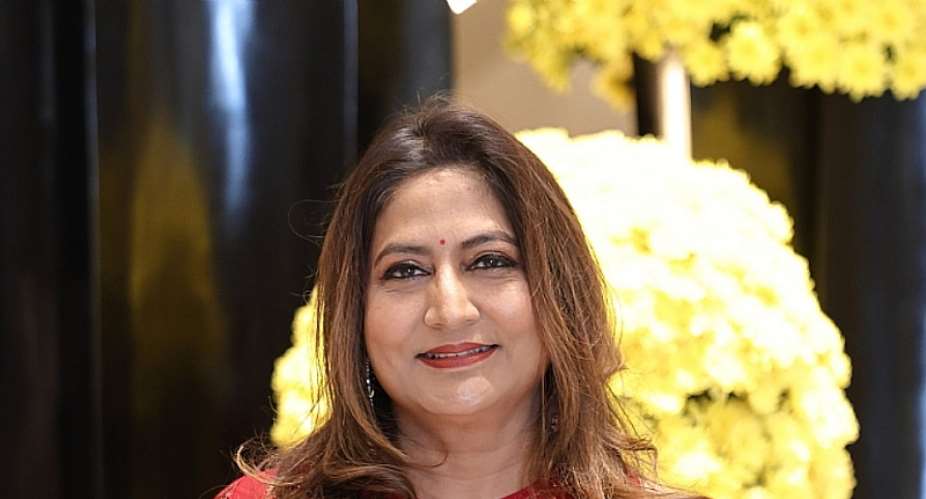
By Dr. Nandita Palshetkar, Scientific Director & Head of the Bloom IVF Unit at Lilavati Hospital, Mumbai, and Medical Director of Bloom IVF Centres.

 Ms. Emelia Affi Agbenyo must honourably resign as new EC Deputy Chairperson to p...
 Why have US-Ukraine relations soured ahead of the midterms?
 Govt to meet Free Zones Authority, Trade Ministry over Customs Act concerns
 Kojo Bamba was never my driver or bodyguard — Nana B
 Ekow Assafuah petitions OSP to probe alleged World Cup visa facilitation irregul...
 Africa attracting wrong waste management solutions – GAIA report
 Summon Kofi Adams, GTA boss over 2026 World Cup visa scandal — NPP tells Parliam...
 Obuasi SHS headmaster accused of sexual abuse is NDC constituency secretary – Ma...
 Family demands answers over death of 14-year-old student at Abomosu STEM SHS
 Osahen Afenyo-Markin reflects on loneliness of public service, says survival is ...


