




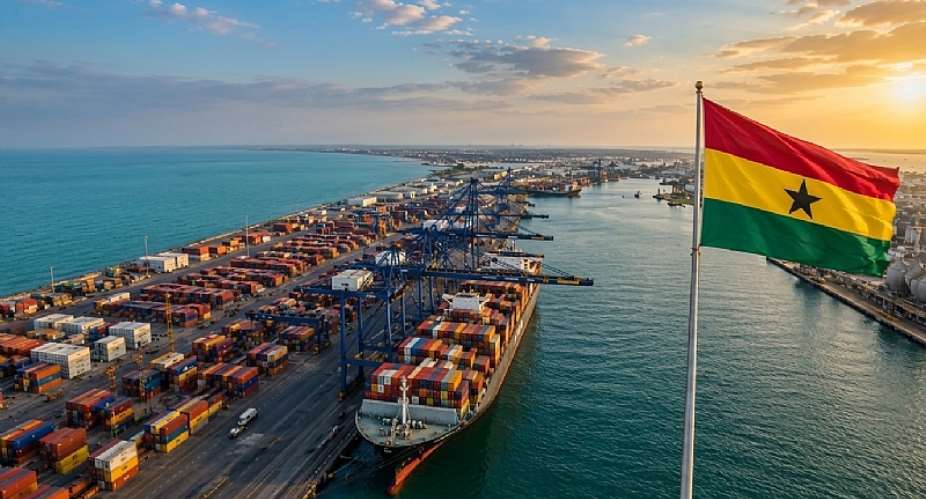
Shipping Your Family's Life to Ghana: A Guide for Families in New York, New Jersey, and DC
What You Need to Know First
- The PUBD form is the most important paper for your family's move. Fill it out at the airport when you land in Ghana, or within 48 hours. Without it, your shipment faces heavy penalties and long delays.
- You can bring your used household goods duty-free if you have lived outside Ghana for at least 12 continuous months. This is called removal articles.
- Used refrigerators, air conditioners, and deep freezers are banned. This rule catches many relocating families off guard.
- Budget about 50 percent of your freight cost for duties and taxes on a full household shipment. A 20-foot container from the US East Coast costs around $2,800 to $4,800 in ocean freight. A 40-foot unit runs between $4,900 and $7,200. Those numbers only cover the ship. They do not cover customs clearance or clearing agent fees.
Background: Why Your Location Matters
If you are a Ghanaian family living in New York, New Jersey, or the DC metro area, you are part of one of the largest Ghanaian communities in the United States. New York State has the largest number of Ghana-born residents, followed by Virginia, New Jersey, and Maryland. The New York City metro area has the biggest Ghanaian immigrant population, and Washington, DC is also home to a significant number of Ghana-born residents.
This matters for a simple reason. You live near some of the best shipping infrastructure in the country. The Port of New York and New Jersey is one of the busiest ports on the East Coast. It offers weekly container service to Tema, Ghana. You also have access to JFK and Dulles airports for air freight. And you have a dense network of Ghanaian-owned shipping companies and community consolidators who specialize in exactly what you need.
But living here also comes with unique challenges. The cost of living is high. Space is tight. Traffic is heavy. Packing a barrel in a Bronx apartment is different from packing one in a house with a garage. And the cultural rhythm of your community, whether it is the Christmas barrel rush in the Bronx or the church group shipments from Virginia, shapes how and when you ship.
This guide is written for you. It focuses on what matters most when you are a family in the NY, NJ, or DC area moving your life to Ghana. It includes real numbers, real rules, and real steps. By the time you finish reading, you will know how to pack your boxes, what papers to file, and how to deal with the agencies that control the process.
Top 10 Do's for Families in the NY, NJ, and DC Area
1. Register with the Ghana Shippers' Authority First
Every importer must register with the Ghana Shippers' Authority (GSA) before clearing goods through customs. This has been mandatory since August 3, 2026. It is enforced through ICUMS.
For individuals, you register with a valid Ghana Card and pay a fee of GH¢150. The registration is valid for 12 months. It does not need to be renewed for each shipment. The GSA says certificates will be issued within one week, either manually or electronically.
Do this before you ship anything. It is the first door you must open.
2. Fill Out the PUBD Form the Moment You Land
PUBD stands for Personal Unaccompanied Baggage Declaration. This is the most critical form for your family's move.
Here is how it works. When you arrive in Ghana, go to the customs desk at the airport. Fill out the PUBD form right there. You must declare that you have unaccompanied baggage coming later. You have 48 hours after arrival to file it.
Why is this so important? When your container arrives weeks or months later, customs will ask for this form. Without it, the shipment faces heavy penalties and significant delays.
Parent tip: Do this before you leave the airport. Do not wait until you get to your hotel. Do not wait until tomorrow. Do it while you are still in the arrival hall. Movers must advise clients to complete this form upon arrival even if their shipment is weeks or months away.
3. Prove You Lived Abroad for 12 Months to Get Duty-Free Treatment
Ghanaians and non-Ghanaians who have lived outside Ghana for at least 12 continuous months and are now relocating to Ghana can import their personal effects free of taxes. These are called removal articles.
This is a huge benefit for families. It means your children's beds, your sofa, your dining table, and your clothes can come in without paying import duty.
But there are rules. You need to prove you lived abroad for that period. Keep your old lease, utility bills, or employer letters. You will also need a letter from your employer stating you are starting a new contract in Ghana. Your documents must include a copy of your valid passport with entry visa, a packing list, the original bill of lading, a detailed valued inventory in English signed and dated by you, and the PUBD form.
4. Make a Detailed Inventory, Especially for Kids' Items
Customs needs to know exactly what is in your container. Write a detailed list. Do not write "children's toys" or "household items." Write "wooden toy train set, 1 piece" and "children's bicycles, 2 units."
Your packing list, bill of lading, and inventory must all match. If they do not, your shipment gets flagged for inspection. A detailed valued inventory in English, signed and dated by the owner of the goods, is a required document for importing used household goods into Ghana.
Parent tip: Take photos of your children's rooms before you pack. This helps you remember what you have and serves as proof if customs asks questions.
5. Get the EasyPASS Certificate for Toys and Electronics
Toys, games, sports equipment, and electrical items are regulated products under Ghana's EasyPASS programme. This means your children's toys and your family's electronics need a Certificate of Conformity before they can clear customs.
The EasyPASS programme is not new. It has been in operation for over ten years as a conformity assessment scheme of the Ghana Standards Authority. Only products which meet the relevant Ghana Standards are admitted through the programme. You will also need an invoice for electrical and hi-fi appliances and for all items purchased less than 6 months before the shipment's arrival.
Ask your shipping company or a customs broker to help you get this. Without it, your children's Christmas presents and birthday gifts could be stuck at the port.
6. Check the Vehicle Rules Before You Ship the Family Car
If you are shipping a car for your family, there are strict rules. These rules changed significantly in 2026.
Only left-hand-drive vehicles are allowed. Right-hand-drive vehicles are banned. Starting October 1, 2026, all used vehicles must undergo conformity assessment before shipment. You will need to register with the GSA and obtain certification from an approved inspection company. The estimated cost is around $300 per vehicle.
Used vehicles more than 15 years old are prohibited from importation into Ghana. Vehicles that have been submerged in water, damaged by fire, assembled from spare parts, or have chassis damage are also banned.
Import duty on vehicles runs from 5 percent to 20 percent depending on engine size. The bands work like this: 5 percent to 10 percent up to 1.5 litres, 10 percent to 15 percent from 1.5 litres to 2.0 litres, 15 percent to 20 percent from 2.0 litres to 3.0 litres, and 20 percent or more above 3.0 litres. Added to this are VAT, NHIL, GETFund, and environmental taxes. The total tax burden commonly lands at 18 to 30 percent of the landed cost.
Pure electric vehicles enjoy zero percent import duty in 2026. This can save you thousands of dollars.
Parent tip: If your family car is right-hand-drive or older than 15 years, do not ship it. You will lose the shipping cost and the car. If you are buying a vehicle, a 2.0-litre SUV can land GHS 40,000 cheaper than a 2.5-litre model because of the duty bands.
7. Use the Community Shipping Networks in Your Area
One of the biggest advantages of living in the NY, NJ, or DC area is the density of Ghanaian-owned shipping companies and community consolidators.
In the Bronx, Karima Shipping Enterprises has been a household name for years. They specialize in door-to-door shipping from the USA to Ghana. They ship barrels, U-Haul boxes, fridges, washing machines, televisions, furniture, building materials, personal effects, and cars. They are located at 1000 Brook Ave in the Bronx.
In the DC metro area, companies like Biljoy International Consolidator serve the Ghanaian community. They are located at 5551 Illinois Ave NW in Washington, DC.
And across the whole region, Guldstreet Shipping picks up at your door across New York City, New Jersey, and Philadelphia. They ship by ocean to Accra, Tema, Kumasi, and more. Their rates to Ghana are: 55-gallon barrel $190, 65-gallon barrel $240, large box $65, medium box $45, tote $65, suitcase $35. The $190 barrel price includes door pickup in NYC, NJ, and Philadelphia, ocean freight to Tema, customs clearance at Tema, Ghana import duties on personal effects, and door delivery in Accra and Tema.
Parent tip: For the Christmas season, book and pay your deposit by November 28 for NYC and NJ pickups, or November 25 for Philadelphia. Estimated arrival is December 20-24. Transit to Tema runs about 18-22 days at sea.
8. Plan Ahead for the Family Pet
Ghana does not have a mandatory quarantine period for pets arriving from low-risk countries if all paperwork is in order. But you need a veterinary health certificate signed by an official veterinarian in your home country, proof of rabies vaccination given at least 30 days before travel and no more than 12 months before arrival, and a Veterinary Import Permit from Ghana's Veterinary Services Directorate.
Parent tip: Start this process at least 2 to 3 months before you travel. Airlines will not accept pets without the correct permits. If you are flying out of JFK or Newark, check with your airline about their specific pet policies well in advance.
9. Budget About 50 Percent of Your Freight Cost for Duties and Taxes
Here is the hard truth about money. Even with duty-free removal articles, some items will still attract taxes. New items are always dutiable. Multiple items of the same kind, like a second television or a third laptop, may also be taxed.
Ghana has a duty-free threshold. Goods valued over GHS 600, which is about $50 USD, are subject to import duties. Import duty rates depend on the product category. Electronics attract 0 to 20 percent duty. Clothing and textiles incur a 20 percent duty. Footwear is 20 percent. Books are 0 percent.
On top of import duty, you will pay Value Added Tax at 15 percent, National Health Insurance Levy at 2.5 percent, and GETFund Levy at 2.5 percent. There is also an ECOWAS levy of 0.5 percent on goods from outside the ECOWAS region, an African Union levy of 0.2 percent, an EXIM Bank levy of 0.75 percent, and a Special Import Levy of 2 percent on some goods. The total effective tax rate on the CIF value, which is cost plus insurance plus freight, often reaches around 47 percent.
For household goods, you should budget about 50 percent of your freight cost for duties and taxes. A 20-foot container from the United States costs around $4,800 in ocean freight, and a 40-foot unit runs between $5,500 and $7,200. Those numbers only cover the ship. They do not cover customs clearance or the clearing agent fees. If you are shipping a car, the numbers jump significantly. Car shipping for an SUV can easily cost $6,500 just for the clearing fees, depending on the age and engine capacity of the vehicle.
Parent tip: Keep receipts for everything you bought in the last 6 months. Customs will want to see them. Be prepared for high import costs. Duties and taxes can add 40 to 50 percent to the shipment's value.
10. Hire a Licensed Customs Broker
Ghana's Customs Act requires most importers to clear goods through a licensed customs house agent.
A good broker will help you classify your goods correctly, tell you which permits you need, handle the ICUMS submission, and keep your shipment out of the red channel, which is the slow inspection lane. Customs clearance in Ghana runs through ICUMS, which routes every consignment into a red, yellow, or green channel. The channel decides how goods are examined. Best-practice shipments with complete, accurate documentation clear in 5 to 7 business days after vessel arrival.
For a family move with children's items, electronics, and a vehicle, a broker is not a luxury. It is essential.
Top 10 Don'ts for Families
1. Don't Ship Used Refrigerators, Air Conditioners, or Deep Freezers
This is the rule that catches many relocating families off guard. Used refrigerators, used air conditioners, and used deep freezers are prohibited. This applies regardless of who you are. It is strictly enforced.
Parent tip: Sell or donate your old fridge and freezer before you leave. Buy new ones in Ghana.
2. Don't Forget the 48-Hour PUBD Deadline
You must file your PUBD form immediately on arrival or within 48 hours. If you miss this window, your shipment will face penalties. Do not think you can sort it out later. File it at the airport.
3. Don't Pack Multiple of the Same Appliance
Only one of each used electrical appliance is exempt from duty. A second television, a third laptop, or a fourth mobile phone may be taxed. If each child has a tablet for school, that is usually fine. But if you are bringing five tablets for "the family," customs may see it as commercial. Be ready to explain.
4. Don't Ship a Right-Hand-Drive Car
This cannot be said enough. Right-hand-drive vehicles are banned. Ghana drives on the right. There is a ministerial dispensation route, but it is not automatic. Do not buy or ship a right-hand-drive car on a verbal promise.
5. Don't Ignore the Pre-Shipment Inspection Requirement
Starting October 1, 2026, all used vehicles must undergo conformity assessment before shipment. You need to register with the GSA and obtain certification from an approved inspection company at an estimated cost of $300 per vehicle. Without it, your vehicle will be denied clearance at the port. Vehicles that were shipped before October 1, 2026, even if they arrive in Ghana after that date, will not be affected by the new import requirements.
6. Don't Try to Bring Banned Foods Through Land Borders
Rice, sugar, cooking oil, frozen foods, textiles, flour, canned tomatoes, pasta, and pharmaceuticals are banned from land border entry. They must enter through a Ghanaian seaport. If you are shipping food items for your family, use sea freight to Tema or Takoradi. Do not try to bring them overland from a neighbouring country.
Parent tip: If you are in the DC area and shipping from the DMV, your containers will likely leave from the Port of Baltimore or the Port of Virginia. Both have direct service to Tema.
7. Don't Write Vague Descriptions on Your Packing List
"Kids' stuff." "Kitchen items." "Assorted toys." These descriptions guarantee a red-channel inspection. Write exactly what is in each box. "Children's storybooks, 25 pieces." "Plastic building blocks, 1 set." "Girl's bicycle, pink, 1 unit."
8. Don't Underestimate Taxes on New Items
Duty-free treatment applies to used personal effects. New items are always dutiable. If you bought new furniture or new electronics in the last 6 months, be ready to pay tax on them.
9. Don't Ship a Vehicle Without the Certificate of Conformity
Every used vehicle must be inspected in its country of origin before shipping. You need the Certificate of Conformity. Without it, your vehicle will be denied clearance at the port. You will pay storage fees while you try to sort it out.
10. Don't Forget About the Children's School Supplies
School books, stationery, and educational materials for use in schools approved by the Minister of Education can be imported duty-free. But this applies to materials for schools, not for individual families. Your children's personal schoolbooks and supplies are part of your personal effects. Include them in your inventory and PUBD declaration.
Summary: Your Family's Moving Checklist
| Step | What to Do | Why It Matters |
|---|---|---|
| 1 | Register with GSA using your Ghana Card (GH¢150) | No registration, no clearance |
| 2 | Fill out the PUBD form at the airport within 48 hours | Missing it means penalties and delays |
| 3 | Prove 12 months abroad for duty-free removal articles | Saves you thousands in taxes |
| 4 | Write a detailed inventory of every box | Vague lists trigger inspections |
| 5 | Get EasyPASS Certificate for toys and electronics | No certificate, no entry |
| 6 | Check vehicle: left-hand drive, under 15 years, pre-shipment inspection ($300), Certificate of Conformance | Wrong car means total loss |
| 7 | Bring prescription meds with doctor's letter | Keeps your family healthy |
| 8 | Arrange pet permits 2-3 months ahead | No permit, no pet on the plane |
| 9 | Budget 50% of freight cost for duties (40ft container: $5,500-$7,200 ocean freight) | Avoid financial surprises |
| 10 | Hire a licensed customs broker | Saves time, money, and stress |
Conclusion: You Can Do This
Moving a family to Ghana from New York, New Jersey, or DC is a big adventure. It comes with paperwork, rules, and a few headaches. But thousands of families do it every year. They pack their barrels in the Bronx, their boxes in Newark, and their suitcases in Silver Spring. They ship them across the ocean to Tema. And they settle into new homes, enrol their children in new schools, and build new lives.
The secret is preparation. Register with the GSA before you ship. Fill out the PUBD form the moment you land. Write a detailed inventory. Get the certificates for your children's toys and your family car. Bring your prescriptions and your pet's paperwork.
And lean on your community. The Ghanaian-owned shipping companies in the Bronx, the consolidators in DC, the church groups in Virginia that organize barrel drives, these are your allies. They know the routes. They know the rules. They know the ports. Use them.
Do these things, and your container will clear customs while you are still unpacking your suitcases. Your children will sleep in their own beds. Your kitchen will have your pots and pans. Your new life will begin smoothly.
Ghana is waiting. You are ready.

 Creative Arts Agency Board Engages Lands Minister Over Welfare Project for Aged...
 I will rebuild demolished La Pleasure Beach if elected in 2028 to save jobs — Ba...
 Free primary healthcare requires recruitment of more nurses – GRNMA
 Ethiopia's Tigray rebels abandon regional capital as govt advances
 Mahama in Egypt for AU Mid-Year Summit
 SSNIT defends La Beach demolition, cites encroachment and security concerns
 Russia strikes another major bridge across Kyiv's Dnipro river
 Co-pilot on Flydubai flight was banned from flying by Oman for holding extremist...
 Spanish lawmakers vote down affordable housing bills in blow to Sanchez’s govern...


