




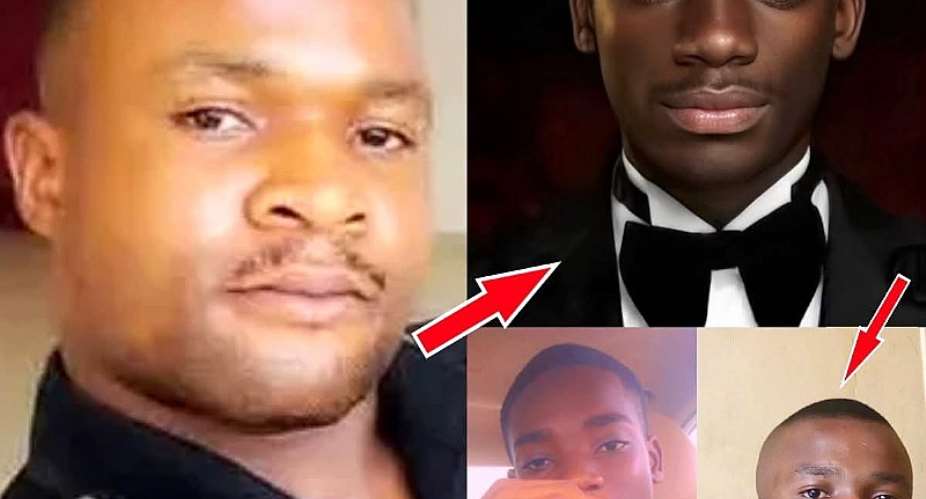
How a journey to play football ended in death and why the court case is only beginning to reveal what happened on the Tema Motorway
On August 27, 2026, 20-year-old Central University law student Ivan Apprey Baidoo left home in Old Ashongman for what should have been an ordinary trip to East Legon to play football with friends.
He never returned.
Instead, a traffic violation allegedly committed by the motorcycle carrying him triggered a police pursuit that ended on the Tema Motorway with a crash, severe injuries and Ivan's death.
Nearly three weeks later, the matter has moved from public suspicion to a criminal prosecution. On September 15, General Corporal Robert Katey Koranteng, 34, was arraigned before the Adabraka District Court and charged with murder. The court did not take his plea and remanded him to reappear on September 29.
But a murder charge is not a conviction. What happened that afternoon must still be established through evidence, witnesses, video footage, medical evidence and the court process.
And that is precisely why this case deserves much deeper scrutiny.
WHO WAS IVAN APPREY BAIDOO?
Ivan Apprey Baidoo was a young Ghanaian university student studying law at Central University.
According to the latest court account, he was a 20-year-old Level 200 law student. On August 27, he booked a YANGO motorcycle from Ashongman Estates to the East Legon Astroturf Park, where he was going to play football.
He was not the person accused of committing the traffic offence that began the confrontation.
The alleged traffic violation was attributed to the motorcycle rider carrying him.
That distinction matters.
If the rider violated a traffic light, Ivan was nevertheless a passenger. He was not the person controlling the motorcycle.
Yet according to the prosecution's account, he became the person who ultimately paid with his life.
THE FAMILY THAT WENT TO BED WITHOUT THEIR SON
Ivan's father, Evans Baidoo, has become one of the most prominent voices demanding answers.
According to Evans, Ivan left home to play football. By around 6 p.m., he had not returned, so his mother called his phone.
A stranger answered.
The family was reportedly told that Ivan had been involved in an accident and had died.
Evans said the caller initially presented himself as an eyewitness before later identifying himself as a police officer who had allegedly been following the motorcycle.
The family subsequently contacted Tema General Hospital and confirmed that Ivan's body had been brought there. The following morning, Evans said he found his son lying lifeless on a stretcher, still wearing the clothes in which he had left home.
The family says it was subsequently confronted with more questions than answers.
Who brought Ivan to the hospital?
Who identified him?
Where exactly did the crash occur?
Who was the police officer?
What happened to Ivan's phone?
What did the cameras capture?
And why did the family initially struggle to obtain basic information about the circumstances surrounding the death?
These concerns eventually led the family, through its lawyers Nyamekye & Partners, to petition the CID for a full-scale investigation.
The family also offered GH¢50,000 for information that could help establish what happened.
WHO IS GENERAL CORPORAL ROBERT KATEY KORANTENG?
The officer at the centre of the case is General Corporal Robert Katey Koranteng, aged 34.
He is a member of the Ghana Police Service and was stationed with the Traffic Management Enforcement Unit at Police Headquarters in Accra.
This is important because available reports do not identify him as a police officer attached to a particular municipal or district police station. The reliable reports instead identify his posting as the Traffic Management Enforcement Unit at Police Headquarters.
He was reportedly on traffic duty at the UPSA intersection when the incident began.
His professional environment is significant.
The Ghana Police Service says traffic policing is intended to promote road safety and enforce traffic regulations. The Motor Traffic and Transport Department is responsible for enforcing road traffic laws, investigating crashes and producing accident reports.
The Police Service itself describes its broader mandate as including the protection of life and property, prevention and detection of crime, apprehension of offenders and maintenance of public order.
That creates a fundamental question:
At what point does traffic enforcement stop being enforcement and become a potentially dangerous pursuit?
That question will ultimately have to be answered by evidence, law and the court.
WHAT HAPPENED BEFORE IVAN DIED?
The prosecution's version begins at the UPSA traffic intersection.
According to the case presented in court, YANGO rider Samuel Wesley Arthur allegedly went through a red traffic light while carrying Ivan.
Corporal Koranteng, who was on duty, allegedly pursued the motorcycle and signalled the rider to stop.
The rider allegedly did not stop.
The pursuit reportedly continued through Okponglo and the Tetteh Quarshie Interchange before entering the Tema Motorway.
The prosecution alleges that after the former tollbooth, Koranteng kicked the motorcycle with his leg.
The impact allegedly caused Arthur to lose control.
The motorcycle crashed into a concrete barrier.
Ivan suffered fatal injuries.
Arthur survived.
The prosecution further alleges something even more serious: that after the crash, the police officer sped away without stopping to assist the victims or arranging immediate medical attention.
Members of the public subsequently transported the injured men to Tema General Hospital.
Ivan was pronounced dead on arrival.
Arthur was treated and discharged.
BUT THE RIDER'S ACCOUNT RAISES ANOTHER VERSION
The motorcycle rider, Samuel Wesley Arthur, is central to this case because he was reportedly the only person on the motorcycle who survived.
According to the victim's family's petition, Arthur told investigators at the Airport Police Station that a police patrol officer riding another motorcycle pursued him from the UPSA-Legon junction towards the Tema Motorway.
The family's lawyers say Arthur alleged that the officer eventually caught up with them and hit their motorcycle from behind, causing both him and Ivan to fall.
Evans Baidoo also told Citi News that information communicated to the family indicated that the pursuing officer allegedly pulled a pistol during the chase before striking the motorcycle near the motorway tollbooth area.
There is therefore a crucial distinction between the accounts currently in the public domain:
The prosecution says the officer allegedly kicked the motorcycle.
The rider's account, as relayed through the family's petition, says the officer allegedly struck the motorcycle from behind.
Those are not insignificant differences.
They can potentially be tested.
And that is why the motorcycle itself, photographs, crash-scene measurements, CCTV footage, forensic examination and independent witnesses could become extraordinarily important.
WHERE ARE THE EYEWITNESSES?
This may be one of the most important unanswered questions.
The family said the rider was expected to help investigators identify people who witnessed the incident.
The family also raised questions about the identity of the good Samaritan who allegedly transported Ivan and Arthur to Tema General Hospital.
Yet the publicly available reports reviewed for this article do not identify that Samaritan by name, nor do they provide a detailed independent eyewitness account from someone who watched the entire pursuit and crash.
That creates an obvious investigative priority:
Who actually saw the motorcycle being pursued?
Who saw the alleged contact between the police motorcycle and the YANGO motorcycle?
Who saw the motorcycle after the impact?
Who saw the officer leave?
Who called the police?
Who transported the victims?
Who first spoke to the rider?
And who handled Ivan's phone?
The answers could potentially establish a timeline far more reliably than rumours circulating on social media.
WHAT DO THE MEDICAL REPORTS SAY?
This is perhaps the most important part of the case because medical evidence establishes what injuries actually killed Ivan.
A post-mortem examination was conducted on September 3, 2026, by Dr Eric Dumfeh, a pathologist at Tema General Hospital.
According to the prosecution's account reported by the Ghana News Agency, the cause of death was:
Haemorrhagic shock resulting from bilateral haemothorax and haemoperitoneum caused by blunt trauma to the chest and abdomen.
In simpler terms, Ivan suffered severe blunt-force trauma that caused major internal bleeding.
The medical evidence therefore establishes that Ivan died from catastrophic physical injuries.
But medical evidence alone does not necessarily establish who caused those injuries or exactly how the collision occurred.
That is a matter for the wider investigation and trial.
WHAT ABOUT THE HOSPITAL?
The available accounts identify Tema General Hospital as the facility where Ivan and the rider were taken.
Ivan was pronounced dead on arrival.
Arthur received treatment and was discharged.
Evans Baidoo said the family later found a coroner's request form bearing Ivan's name but initially had questions about how his identity had been established and who transported him to the hospital.
Those questions may sound administrative.
They are not.
In a fatal road-crash investigation, the chain from crash scene → rescuers → ambulance or private transport → hospital → police notification → mortuary → post-mortem can be crucial evidence.
Every person who touched that chain could potentially help establish what happened.
THE STRANGE JOURNEY OF THE INVESTIGATION
The case appears to have gone through several stages.
Initially, the motorcycle rider became the subject of police action.
According to Evans Baidoo's account, Arthur was first charged with careless driving and negligently causing harm and granted bail. He was later re-arrested and faced a murder allegation.
The family questioned this development and eventually petitioned the CID.
On September 8, the Homicide Unit of the CID took over the investigation.
On September 12, the Police Service announced that General Corporal Robert Koranteng had been identified, arrested and interdicted.
The Police Professional Standards Bureau was separately tasked with examining the officer's conduct.
Then, on September 15, the officer himself appeared before the Adabraka District Court facing a murder charge.
He was not convicted.
His case is now before the court.
THE BIGGEST QUESTION: WHY WAS THE MOTORCYCLE CHASE NECESSARY?
This may be the question that deserves the greatest attention.
Assuming the prosecution's account is correct that the motorcycle passed a red light, what was the appropriate enforcement response?
Was it necessary to pursue the motorcycle through multiple major intersections and onto the Tema Motorway?
What was the speed of both motorcycles?
Was the officer attempting to apprehend the rider immediately?
Was the rider identifiable?
Could the motorcycle have been identified later through its registration number?
Were other police units alerted?
Was there communication with another police post ahead?
Was there a safer interception point?
These questions are not about excusing a traffic violation.
They concern proportionality, road safety and the responsibility of law enforcement officers during pursuits.
The Ghana Police Service itself describes road safety as a major concern and says MTTD is responsible for enforcing traffic regulations.
If a traffic enforcement operation itself creates a greater risk to life, the public deserves to know what rules govern such pursuits.
AND WHAT IF THE RIDER HAD STOPPED?
Another uncomfortable question deserves examination.
If Arthur had stopped at the first police signal, would Ivan still be alive?
If the answer is yes, then Arthur's alleged traffic violation becomes an important part of the causal chain.
But it does not automatically answer the separate question of whether the subsequent pursuit and alleged physical contact with the motorcycle were lawful or proportionate.
That distinction is critical.
There can be more than one contributing event in a chain of causation.
The court will have to determine the legal significance of each.
WHERE IS THE CCTV?
This may ultimately become one of the most powerful pieces of evidence.
The family specifically asked investigators to establish what road-mounted cameras captured.
According to the family's September 7 petition, they were assured that relevant road-camera footage would be shared, but the family said more than a week had passed without receiving it.
Ghana has increasingly moved toward technology-based traffic enforcement. The Police Service's Traffitech-GH system uses cameras and sensors to capture traffic offences, including red-light violations, and transmit evidence for validation.
That makes the question unavoidable:
If cameras were operating along relevant roads, what did they record on August 27?
Did they capture the alleged red-light violation?
Did they capture the pursuit?
Did they capture the motorcycles?
Did they capture the crash?
Did they capture what happened immediately afterwards?
If such footage exists, it could potentially settle some of the most disputed factual questions.
THE PHONE THAT RAISES QUESTIONS
Ivan's phone is another unexplained element.
His father says a stranger answered the phone when Ivan's mother called and informed the family about the accident.
The family subsequently wanted the phone deposited at a police station, but Evans says this did not happen.
That raises several investigative questions:
Who possessed Ivan's phone immediately after the crash?
Was it recovered from the crash scene?
Was it logged as evidence?
Was its location data preserved?
Were calls made from it after the crash?
Was it handed to police?
Who first used the phone to contact the family?
These questions are particularly important because modern mobile-phone records can establish location, timing and communication sequences.
WHO ARE IVAN'S PARENTS?
Public reports have identified Evans Baidoo as Ivan's father.
Ivan's mother has been referred to in reports, particularly in connection with the telephone call made when Ivan failed to return home, but I found no reliable publication naming her. It would therefore be irresponsible to publish an unverified name.
Evans has publicly demanded a transparent investigation and said the family does not believe Ivan simply died in an ordinary accident.
He has also called for anyone responsible to be identified and, if the evidence establishes culpability, prosecuted.
The family has since continued preparing to bury Ivan while simultaneously seeking answers about how he died.
The funeral cannot answer those questions.
Only a credible investigation can.
THE HISTORICAL CONTEXT: WHY POLICE TRAFFIC ENFORCEMENT MATTERS
The Ghana Police Service has existed in different forms since the colonial era. The Service's own history traces policing in the Gold Coast to the nineteenth century and records the evolution from colonial policing structures into the modern Ghana Police Service. Following independence in 1957 and the Police Service Act of 1970, the institution's stated mandate increasingly centred on maintaining public order, preventing crime and protecting people and property.
Traffic policing became an important part of that public-safety responsibility because Ghana's growing road network brought increasing numbers of vehicles, motorcycles, commercial transport operators and pedestrians into the same spaces.
Today, the Police Service says the Motor Traffic and Transport Department is responsible for traffic enforcement, accident investigation and road-safety operations.
Ghana's traffic laws are therefore not merely about issuing tickets.
They exist because road enforcement is ultimately supposed to protect human life.
That is what makes the Ivan Baidoo case so significant.
THE QUESTIONS THAT GHANA MUST NOT ALLOW TO DISAPPEAR
The court will determine criminal responsibility. But the public-interest questions go beyond one officer and one victim.
1. Was there actually a red-light violation?
If yes, is there independent video evidence?
2. Why did the pursuit continue from UPSA through Okponglo and Tetteh Quarshie to the Tema Motorway?
3. Was the officer authorised to pursue the motorcycle in the manner alleged?
4. At what speed were the two motorcycles travelling?
5. Did the police motorcycle physically contact the YANGO motorcycle?
If so, was it from behind, from the side or through an alleged kick?
6. Was a firearm displayed during the pursuit?
If the allegation is true, why?
7. Did the officer stop after the crash?
The prosecution says he did not.
8. If he did not stop, why?
9. Who called the emergency services?
10. Who transported Ivan to Tema General Hospital?
11. Who possessed Ivan's phone?
12. What does the phone's digital history show?
13. What do the road cameras show?
14. Who were the other officers, if any, involved in the operation?
15. Why did the investigation initially focus on the motorcycle rider?
16. Why did the family reportedly experience delays obtaining information?
17. Was evidence preserved immediately?
18. Was the motorcycle examined for physical contact with another motorcycle?
19. Were the police motorcycle and equipment examined for corresponding damage?
20. What does the accident reconstruction show?
These questions should not be answered by social media speculation.
They should be answered by evidence.
THE MOST UNCOMFORTABLE QUESTION
Perhaps the most difficult question of all is this:
If a police officer is pursuing someone for a traffic offence and that pursuit ends with an innocent passenger dead, where does responsibility begin and where does it end?
The rider allegedly committed the initial traffic offence.
The passenger allegedly did nothing wrong.
The police officer was performing traffic enforcement.
The motorcycle crashed.
Ivan died.
That chain of events demands more than a simple narrative.
It demands reconstruction.
WHAT HAPPENS NEXT?
General Corporal Robert Katey Koranteng has now been charged with murder and remanded to September 29, 2026. The court did not take his plea at the September 15 hearing.
The CID Homicide Unit is investigating the circumstances surrounding Ivan's death, while the Police Professional Standards Bureau has been tasked with examining the officer's conduct.
The medical evidence establishes that Ivan died from massive internal bleeding caused by blunt trauma.
The prosecution alleges that the officer's conduct during the pursuit caused the crash.
The rider's account, as presented by the family, alleges that the police motorcycle struck theirs.
The family says there are still unanswered questions about the officer, the crash, the phone, the CCTV footage and the people who helped after the collision.
Those competing accounts must now be tested in court.
IVAN WAS GOING TO PLAY FOOTBALL. HE NEVER MADE IT.
There is something profoundly disturbing about the simplicity of Ivan's final journey.
A young law student left home.
He booked a motorcycle.
He was going to meet friends and play football.
A traffic violation allegedly occurred.
A police pursuit allegedly followed.
A motorcycle crashed.
A young man died.
Now a police officer is facing a murder charge.
But behind the legal terminology is a family preparing to bury a son, a university community mourning a student, a motorcycle rider whose account may be central to the case, and a public demanding to know whether every part of the story has been told.
The question Ghana must therefore ask is not simply:
“Who killed Ivan Baidoo?”
The deeper question is:
“What exactly happened between the moment that motorcycle allegedly crossed the red light and the moment Ivan's heart stopped beating?”
That is the story the investigation must reconstruct.
And if CCTV, phone records, forensic evidence, crash reconstruction, medical evidence and witness testimony can answer it, then no unanswered question should be allowed to remain buried with Ivan.
By:
Patrick Belebang Yagsori
+233240292413
[email protected]
 Ivorian footballer Malick Yalcouyé falsely accused of lying about his age
 South Africa's president taken ill after BRICS summit
 Chief Justice praising government policies is problematic – Kwesi Pratt
 Police interdict seven officers for allegedly forcing victim to withdraw money f...
 GAF ready to deepen defence cooperation with Russia – Major General Annan
 WHO sees 'encouraging signs' in DR Congo Ebola response but says outbreak 'far f...
 GRA challenges GH¢79.65m Servestar Minwax judgment debt
 Government allocates GH¢1.98bn to school feeding programme in 2026 — Gender Mini...
 DVLA boss calls for modernisation of learner’s licence acquisition process
 EPA shuts down Empire Cement over alleged environmental breaches


