




A new treatment for prostate cancer can rid the disease from nine in ten men without debilitating side effects, a study has found, leading to new hope for tens of thousands of men.
London (UK) – 16 Apr 2012 - The Telegraph – It is hoped the new treatment, which involves heating only the tumours with a highly focused ultrasound, will mean men can be treated without an overnight stay in hospital and avoiding the distressing side effects associated with current therapies.
A study has found that focal HIFU, high-intensity focused ultrasound, provides the 'perfect' outcome of no major side effects and free of cancer 12 months after treatment, in nine out of ten cases.
Traditional surgery or radiotherapy can only provide the perfect outcome in half of cases currently.
Experts have said the results are 'very encouraging' and were a 'paradigm' shift in treatment of the disease.
It is hoped that large scale trials can now begin so the treatment could be offered routinely on the NHS within five years.
The National Institute for Health and Clinical Excellence will say in new guidance next week that the treatment is safe and effective and larger scale trials should go ahead.
A larger trial is already recruiting patients and men interested in the treatment should speak to their cancer doctor or GP about being referrred, experts said.
Prostate cancer is the commonest cancer in men with more than 37,000 diagnoses each year approximately 10,000 deaths.
Current treatments include surgery to remove the whole prostate or radiotherapy. Both of which can effectively treat the cancer but often cause side effects such as incontinence and impotence.
However in many men prostate cancer will not progress to a life threatening disease meaning that radical treatment risks side effects unnecessarily. For this reason, research is now focused on reducing side effects.
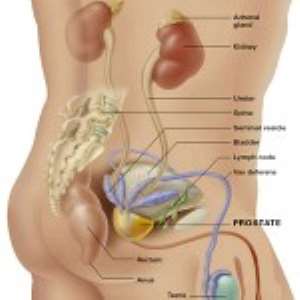
Focal HIFU involves careful selection of tumours, as small as a grain of rice, within the prostate gland and targeting them with highly focused ultrasound to heat them and destroy them.
The advantage over previous HIFU and other treatments is that damage to surrounding tissue is minimised, meaning there are far fewer side effects.
In the study published in the journal Lancet Oncology, 41 men were treated with focal HIFU. After 12 months, none were incontinent and one in ten suffered impotence.
The majority, 95 per cent, were free of cancer after 12 months.
Dr Hashim Ahmed, who led the study at University College London Hospitals NHS Foundation Trust andUniversity College London, said: 'This changes the paradigm. By focusing just on the areas of cancer we reduce the collateral damage to surrounding tissue.
“Our results are very encouraging. We're optimistic that men diagnosed with prostate cancer may soon be able to undergo a day case surgical procedure, which can be safely repeated once or twice, to treat their condition with very few side-effects. That could mean a significant improvement in their quality of life.
'This study provides the proof-of-concept we need to develop a much larger trial to look at whether focal therapy is as effective as the current standard treatment in protecting the health of the men treated for prostate cancer in the medium and long term.'
He said after Nice guidance is issued next week, he expected other doctors to consider using the treatment.
He said: “These results will encourage more physicians to look at it more carefully.
“If men are interested in this concept they should speak to their cancer doctror or their GP.
“The next step is a large scale randomised controlled trial. This needs to be evaluated in a timly way so men can benefit.”
The research programme is led by Professor Mark Emberton, of UCL and UCLH. He said: 'Focal therapy offers harm reduction - it is a strategy that attempts to redress the balance of harms and benefits by offering men who place high utility on genito-urinary function an alternative to standard care.
“In fact, the concept is not new – tissue preserving strategies have been used successfully in all other solid organ cancers such as breast cancer by offering women a lumpectomy rather than mastectomy.'
Professor Gillies McKenna, director of the Medical Research Council and Cancer Research UK Gray Institute for Radiation Oncology and Biology, said: “Clinical trials, like this one supported by the MRC, are a fantastic tool for telling us whether experimental new treatments are likely to be effective in the clinic.
“If these promising results can be confirmed in a randomised controlled trial, focal therapy could soon become a reasonable treatment choice for prostate cancer alongside other proven effective therapies.'
The research was funded by the MRC, the Pelican Cancer Foundation and St Peter's Trust.
Jacqui Graves, Interim Head of Healthcare at Macmillan Cancer Support, said: 'We welcome any research that shows early signs of improving the outcomes of treatment for prostate cancer patients.
“Significant reduction in the likelihood of common side effects, such as incontinence, will enable men to recover better and go on to lead good quality lives. We hope that a larger trial will be supported to ensure that the UK achieves the best outcomes for men affected by prostate cancer.'
Owen Sharp, Chief Executive of The Prostate Cancer Charity said: 'We welcome the development of any prostate cancer treatment which limits the possibility of damaging side effects such as incontinence and impotence. These early results certainly indicate that focal HIFU has the potential to achieve this in the future.
'However, we need to remember that this treatment was given to fewer than 50 men, without follow up over a sustained period of time. We look forward to the results of further trials, which we hope will provide a clearer idea of whether this treatment can control cancer in the long term whilst ridding men of the fear that treating their cancer might mean losing their quality of life.'
Prostate cancer treatment 'more successful than surgery', claim British scientists
A pioneering treatment for the UK's most common male cancer is more successful than surgery or radiotherapy, according to a landmark study by British scientists.
London (UK) – 02 Jul 2009 - The Telegraph – Prostate cancer is the country's most prevalent cancer among men, with 10,000 deaths among 35,000 cases each year, affecting a third of men over 50.
Traditional therapies are invasive and require overnight stays in hospital, with multiple visits for further treatment.
They also have significant and long-lasting side-affects that put many men off.
However, new research shows that intensive ultrasound therapy matches the 92 per cent cure rate of traditional treatments – but dramatically reduces side effects.
The technique is also much simpler, involving a one off visit, with sufferers walking out of the hospital hours later.
Furthermore, those who undergo ultrasound can return to normal life in just a week or two compared with up to six months for the other treatments.
The National Institute for Health and Clinical Excellence, the NHS rationing body, which has previously considered the results of similar tests “uncertain”, has pledged to consider the new evidence as it assesses the technique for use in the health service.
It currently remains in clinical trials, but the results were described as “excellent news” by cancer charities.
“This technique needs careful evaluation to make sure that it can produce the same results as the proven treatments for early prostate cancer,” said Professor Peter Johnson, chief clinician at Cancer Research UK.
“If the treatment can be shown to have less side effects then that will be excellent news, but more research is needed to show this.”
Ministers have been considering whether to introduce a nationwide screening programme for prostate cancer, after the largest study of its kind suggested that it could save lives.
However, experts have warned that the risks associated with traditional surgery to remove some slow growing tumours, which can include incontinence, outweigh the risks posed by the disease for many men.
If caught early enough then treatments such as radiotherapy and surgery can stop the spread of the cancer but the side-effects severely damage the quality of life of the patient.
Of men treated with surgery or radiotherapy, up to 20 per cent usually suffer incontinence and half have impotence.
Radiotherapy can also cause other side effects in up to one in five patients, including pain and bleeding.
The new technique, known as High Intensity Focused Ultrasound (Hifu), focuses powerful soundwaves on an area about a tenth of an inch across. It effectively boils cancerous cells to death, killing tumours, and is far less invasive.
In the trial of 172 men, carried out by the University College Hospital and the private Princess Grace Hospital, both in London, less than one per cent had incontinence, none had any bowel problems and around 35 per cent had impotence.
All the men in the study, published in the British Journal of Cancer, were day cases, with almost all discharged from hospital in an average of five hours.
Dr Hashim Ahmed, who ran the trial, said as the preliminary results suggest the lack of side effects and short hospital stay made it “clearly advantageous to men with prostate cancer”.
He hoped that Nice, the rationing body, would seriously consider allowing it to be rolled out across the NHS.
Professor Karol Sikora, an expert in cancer treatment, said: 'It is very encouraging that new approaches to prostate cancer are being sought. I think anything that can reduce side effects is a good thing.'
John Neate, chief executive of The Prostate Cancer Charity, said it was “promising” and could be a “third way” in the treatment of the disease although more research was needed.
“As HIFU is a new technology, that data does not yet exist and longer term trials are necessary, but these are promising results,” he said.
A spokesman for NICE said: “We will consider every piece of new evidence to see if it has impact on the guidance.”
Sex drive linked to prostate cancer risk
Men who are highly sexually active while young are more likely to develop prostate cancer, scientists believe.
London (UK) – 27 Jan 2009 - The Telegraph – Those who had regular sexual intercourse and masturbated frequently while they were in their 20s and 30s were most at risk, a new study has found.
However. having the same habits as an older men appeared to have little effect on the chances of developing the disease, which affects more than 30,000 men in Britain every year. The researchers believe that the link could be connected to hormones which govern sexual desire.
According to the findings, published in the journal BJU International journal revealed, low levels of activity when a man is in his 50s could even help to protect him from the disease.
Dr Polyxeni Dimitropoulou, from the University of Cambridge, said: “We were keen to look at the links between sexual activity and younger men as a lot of prostate cancer studies focus on older men as the disease is more prevalent in men over 50.
“Hormones appear to play a key role in prostate cancer and it is very common to treat men with therapy to reduce the hormones thought to stimulate the cancer cells.
“A man's sex drive is also regulated by his hormone levels, so this study examined the theory that having a high sex drive affects the risk of prostate cancer.”
The study looked at the sexual behaviour of more than 431 men who had been diagnosed with prostate cancer before the age of 60, and another 409 who did not have the disease.
The researchers said that most of the differences in behaviour were linked to masturbation rather than sexual intercourse.
The survey found that 59 per cent of men said they had engaged in sexual activity 12 times a month or more in their twenties.
That figure dropped as they aged to 49 per cent ion their thirties, 28 per cent on their forties and 13 per cent in their fifties.
Men who took part in the study were asked about all aspects of their sex life from their twenties onwards, including how old they were when they became sexually active, how often they masturbated and had intercourse, how many sexual partners they had had and whether they had suffered from any sexually transmitted diseases.
John Neate, from The Prostate Cancer Charity, said that more evidence was necessary to establish the link.
He said that the sample of men asked was small and that “in relying on men to recall information from 20 or 30 years previously, it is likely that there will be some inaccuracy in the data collected as men either consciously or unconsciously forget some detail which could compromise their findings.”
 BoG's $260 million building: It was Ato Forson who first proposed 'sell-and-leas...
 'We have to do soul-searching' — Mahama orders nationwide flood assessment
 Court orders woman beater to pay GHS5,000 compensation to midwife at Tema Commun...
 Over 12,000 women living with obstetric fistula in Ghana — Asokwa MP
 Mahama secures 1,840 farm equipment deal from Belarus
 Titus Glover slams Mahama’s flood report directive, calls it “waste of energy an...
 We have increased posting of doctors from 12 to 100 to underserved regions in 20...
 'You had the effrontery to call me struggling lawyer, you won't come back to pow...
 Belarus manufacturers to storm Ghana next week after President's visit
 Government to offer tax incentives for factories located outside Accra


